


Ahmedabad
(Head Office)Address : 506, 3rd EYE THREE (III), Opp. Induben Khakhrawala, Girish Cold Drink Cross Road, CG Road, Navrangpura, Ahmedabad, 380009.
Mobile : 8469231587 / 9586028957
E-mail: dics.upsc@gmail.com

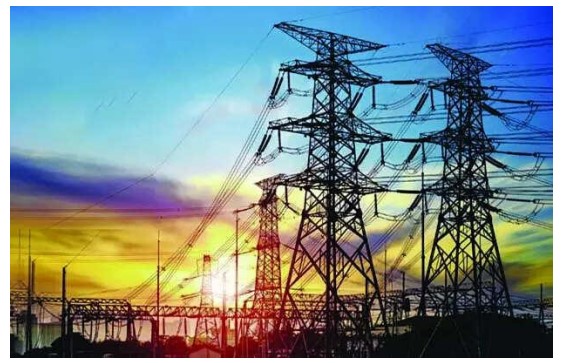
On May 1, 2026, India power exchange witnessed a historic event as electricity prices hit zero for the first time in specific time blocks. This occurrence, driven by record solar generation and a sudden dip in demand, highlights the growing complexities of grid management as India aggressively pursues its ambitious target of 500 GW non-fossil fuel capacity by 2030.
• Supply-Demand Mismatch: The price crash was triggered by a perfect storm of high supply and low demand. Record solar generation (reaching ~57.5 GW) coincided with cooler weather and light rains in Northern and Eastern India, which lowered cooling requirements. Additionally, industrial demand dropped significantly due to the Labour Day holiday.
• Inflexible Thermal Base: A critical factor in zero pricing is the inflexibility of thermal power plants. Unlike solar or hydro, coal-fired plants cannot be switched off and on rapidly. To maintain grid frequency at the mandatory 50 Hz, these plants continue generating even when demand is low, leading to a massive oversupply on the exchange.
• Market Dynamics on IEX: On the Real-Time Market (RTM) platform of the Indian Energy Exchange (IEX), sell bids reached 46 GW against purchase bids of only 6 GW during the affected blocks. While exchange-traded power accounts for only 13% of total supply (the rest being long-term PPAs), it acts as a crucial barometer for the health of India energy ecosystem.
• The Case for Negative Pricing: Experts suggest that India may eventually need to follow the European and Australian models of negative pricing. This mechanism essentially pays consumers or storage operators to take excess power off the grid, providing a financial incentive to balance supply and prevent grid instability.
• Storage as a Solution: The price crash is viewed not as a lack of demand for renewables, but as an urgent signal for Battery Energy Storage Systems (BESS) and Pumped Hydro Storage. Capturing excess daytime solar energy to meet evening peak demand is essential to prevent value erosion for renewable energy developers.
Key Definitions
• Real-Time Market (RTM): A market segment on power exchanges that allows participants to buy or sell electricity just an hour before delivery, helping in managing last-minute demandsupply variations.
• Grid Frequency: Measured in Hertz (Hz), it represents the balance between power generation and load. In India, it must stay near 50 Hz; oversupply increases frequency, while undersupply decreases it, both risking grid collapse.
• Open Access Consumers: Large consumers (typically with a load of 1 MW or more) who are permitted to buy power directly from the market or private generators rather than relying solely on local Discoms.
Constitutional & Legal Provisions
• The Electricity Act, 2003: The foundational legal framework that de-licensed generation and introduced competition through power exchanges. It mandates the Security of the Grid as a primary responsibility of the Load Despatch Centers.
• Article 246 (Seventh Schedule): Electricity is a Concurrent List subject (Entry 38), meaning both the Union and State governments can legislate on it, necessitating coordinated efforts for grid balancing.
• CERC Regulations: The Central Electricity Regulatory Commission (CERC) frames the rules for market operations and grid codes that govern how prices are discovered and how surpluses are handled on the exchange.
Important Key Points
• Impact on Investment: Frequent zero-price events can discourage private investment in renewable energy if developers cannot realize value for the power generated during peak sun hours.
• Optimization Opportunity: For Distribution Companies (Discoms) and industrial users, these price dips offer a chance to significantly lower power procurement costs by shifting flexible loads to daytime slots.
Conclusion:
The occurrence of zero-priced power is a growing pain of India’s energy transition. It underscores that the challenge is no longer just about adding capacity, but about integrating flexibility. Moving forward, the focus must shift toward mandatory energy storage obligations, demand-side management, and potentially evolving market rules to include negative pricing to ensure a stable and financially viable green energy future.
UPSC Relevance
• GS Paper III: Infrastructure (Energy); Economic Development; Science and Technology (Renewable Energy and Grid Management); Environmental impact of energy transition.
• GS Paper II: Government policies and interventions for development in various sectors.
• Prelims: Understanding of Indian Energy Exchange (IEX), Grid Frequency (50 Hz), and India NDC targets (500 GW non-fossil capacity by 2030).


Address : 506, 3rd EYE THREE (III), Opp. Induben Khakhrawala, Girish Cold Drink Cross Road, CG Road, Navrangpura, Ahmedabad, 380009.
Mobile : 8469231587 / 9586028957
E-mail: dics.upsc@gmail.com
Address: A-306, The Landmark, Urjanagar-1, Opp. Spicy Street, Kudasan – Por Road, Kudasan, Gandhinagar – 382421
Mobile : 9723832444 / 9723932444
E-mail: dics.gnagar@gmail.com
Address: 2nd Floor, 9 Shivali Society, L&T Circle, opp. Ratri Bazar, Karelibaugh, Vadodara, 390018
Mobile : 9725692037 / 9725692054
E-mail: dics.vadodara@gmail.com
Address: 403, Raj Victoria, Opp. Pal Walkway, Near Galaxy Circle, Pal, Surat-394510
Mobile : 8401031583 / 8401031587
E-mail: dics.surat@gmail.com
Address: 303,305 K 158 Complex Above Magson, Sindhubhavan Road Ahmedabad-380059
Mobile : 9974751177 / 8469231587
E-mail: dicssbr@gmail.com
Address: 57/17, 2nd Floor, Old Rajinder Nagar Market, Bada Bazaar Marg, Delhi-60
Mobile : 9104830862 / 9104830865
E-mail: dics.newdelhi@gmail.com