

Ahmedabad
(Head Office)Address : 506, 3rd EYE THREE (III), Opp. Induben Khakhrawala, Girish Cold Drink Cross Road, CG Road, Navrangpura, Ahmedabad, 380009.
Mobile : 8469231587 / 9586028957
E-mail: dics.upsc@gmail.com

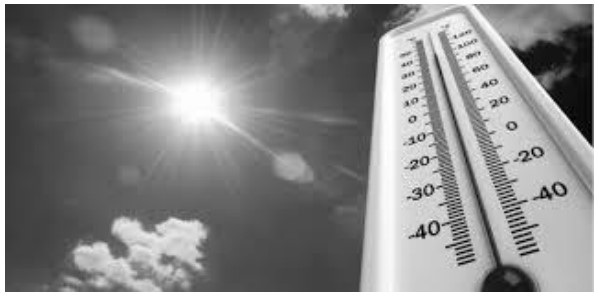
• Intensifying Climate Risk: The India Meteorological Department (IMD) has warned that the 2026 summer may see an above-normal frequency of heatwave days, underscoring that heatwaves are slow-onset disasters requiring sustained planning rather than just emergency response.
• Institutional Evolution: While many regions have implemented Heat Action Plans (HAPs) focusing on early warnings and public advisories, there is a critical need to transition from these reactive measures to long-term sustainable urban cooling strategies.
• Fiscal Breakthrough: A landmark recommendation by the 16th Finance Commission proposes including heatwaves as nationally notified disasters, which significantly expands the fiscal space for states to access the National Disaster Risk Management Fund (NDRMF).
• Structural Vulnerabilities: Current policy frameworks often overlook the root causes of heat vulnerability, such as poor urban design, heat-absorbing construction materials, diminishing green cover, and unequal access to thermal comfort.
• Call for Holistic Vision: The National Disaster Management Authority (NDMA) is urged to lead a comprehensive framework that integrates climate-sensitive planning, green and blue infrastructure expansion, and sustainable cooling solutions into urban development.
• Building Local Capacity: Effective fund utilization requires strengthening institutional capacity at the local government level, ensuring better coordination between urban planning departments and disaster management institutions.
Key Definitions & Concepts
• Heat Action Plan (HAP): A comprehensive guide that outlines immediate and long-term steps to prepare for, respond to, and recover from heatwaves through inter-agency coordination.
• Slow-Onset Disaster: Natural hazards that unfold over days, weeks, or even years, such as heatwaves or droughts, necessitating different management strategies compared to sudden events like cyclones.
• Green and Blue Infrastructure: Urban design elements involving vegetation (green) and water bodies (blue) that help mitigate the Urban Heat Island effect through natural cooling.
Constitutional & Legal Provisions
• Disaster Management Act, 2005: The primary legal framework for disaster management in India; the proposed inclusion of heatwaves as a notified disaster under this Act would formalize state and central responsibilities.
• 16th Finance Commission: A constitutional body under Article 280 that recommends the distribution of financial resources; its recent recommendation on disaster classification alters how states fund climate resilience.
• Article 21: The Right to Life increasingly encompasses the right to a healthy environment, placing a positive obligation on the State to protect citizens from extreme climate events.
• Entry 23 (Concurrent List): Social security and social insurance; employment and unemployment, often linked to the protection of outdoor workers during heatwaves.
Additional Key Points for Analysis
• Urban Heat Island (UHI) Effect: Urban areas experience significantly higher temperatures than surrounding rural areas due to human activity and heat-retaining infrastructure.
• Fiscal Shift: Previously, states could only use up to 10% of their State Disaster Response Fund (SDRF) for localized disasters; national notification allows for larger, more flexible funding for long-term mitigation.
• Inter-departmental Coordination: Effective heat management requires a whole-ofgovernment approach involving health, labor, urban development, and transport sectors.
Conclusion
The potential classification of heatwaves as a national disaster is a pivotal moment for India climate policy. It provides the necessary financial leverage to move from mere relief to proactive resilience. However, the ultimate success of this shift depends on whether the NDMA and local governments can translate these funds into structural changes—such as cooler building designs and expanded urban forests—to ensure that Indian cities remain habitable in an era of global boiling.
UPSC Relevance
• General Studies I: Important Geophysical phenomena (Heatwaves); Changes in critical geographical features and their effects.
• General Studies II: Statutory, regulatory and various quasi-judicial bodies (Finance Commission, NDMA); Government policies and interventions for development.
• General Studies III: Disaster and disaster management; Conservation, environmental pollution and degradation, environmental impact assessment.
• Prelims: Criteria for heatwaves in India; Composition and functions of the Finance Commission; NDRF vs. SDRF funding mechanisms.


Address : 506, 3rd EYE THREE (III), Opp. Induben Khakhrawala, Girish Cold Drink Cross Road, CG Road, Navrangpura, Ahmedabad, 380009.
Mobile : 8469231587 / 9586028957
E-mail: dics.upsc@gmail.com
Address: A-306, The Landmark, Urjanagar-1, Opp. Spicy Street, Kudasan – Por Road, Kudasan, Gandhinagar – 382421
Mobile : 9723832444 / 9723932444
E-mail: dics.gnagar@gmail.com
Address: 2nd Floor, 9 Shivali Society, L&T Circle, opp. Ratri Bazar, Karelibaugh, Vadodara, 390018
Mobile : 9725692037 / 9725692054
E-mail: dics.vadodara@gmail.com
Address: 403, Raj Victoria, Opp. Pal Walkway, Near Galaxy Circle, Pal, Surat-394510
Mobile : 8401031583 / 8401031587
E-mail: dics.surat@gmail.com
Address: 303,305 K 158 Complex Above Magson, Sindhubhavan Road Ahmedabad-380059
Mobile : 9974751177 / 8469231587
E-mail: dicssbr@gmail.com
Address: 57/17, 2nd Floor, Old Rajinder Nagar Market, Bada Bazaar Marg, Delhi-60
Mobile : 9104830862 / 9104830865
E-mail: dics.newdelhi@gmail.com