




Ahmedabad
(Head Office)Address : 506, 3rd EYE THREE (III), Opp. Induben Khakhrawala, Girish Cold Drink Cross Road, CG Road, Navrangpura, Ahmedabad, 380009.
Mobile : 8469231587 / 9586028957
Telephone : 079-40098991
E-mail: dics.upsc@gmail.com

• Crisis Off Cape Verde: A cruise ship carrying approximately 150 passengers—primarily British, American, and Spanish nationals—has been held off the coast of West Africa following a suspected hantavirus outbreak.
• Fatality and Transmission: The outbreak has already claimed three lives (a Dutch couple and a German national), highlighting the deadly nature of the virus which is primarily spread by rodents but can, in rare cases, transmit between humans.
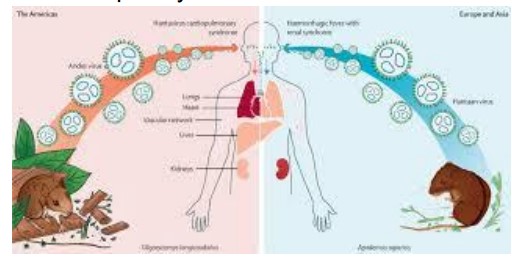
• Mechanism of Infection: Humans typically become infected when the virus, found in rodent droppings, saliva, or urine, becomes airborne and is subsequently inhaled.
• Clinical Manifestations: The disease typically begins with flu-like symptoms such as fatigue and fever, progressing within 4 to 10 days to severe respiratory issues, including coughing, shortness of breath, and fluid accumulation in the lungs.
• Diagnostic and Therapeutic Limitations: There is currently no specific therapy or vaccine for hantavirus infection; treatment is limited to supportive care, including rest and fluids, making early detection and prevention critical.
• Global Health Risk Assessment: The World Health Organization (WHO) currently assesses the risk to the wider public as low, given that the disease is typically rodent-borne and does not transfer easily between humans.
Key Definitions
• Hantavirus: A family of viruses named after the Hantan River area in South Korea; it causes two major illnesses: one affecting the lungs (Hantavirus Pulmonary Syndrome) and another attacking the kidneys (Hemorrhagic Fever with Renal Syndrome).
• Zoonotic Disease: A disease that can be transmitted from animals to humans; hantavirus is a classic example where rodents act as the primary reservoir.
Constitutional & Legal Provisions
• Article 21: The Right to Life and Personal Liberty includes the right to health; the state has a fundamental obligation to protect citizens from emerging biological threats and pandemics.
• Article 47: A Directive Principle of State Policy (DPSP) that mandates the State to regard the improvement of public health as among its primary duties.
• Epidemic Diseases Act, 1897: The primary Indian legislation used to provide for the better prevention of the spread of dangerous epidemic diseases, allowing the government to take special measures and prescribe regulations.
• International Health Regulations (IHR 2005): A legally binding international instrument that requires World Health Organization (WHO) member states to report certain disease outbreaks and public health events to strengthen global health security.
Additional Key Points for Examination
• Emergence of Rare Syndromes: While Hantavirus Pulmonary Syndrome (HPS) is more common in the Americas, other strains can lead to severe renal failure, emphasizing the geographical diversity of viral impacts.
• Public Health Precautionary Principle: The decision by Cape Verde to deny docking to the Dutch-flagged MV Hondius reflects the precautionary principle in international law to protect national public health against uncertain risks.
• One Health Approach: This outbreak underscores the need for a One Health framework— integrating human, animal, and environmental health—to monitor rodent populations and prevent zoonotic spillovers.
Conclusion
The hantavirus incident off Cape Verde serves as a stark reminder of the persistent threat posed by zoonotic pathogens in a highly interconnected world. While the risk of a widespread human-to-human pandemic remains low for this specific virus, the lack of targeted treatment and high mortality rate necessitate robust global surveillance systems. For India, which has diverse rodent ecosystems, strengthening laboratory diagnostic capacities and public health awareness remains vital to mitigating the risk of such spillover events.
UPSC Relevance
• General Studies III (Science & Technology): Awareness in the fields of Biotechnology and issues relating to Intellectual Property Rights; development of vaccines and treatments for emerging diseases.
• General Studies II (Social Justice & Governance): Issues relating to development and management of Social Sector/Services relating to Health.
• Prelims: Specific focus on the difference between viral and bacterial diseases, modes of transmission (zoonotic vs. human-to-human), and the role of international bodies like the WHO in managing health emergencies.


Address : 506, 3rd EYE THREE (III), Opp. Induben Khakhrawala, Girish Cold Drink Cross Road, CG Road, Navrangpura, Ahmedabad, 380009.
Mobile : 8469231587 / 9586028957
Telephone : 079-40098991
E-mail: dics.upsc@gmail.com
Address: A-306, The Landmark, Urjanagar-1, Opp. Spicy Street, Kudasan – Por Road, Kudasan, Gandhinagar – 382421
Mobile : 9723832444 / 9723932444
E-mail: dics.gnagar@gmail.com
Address: 2nd Floor, 9 Shivali Society, L&T Circle, opp. Ratri Bazar, Karelibaugh, Vadodara, 390018
Mobile : 9725692037 / 9725692054
E-mail: dics.vadodara@gmail.com
Address: 403, Raj Victoria, Opp. Pal Walkway, Near Galaxy Circle, Pal, Surat-394510
Mobile : 8401031583 / 8401031587
E-mail: dics.surat@gmail.com
Address: 303,305 K 158 Complex Above Magson, Sindhubhavan Road Ahmedabad-380059
Mobile : 9974751177 / 8469231587
E-mail: dicssbr@gmail.com
Address: 57/17, 2nd Floor, Old Rajinder Nagar Market, Bada Bazaar Marg, Delhi-60
Mobile : 9104830862 / 9104830865
E-mail: dics.newdelhi@gmail.com