
Ahmedabad
(Head Office)Address : 506, 3rd EYE THREE (III), Opp. Induben Khakhrawala, Girish Cold Drink Cross Road, CG Road, Navrangpura, Ahmedabad, 380009.
Mobile : 8469231587 / 9586028957
Telephone : 079-40098991
E-mail: dics.upsc@gmail.com

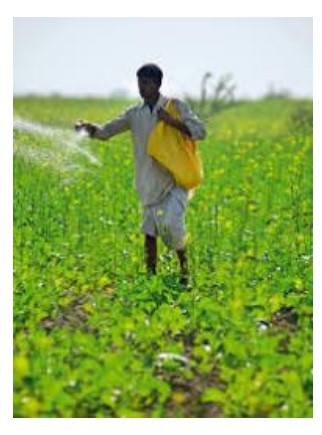
• Surge in Subsidy Outlay: India’s fertilizer subsidy bill reached ₹2.17 trillion in FY26, significantly surpassing the revised budget estimate of ₹1.86 trillion, primarily due to the government’s commitment to insulate farmers from global price volatility.
• Geopolitical Supply Chokepoints: The blockade of the Strait of Hormuz has disrupted West Asian supplies, creating a supply-side shock that is expected to push the FY27 budgeted subsidy of ₹1.7 trillion upward by at least 20%.
• Import Dependency Vulnerability: As the world largest importer of Urea and Diammonium Phosphate (DAP), India remains highly susceptible to international nutrient prices and currency fluctuations, importing 60% of its DAP and 15% of its Urea requirements.
• Dual Subsidy Mechanism: The bill is divided into a heavily price-controlled regime for Urea and a fixed, nutrient-linked support system for non-urea fertilizers (P&K), with Urea traditionally consuming the lion share of the fiscal support.
• Agricultural Bedrock: The subsidy serves as a critical intervention for a sector that employs 46.1% of the Indian workforce and contributes 15.6% to the national income, ensuring that input costs do not compromise national food security.
• Fiscal Deficit Implications: Persistent overshooting of subsidy estimates exerts immense pressure on the Union Budget, potentially widening the fiscal deficit and challenging the government’s fiscal consolidation roadmap.
Key Definitions
• Nutrient Based Subsidy (NBS): A scheme for Phosphatic and Potassic (P&K) fertilizers where a fixed amount of subsidy is decided by the government annually based on the individual nutrient content (N, P, K, and S) rather than the product price.
• Strait of Hormuz: A strategic maritime chokepoint between the Persian Gulf and the Gulf of Oman, through which a significant portion of the world’s fertilizer inputs and petroleum products are transported.
Constitutional & Legal Provisions
• Article 112 (Annual Financial Statement): The subsidy bill is a part of the Union Budget Revenue Expenditure, reflecting the government fiscal priorities and socio-economic obligations.
• Article 39(b) & (c): Under the Directive Principles of State Policy, the State is encouraged to ensure that the ownership and control of material resources are distributed to subserve the common good, justifying state intervention in essential agricultural inputs.
• Essential Commodities Act, 1955: Fertilizers are declared as essential commodities under this Act, allowing the government to regulate their production, supply, and distribution to ensure availability at fair prices.
Additional Key Points for Examination
• Direct Benefit Transfer (DBT): The government utilizes a DBT system where the subsidy is released to the fertilizer companies only after the actual sale to the farmer is verified via Point of Sale (PoS) devices using Aadhaar authentication.
• Nano Urea Shift: To reduce the subsidy burden and improve efficiency, the government is promoting Nano Urea and Nano DAP, which have higher nutrient absorption rates and lower logistics costs.
• One Nation One Fertilizer (PMBJP): The initiative to market all subsidized fertilizers under a single brand name, Bharat, to standardize quality and reduce cross-country movement of fertilizers.
Conclusion The burgeoning fertilizer subsidy bill highlights a complex policy trilemma: maintaining affordable retail prices for farmers, ensuring domestic food security, and adhering to fiscal discipline. While short-term spikes due to the West Asia crisis are unavoidable, the long-term solution lies in diversifying import sources, accelerating the adoption of alternative fertilizers like Nano Urea, and achieving Atmanirbhar Bharat in fertilizer production through the revival of domestic plants.
UPSC Relevance
• General Studies III (Agriculture & Economy): Direct and indirect farm subsidies and issues related to Minimum Support Prices; Public Distribution System; Food Security.
• General Studies II (International Relations): Impact of West Asian geopolitics and maritime chokepoints on India domestic economy.
• Prelims: Differences between Urea and NBS regimes, major fertilizer exporting regions to India, and the functioning of the DBT system in fertilizers.


Address : 506, 3rd EYE THREE (III), Opp. Induben Khakhrawala, Girish Cold Drink Cross Road, CG Road, Navrangpura, Ahmedabad, 380009.
Mobile : 8469231587 / 9586028957
Telephone : 079-40098991
E-mail: dics.upsc@gmail.com
Address: A-306, The Landmark, Urjanagar-1, Opp. Spicy Street, Kudasan – Por Road, Kudasan, Gandhinagar – 382421
Mobile : 9723832444 / 9723932444
E-mail: dics.gnagar@gmail.com
Address: 2nd Floor, 9 Shivali Society, L&T Circle, opp. Ratri Bazar, Karelibaugh, Vadodara, 390018
Mobile : 9725692037 / 9725692054
E-mail: dics.vadodara@gmail.com
Address: 403, Raj Victoria, Opp. Pal Walkway, Near Galaxy Circle, Pal, Surat-394510
Mobile : 8401031583 / 8401031587
E-mail: dics.surat@gmail.com
Address: 303,305 K 158 Complex Above Magson, Sindhubhavan Road Ahmedabad-380059
Mobile : 9974751177 / 8469231587
E-mail: dicssbr@gmail.com
Address: 57/17, 2nd Floor, Old Rajinder Nagar Market, Bada Bazaar Marg, Delhi-60
Mobile : 9104830862 / 9104830865
E-mail: dics.newdelhi@gmail.com