



Ahmedabad
(Head Office)Address : 506, 3rd EYE THREE (III), Opp. Induben Khakhrawala, Girish Cold Drink Cross Road, CG Road, Navrangpura, Ahmedabad, 380009.
Mobile : 8469231587 / 9586028957
Telephone : 079-40098991
E-mail: dics.upsc@gmail.com

• Strategic Mapping of Critical Sectors: The EAC-PM Chairman has emphasized the urgent need to identify and monitor sectors highly susceptible to external shocks, specifically energy (crude oil and gas), food, fertilizers, metals, and critical minerals.
• Mitigating Geopolitical Risks: The proposal aims to insulate the Indian economy from West Asia-like crises by proactively addressing supply chain disruptions and price volatility through a data-driven monitoring framework.
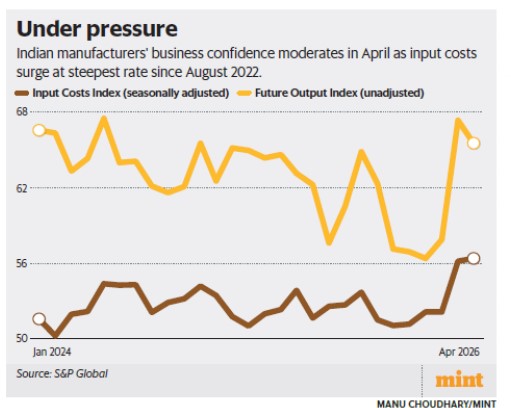
• Commodity Price Volatility: As a major consumer of imported nutrients and fuel, India faces imported inflation whenever global prices surge; systematic mapping would allow for earlier fiscal and monetary hedging.
• Focus on Critical Minerals: With the global transition toward green energy, mapping the supply of critical minerals (Lithium, Cobalt, etc.) is identified as vital for the Atmanirbhar Bharat initiative in the EV and electronics sectors.
• Proactive vs. Reactive Policy: The EAC-PM advocates for a shift from reactive crisis management to a proactive stance where supply buffers and alternative trade routes are established before a crisis escalates.
• Resilience through Diversification: Monitoring economic vulnerabilities will facilitate the diversification of import sources and the strengthening of domestic production capacities to reduce over-reliance on volatile regions.
Key Definitions
• Economic Vulnerability: The degree to which a country economic growth and stability are susceptible to exogenous shocks, such as natural disasters, global price fluctuations, or geopolitical conflicts.
• Critical Minerals: Mineral requirements essential for modern technology and national security that have a high risk of supply chain disruption (e.g., Rare Earth Elements).
• EAC-PM: An independent body constituted to advise the Prime Minister on economic and related issues, providing a neutral viewpoint on macroeconomic health.
Constitutional & Legal Provisions
• Article 74: While the EAC-PM is a non-constitutional, non-statutory body, it provides expert aid and advice which eventually informs the Council of Ministers decisions under this Article.
• Economic Security: Though not explicitly defined in the Constitution, it is interpreted as a subset of National Security, falling under the Union List (Entry 1 to 9) regarding the defense and economic well-being of India.
• Mines and Minerals (Development and Regulation) Amendment Act, 2023: Legal framework providing for the exploration and auction of critical and strategic minerals mentioned by the EAC-PM.
• Essential Commodities Act, 1955: Leveraged to monitor and control the supply and price of vulnerable goods like food and fertilizers to prevent hoarding during crises.
Additional Key Points for Examination
• Imported Inflation: When India maps vulnerabilities, it primarily targets items where domestic demand-supply gaps lead to a surge in the Wholesale Price Index (WPI) due to global factors.
• Strategic Petroleum Reserves (SPR): A practical example of mapping and addressing energy vulnerability; India currently maintains reserves at Visakhapatnam, Mangaluru, and Padur.
• Supply Chain Resilience Initiative (SCRI): A trilateral move by India, Japan, and Australia that aligns with the EAC-PM recommendation to reduce dependency on a single dominant supplier (like China).
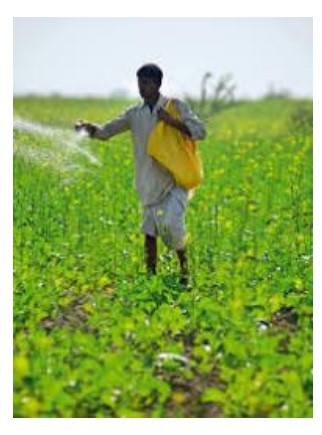
• Role of Fertilizer Subsidies: The mapping of fertilizer vulnerability is crucial to prevent the fiscal deficit from overshooting due to unexpected spikes in global natural gas or urea prices.
Conclusion
The call by the EAC-PM Chairman for a Vulnerability Map marks a transition toward a more sophisticated, intelligence-led economic policy. By treating economic data as a strategic asset, India can build shock absorbers into its macro-policy framework. This approach is essential for maintaining a 7-8% growth trajectory in an increasingly fragmented and conflict-prone global order, ensuring that domestic development is not derailed by events beyond the nation borders.
UPSC Relevance
• General Studies III (Economy): Planning, mobilization of resources, growth, development, and employment. Effects of liberalization on the economy.
• General Studies II (Governance): Role of advisory bodies like EAC-PM and NITI Aayog in policy formulation.
• Prelims: Definition of Critical Minerals, location of Strategic Petroleum Reserves, and the difference between statutory and advisory bodies.


Address : 506, 3rd EYE THREE (III), Opp. Induben Khakhrawala, Girish Cold Drink Cross Road, CG Road, Navrangpura, Ahmedabad, 380009.
Mobile : 8469231587 / 9586028957
Telephone : 079-40098991
E-mail: dics.upsc@gmail.com
Address: A-306, The Landmark, Urjanagar-1, Opp. Spicy Street, Kudasan – Por Road, Kudasan, Gandhinagar – 382421
Mobile : 9723832444 / 9723932444
E-mail: dics.gnagar@gmail.com
Address: 2nd Floor, 9 Shivali Society, L&T Circle, opp. Ratri Bazar, Karelibaugh, Vadodara, 390018
Mobile : 9725692037 / 9725692054
E-mail: dics.vadodara@gmail.com
Address: 403, Raj Victoria, Opp. Pal Walkway, Near Galaxy Circle, Pal, Surat-394510
Mobile : 8401031583 / 8401031587
E-mail: dics.surat@gmail.com
Address: 303,305 K 158 Complex Above Magson, Sindhubhavan Road Ahmedabad-380059
Mobile : 9974751177 / 8469231587
E-mail: dicssbr@gmail.com
Address: 57/17, 2nd Floor, Old Rajinder Nagar Market, Bada Bazaar Marg, Delhi-60
Mobile : 9104830862 / 9104830865
E-mail: dics.newdelhi@gmail.com