


Ahmedabad
(Head Office)Address : 506, 3rd EYE THREE (III), Opp. Induben Khakhrawala, Girish Cold Drink Cross Road, CG Road, Navrangpura, Ahmedabad, 380009.
Mobile : 8469231587 / 9586028957
E-mail: dics.upsc@gmail.com

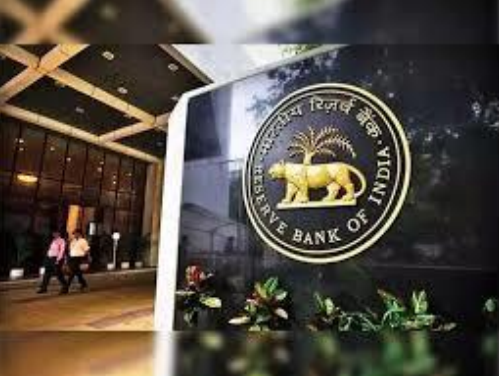
The Reserve Bank of India (RBI) has emerged as a critical stabilizer in the sovereign debt market, absorbing approximately 47% of the Central Government’s bond issuances in FY26. Amidst a massive gross borrowing programme of ₹13,65,000 crore, the central bank’s aggressive Open Market Operations (OMO) reflect a strategic effort to insulate the banking system from liquidity shocks and prevent a disruptive spike in borrowing costs. Key Summary Points • Systemic Liquidity Support: The RBI injected nearly ₹6.39 lakh crore in durable liquidity through OMO purchases to counter the tightening effects of sustained government borrowing and capital outflows. • Yield Management: By absorbing nearly half of the bond supply, the RBI prevented the \'hardening\' of yields, keeping the 10-year benchmark bond yield within a stable range of 6.30%–6.70%. • Credit Growth Anchoring: Ensuring adequate liquidity in the banking system allows commercial banks to maintain credit flow to the private sector, preventing \'crowding out\' despite high public debt levels. • Countering Global Volatility: The interventions mitigated upward pressure on domestic interest rates caused by rising global crude oil prices and fluctuations in US Treasury yields. • Fiscal-Monetary Coordination: The central bank’s actions are synchronized with the government’s fiscal consolidation path, which targets a deficit of 4.4% of GDP for FY26. • Maturity Management: The RBI\'s front-loaded support is also timed to manage a significant maturing of government securities worth over ₹5.47 lakh crore during the current cycle. Definitions of Key Terms • Open Market Operations (OMO): The buying and selling of government securities (G-Secs) by the central bank to regulate the money supply and liquidity in the banking system. • Bond Yield: The annual return an investor gets on a bond, which moves inversely to the bond’s price. High yields indicate higher borrowing costs for the government. • Durable Liquidity: Long-term funds injected into the system (often through OMOs) that stay for an extended period, unlike temporary liquidity provided via daily Repo auctions. • Gross Borrowing Programme: The total amount a government plans to borrow from the market to fund its fiscal deficit and repay past loans.Constitutional and Legal Provisions • Section 20 & 21, RBI Act, 1934: Mandates the RBI to act as the \'Banker to the Government,\' managing its public debt and handling its various banking requirements. • Section 17, RBI Act, 1934: Empowers the RBI to engage in the purchase and sale of government securities as a tool for monetary regulation. • FRBM Act, 2003: While the Fiscal Responsibility and Budget Management Act generally prohibits RBI from buying primary issuances (except under \'escape clause\' conditions), the RBI actively manages liquidity through the secondary market. • Article 292 of the Constitution: Provides the executive power of the Union to borrow upon the security of the Consolidated Fund of India within limits set by Parliament. Additional Important Keypoints • Crowding Out Effect: Large government borrowings can reduce the funds available for private investment; RBI’s absorption of bonds helps mitigate this risk. • Impact of India-US Trade Deal: Emerging positive capital flows from recent trade agreements may reduce the future need for aggressive OMO interventions by the RBI. • Monetary Policy Transmission: Stable bond yields are essential for ensuring that RBI’s policy rate changes (Repo Rate) are effectively passed on to the broader economy. Conclusion The RBI’s massive absorption of government bonds in FY26 acts as a bridge between fiscal necessity and monetary stability. While the government navigates a high borrowing regime to fund infrastructure and development, the central bank’s role in ensuring an \'orderly market\' prevents interest rate volatility. However, the long-term challenge remains the transition toward a market-driven demand for G-Secs, reducing the central bank\'s role as the primary \'buyer of last resort.\' UPSC Relevance • General Studies III: Indian Economy (Government Budgeting, Monetary Policy, and Mobilization of Resources); Issues relating to growth and development. • General Studies II: Statutory bodies (Powers and Functions of the RBI). • Mains Perspective: Analyze the challenges of balancing fiscal deficit targets with the need for market liquidity. Evaluate the effectiveness of OMOs in maintaining monetary policy transmission during periods of high public debt.


Address : 506, 3rd EYE THREE (III), Opp. Induben Khakhrawala, Girish Cold Drink Cross Road, CG Road, Navrangpura, Ahmedabad, 380009.
Mobile : 8469231587 / 9586028957
E-mail: dics.upsc@gmail.com
Address: A-306, The Landmark, Urjanagar-1, Opp. Spicy Street, Kudasan – Por Road, Kudasan, Gandhinagar – 382421
Mobile : 9723832444 / 9723932444
E-mail: dics.gnagar@gmail.com
Address: Tithi Commercial Complex, 401/402 Productivity Road, Opp. Productivity House, Alkapuri, Vadodara, Gujarat – 390007
Mobile : 9725692037 / 9725692054
E-mail: dics.vadodara@gmail.com
Address: 403, Raj Victoria, Opp. Pal Walkway, Near Galaxy Circle, Pal, Surat-394510
Mobile : 8401031583 / 8401031587
E-mail: dics.surat@gmail.com
Address: 303,305 K 158 Complex Above Magson, Sindhubhavan Road Ahmedabad-380059
Mobile : 9974751177 / 8469231587
E-mail: dicssbr@gmail.com
Address: 57/17, 2nd Floor, Old Rajinder Nagar Market, Bada Bazaar Marg, Delhi-60
Mobile : 9104830862 / 9104830865
E-mail: dics.newdelhi@gmail.com