








Ahmedabad
(Head Office)Address : 506, 3rd EYE THREE (III), Opp. Induben Khakhrawala, Girish Cold Drink Cross Road, CG Road, Navrangpura, Ahmedabad, 380009.
Mobile : 8469231587 / 9586028957
Telephone : 079-40098991
E-mail: dics.upsc@gmail.com

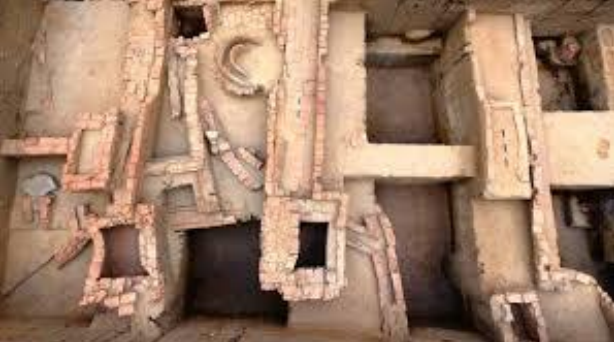
Context: The Archaeological Survey of India (ASI) has formally granted permission to the Tamil Nadu State Department of Archaeology (TNSDA) to conduct excavations at eight historical sites. This includes the highprofile 11th phase at Keeladi, following a period of administrative delay that threatened the narrow excavation window (January to July) before the onset of the monsoon. • Keeladi Phase XI and Clusters: The approval facilitates the continuation of work at Keeladi (Sivaganga district), a site that has already provided landmark evidence of an advanced urban civilization in South India, potentially contemporaneous with or succeeding the late Harappan phase. • Diversified Geographical Scope: Beyond Keeladi, the 2026 excavation season will cover seven other diverse sites: Pattinamarudhur (Thoothukudi), Karivalamvanthanallur (Tenkasi), Manikollai (Cuddalore), Adichanur (Villupuram), Vellalore (Coimbatore), Telunganur-Mangadu (Salem), and Nagapattinam. • Legal and Regulatory Framework: The permission was granted on March 13 under the Ancient Monuments and Archaeological Sites and Remains (AMASR) Rules, 1959. This followed recommendations from an ASI expert committee and repeated high-level requests from the State government to align with the local climatic cycle. • Chronological Significance: Previous phases at Keeladi have pushed the timeline of the \'Second Urbanization\' in the Indian subcontinent and the antiquity of the Tamil-Brahmi script back to the 6th century BCE, bridging gaps in the \'Dark Age\' of South Indian history • Budgetary and Policy Support: These excavations were a key component of the Tamil Nadu Budget for 2025-26, reflecting a structured state policy to scientifically establish the antiquity and cultural continuity of the Tamil civilization through systematic field archaeology. Key Definitions and Legal Provisions • Stratigraphy: The primary tool of the archaeologist; it is the study of layered materials (strata) deposited over time, where the deepest layers are generally the oldest. • Tamil-Brahmi: An adaptation of the Brahmi script used to write the Tamil language; findings at Keeladi suggest its usage was more widespread and earlier than previously recorded. • AMASR Act, 1958 & Rules 1959: The central legislation for the preservation of archaeological resources. It mandates that any excavation, even by state departments, requires \'License to Excavate\' from the Central Government (ASI). • Article 49 (Directive Principles): Obligations of the State to protect every monument or place of artistic or historic interest, declared by or under law made by Parliament to be of national importance. Additional Key Points • Vaigai River Valley Civilization: Keeladi is part of a larger cluster along the Vaigai river, suggesting a riverine civilization model similar to the Indus or the Nile. • Maritime Links: Sites like Nagapattinam and Pattinamarudhur are expected to yield evidence of ancient maritime trade routes connecting the Coromandel coast to Southeast Asia and the Roman Empire. • Scientific Dating: The TNSDA utilizes Accelerator Mass Spectrometry (AMS) carbon dating to ensure global scientific acceptance of the excavated artifacts\' age. Conclusion The ASI’s nod for the 11th phase of Keeladi and seven other sites marks a pivotal moment for Indian historiography. By moving beyond a \'Ganges-centric\' view of Indian history, these excavations provide a more inclusive and pan-Indian understanding of ancient urbanism, literacy, and industrial craftsmanship, reinforcing the cultural depth of the Sangam Era. UPSC Relevance • GS Paper I: Indian culture will cover the salient aspects of Art Forms, literature and Architecture from ancient to modern times; Ancient History (Sangam Age, Megalithic culture). • Mains Perspective: Importance of archaeological findings in reconstructing history; Federalism in heritage management (State vs. Central roles in AMASR implementation). • Prelims: Locations of sites (Keeladi, Adichanur, etc.); Scripts (Tamil-Brahmi); Legal acts governing archaeology in India.


Address : 506, 3rd EYE THREE (III), Opp. Induben Khakhrawala, Girish Cold Drink Cross Road, CG Road, Navrangpura, Ahmedabad, 380009.
Mobile : 8469231587 / 9586028957
Telephone : 079-40098991
E-mail: dics.upsc@gmail.com
Address: A-306, The Landmark, Urjanagar-1, Opp. Spicy Street, Kudasan – Por Road, Kudasan, Gandhinagar – 382421
Mobile : 9723832444 / 9723932444
E-mail: dics.gnagar@gmail.com
Address: 2nd Floor, 9 Shivali Society, L&T Circle, opp. Ratri Bazar, Karelibaugh, Vadodara, 390018
Mobile : 9725692037 / 9725692054
E-mail: dics.vadodara@gmail.com
Address: 403, Raj Victoria, Opp. Pal Walkway, Near Galaxy Circle, Pal, Surat-394510
Mobile : 8401031583 / 8401031587
E-mail: dics.surat@gmail.com
Address: 303,305 K 158 Complex Above Magson, Sindhubhavan Road Ahmedabad-380059
Mobile : 9974751177 / 8469231587
E-mail: dicssbr@gmail.com
Address: 57/17, 2nd Floor, Old Rajinder Nagar Market, Bada Bazaar Marg, Delhi-60
Mobile : 9104830862 / 9104830865
E-mail: dics.newdelhi@gmail.com