





Ahmedabad
(Head Office)Address : 506, 3rd EYE THREE (III), Opp. Induben Khakhrawala, Girish Cold Drink Cross Road, CG Road, Navrangpura, Ahmedabad, 380009.
Mobile : 8469231587 / 9586028957
Telephone : 079-40098991
E-mail: dics.upsc@gmail.com

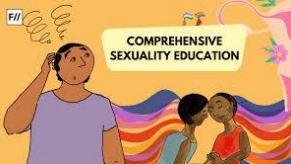
Context: In light of rising student suicides and systemic marginalization, there is an urgent academic discourse on integrating Comprehensive Sexuality Education (CSE) into higher education. Moving beyond a narrow biomedical lens, experts argue for an inclusive curriculum that addresses pleasure, consent, and the structural violence faced by sexual minorities to foster mental well-being and institutional equity. • Linkage between Sexuality and Mental Health: Stigma, silence, and shame surrounding intimacy are significant drivers of mental health crises. The World Health Organization (WHO) identifies lack of bodily autonomy and restricted sexual freedom as sources of \'immense suffering,\' highlighting that mental health support in universities must reckon with sexual and relational equality. • Challenging Heteronormative Curricula: Current mental health and academic curricula in India are often criticized for being \'cis-gendered\' and \'heteronormative.\' By reducing sexuality to \'medical dysfunctions,\' academia erases the lived realities of LGBTQ+ individuals, inhibiting the \'structural competence\' required for effective clinical and social practice. • Judicial Interventions and Guidelines: In 2024 and 2025, the Supreme Court of India took proactive steps by emphasizing the need for open discussions on intimacy and seeking government responses on integrating transgender-inclusive CSE. Furthermore, the Court’s 2025 pan-India guidelines on student suicide explicitly recognized gender and sexual orientation as grounds for institutional discrimination. • Beyond the Biomedical Approach: Academic spaces often prioritize a \'medicalized\' view of sex, ignoring the socio-cultural dimensions of pleasure and identity. Experts advocate for a shift from \'workforce training\' to cultivating critical awareness, resisting anti-democratic movements that seek to marginalize diverse sexual experiences. • Pedagogical Innovation for Safer Spaces: Teaching sensitive topics requires moving away from \'detached abstraction\' toward \'accountable spaces.\' Utilizing icebreaker exercises and small-group discussions allows students to connect theory with personal meaning, building the trust and rapport necessary for transformative learning. • Fostering Care Communities over Short-Term Fixes: While hiring psychologists is a step forward, it often acts as a \'band-aid\' solution. The focus must shift toward creating sustained \'care communities\' and \'diversity-aware\' environments that address the root causes of institutional oppression rather than isolated events or workshops. Key Definitions and Legal Provisions • Comprehensive Sexuality Education (CSE): A curriculum-based process of teaching and learning about the cognitive, emotional, physical, and social aspects of sexuality, aimed at empowering young people to realize their health and dignity. • Structural Competence: The ability of professionals to recognize how social, economic, and institutional structures (like heteronormativity) impact the health and well-being of individuals. • Cis-gendered/Heteronormative: Frameworks that assume \'cis-gender\' (identity matching birth sex) and \'heterosexuality\' are the only normal or preferred orientations, effectively erasing other identities. • Article 21 (Personal Liberty): The Supreme Court has expanded the scope of Article 21 to include the right to choose a partner and the right to privacy, which encompasses sexual identity and orientation. • Article 15 (Non-Discrimination): Prohibits discrimination on grounds of religion, race, caste, sex, or place of birth. The judiciary increasingly interprets \'sex\' to include sexual orientation and gender identity. Additional Key Points • Student Suicide Crisis: Data suggests that a significant portion of student distress in India is linked to identity-based bullying and the inability to discuss intimate struggles in a supportive environment. • Epistemic Gaps: The \'knowledge gap\' in academia regarding queer politics and consent results in \'ethical failures\' when mental health professionals attempt to support marginalized students. • Global Academic Exchange: Observations from DAAD fellows highlight that while Germany and India have different cultural contexts, both face \'academic resistance\' to prioritizing pleasure and diversity over traditional theory. Conclusion Integrating sex education in academia is not merely a matter of health; it is a prerequisite for social justice and mental resilience. By breaking the \'culture of silence,\' educational institutions can evolve from being sites of anxiety and majoritarian norms into compassionate ecosystems that equip students with the tools to navigate a diverse and complex world. UPSC Relevance • GS Paper I: Social empowerment; Salient features of Indian Society; Diversity of India. • GS Paper II: Issues relating to development and management of Social Sector/Services relating to Health, Education, Human Resources; Important Judiciary rulings. • GS Paper IV (Ethics): Ethical concerns in public and private institutions; Compassion towards the vulnerable sections; Values in education. • Mains Perspective: Discuss the role of \'inclusive education\' in mitigating the mental health crisis among Indian youth; Analyze the impact of judicial activism in expanding the rights of the LGBTQ+ community in India.


Address : 506, 3rd EYE THREE (III), Opp. Induben Khakhrawala, Girish Cold Drink Cross Road, CG Road, Navrangpura, Ahmedabad, 380009.
Mobile : 8469231587 / 9586028957
Telephone : 079-40098991
E-mail: dics.upsc@gmail.com
Address: A-306, The Landmark, Urjanagar-1, Opp. Spicy Street, Kudasan – Por Road, Kudasan, Gandhinagar – 382421
Mobile : 9723832444 / 9723932444
E-mail: dics.gnagar@gmail.com
Address: 2nd Floor, 9 Shivali Society, L&T Circle, opp. Ratri Bazar, Karelibaugh, Vadodara, 390018
Mobile : 9725692037 / 9725692054
E-mail: dics.vadodara@gmail.com
Address: 403, Raj Victoria, Opp. Pal Walkway, Near Galaxy Circle, Pal, Surat-394510
Mobile : 8401031583 / 8401031587
E-mail: dics.surat@gmail.com
Address: 303,305 K 158 Complex Above Magson, Sindhubhavan Road Ahmedabad-380059
Mobile : 9974751177 / 8469231587
E-mail: dicssbr@gmail.com
Address: 57/17, 2nd Floor, Old Rajinder Nagar Market, Bada Bazaar Marg, Delhi-60
Mobile : 9104830862 / 9104830865
E-mail: dics.newdelhi@gmail.com