







Ahmedabad
(Head Office)Address : 506, 3rd EYE THREE (III), Opp. Induben Khakhrawala, Girish Cold Drink Cross Road, CG Road, Navrangpura, Ahmedabad, 380009.
Mobile : 8469231587 / 9586028957
Telephone : 079-40098991
E-mail: dics.upsc@gmail.com

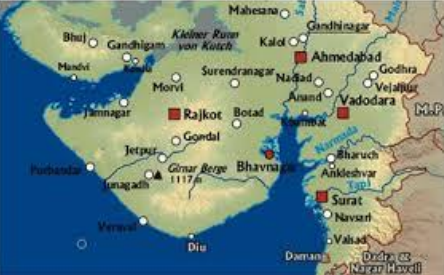
• Enhanced Executive Powers: The Bill grants sweeping authority to District Collectors to take possession of properties in \'specified areas\' if the transfer is deemed \'objectionable\' or \'involuntary,\' aiming to protect the interests of legal owners. • Redefinition of Sensitive Zones: The existing \'Disturbed Areas\' will now be referred to as \'Specified Areas,\' with the criteria for declaration expanded to include regions where there is a \'likelihood\' of public order disturbance due to communal tensions. • Suo Motu Investigation: The amendment allows Collectors to initiate investigations into property transfers on their own accord (suo motu) or based on applications from an expanded definition of \'aggrieved parties\' to prevent forced migration. • Monitoring and Advisory Committee: A new specialized committee will be appointed to advise the State Government on areas prone to communal disturbances and \'involuntary displacement,\' providing a structured mechanism for identifying specified areas. • Demographic Protection: Proponents of the Bill argue it is a necessary measure to prevent \'conspiracies\' intended to alter the demographic character of specific neighborhoods and to stop the forced sale of properties under duress. • Financial Facilitation: To reduce procedural hardships, the Bill proposes simplifying the approval process for mortgaging properties in specified areas to financial institutions for the purpose of obtaining loans. Key Definitions • Specified Areas: Regions officially notified by the State Government where property transfers are strictly regulated to prevent communal clustering or forced displacement (formerly \'Disturbed Areas\'). • Involuntary Transfer: The sale or transfer of immovable property conducted under pressure, fear, or coercion rather than the free will of the owner. • Suo Motu: A Latin term meaning \'on its own motion,\' referring to an action taken by a court or authority without a formal prompt or application from another party. Constitutional and Legal Provisions • Article 19(1)(f) and Article 300A: While the right to property is no longer a Fundamental Right, Article 300A mandates that no person shall be deprived of their property save by authority of law. • Article 14 and Article 15: Critics often scrutinize such Acts against the principles of Equality before Law and Prohibition of discrimination on grounds of religion or caste. • Article 25 and Article 26: Relevant in discussions regarding the displacement of religious institutions (temples/mosques) and the right to manage religious affairs. • The Gujarat Disturbed Areas Act, 1991: The parent legislation originally enacted to check the \'ghettoisation\' and illegal transfer of properties in riot-prone areas of Gujarat. Additional Key Points • Scope of \'Aggrieved Person\': The Bill broadens who can challenge a property transfer, moving beyond just the buyer or seller to include those affected by the changing nature of the neighborhood. • Legislative Debate: Opposition members have questioned the necessity of adding 44 new areas under the Act if the state has remained peaceful, suggesting the Act might hinder natural urban mobility. • Urban Planning and Real Estate: The Act significantly impacts real estate transactions in cities like Ahmedabad, Vadodara, and Surat, requiring a mandatory \'No Objection Certificate\' (NOC) from the Collector for every sale in specified zones. Conclusion The 2026 Amendment to the Disturbed Areas Act reflects the Gujarat Government\'s stringent approach toward maintaining communal status quo in urban pockets. While the government frames it as a shield for vulnerable owners against \'property mafias\' and forced migration, it remains a point of intense legal and political debate regarding its impact on the secular fabric of urban spaces and the fundamental freedom of citizens to reside anywhere within the territory of India. UPSC Relevance GS Paper II: State Legislations and their impact; Government policies and interventions for development in various sectors; Issues arising out of their design and implementation. GS Paper I: Social Empowerment, Communalism, Regionalism & Secularism; Urbanization, their problems and their remedies. Prelims: Provisions of the Disturbed Areas Act; Powers of the District Collector; Constitutional Articles related to Property (300A) and Freedom of Residence (19(1)(e)).


Address : 506, 3rd EYE THREE (III), Opp. Induben Khakhrawala, Girish Cold Drink Cross Road, CG Road, Navrangpura, Ahmedabad, 380009.
Mobile : 8469231587 / 9586028957
Telephone : 079-40098991
E-mail: dics.upsc@gmail.com
Address: A-306, The Landmark, Urjanagar-1, Opp. Spicy Street, Kudasan – Por Road, Kudasan, Gandhinagar – 382421
Mobile : 9723832444 / 9723932444
E-mail: dics.gnagar@gmail.com
Address: 2nd Floor, 9 Shivali Society, L&T Circle, opp. Ratri Bazar, Karelibaugh, Vadodara, 390018
Mobile : 9725692037 / 9725692054
E-mail: dics.vadodara@gmail.com
Address: 403, Raj Victoria, Opp. Pal Walkway, Near Galaxy Circle, Pal, Surat-394510
Mobile : 8401031583 / 8401031587
E-mail: dics.surat@gmail.com
Address: 303,305 K 158 Complex Above Magson, Sindhubhavan Road Ahmedabad-380059
Mobile : 9974751177 / 8469231587
E-mail: dicssbr@gmail.com
Address: 57/17, 2nd Floor, Old Rajinder Nagar Market, Bada Bazaar Marg, Delhi-60
Mobile : 9104830862 / 9104830865
E-mail: dics.newdelhi@gmail.com