

Ahmedabad
(Head Office)Address : 506, 3rd EYE THREE (III), Opp. Induben Khakhrawala, Girish Cold Drink Cross Road, CG Road, Navrangpura, Ahmedabad, 380009.
Mobile : 8469231587 / 9586028957
E-mail: dics.upsc@gmail.com

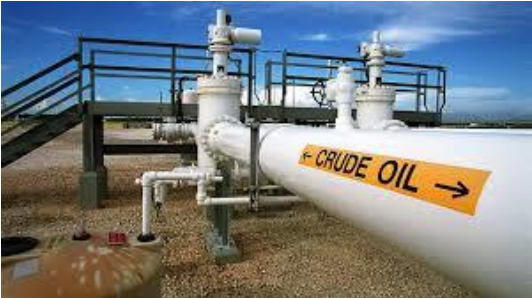
India is set to import over 12 million barrels of Venezuelan crude oil in April 2026, marking a six-year high since February 2020. This strategic pivot comes as the world’s third-largest oil importer seeks to mitigate supply disruptions in West Asia, where the ongoing Iran-Israel conflict has severely hampered traffic through the Strait of Hormuz. Traditionally, nearly 40% of India’s oil imports passed through this chokepoint, but recent hostilities have forced Indian refiners—led by Reliance Industries—to look toward South America. The resumption of trade is facilitated by the easing of US sanctions following a major geopolitical shift in Caracas earlier this year, allowing India to tap into Venezuela’s heavy, sulfur-rich crude, which is a perfect technical fit for Indian complex refineries. • Strategic Supply Shift: India is projected to receive 10-12 million barrels of Venezuelan crude this month to offset lost volumes from the Middle East caused by the Hormuz blockade. • Geopolitical Facilitation: The lifting of US sanctions on Venezuela’s state-run PDVSA in early 2026, following the ouster of the previous regime, has cleared the legal hurdles for direct Indian procurement. • Refining Synergy: Venezuelan \'Merey\' and \'Boscan\' blends are heavy crudes that yield high proportions of middle distillates like diesel and jet fuel, crucial for India\'s domestic and export energy markets. • Bypassing Chokepoints: Diversifying to the South American producer allows India to secure energy via Atlantic-Cape routes, reducing exposure to the volatile Strait of Hormuz. • Private Sector Leadership: Reliance Industries (RIL) has resumed direct imports at its Sikka port, utilizing its specific US licenses to bypass third-party intermediaries and stabilize supply chains. • Economic Cushion: By broadening its sourcing to over 40 countries, India is utilizing \'strategic realism\' to prevent domestic fuel price spikes despite global crude volatility. Key Definitions & Technical Terms • Strait of Hormuz: A vital maritime chokepoint between the Persian Gulf and the Gulf of Oman; it is the world’s most important oil transit route, through which a significant portion of Indian imports pass. • Heavy Crude Oil: Dense oil that does not flow easily and often contains high sulfur; it requires complex refining but often yields valuable products like diesel. • Middle Distillates: A range of refined petroleum products including jet fuel, heating oil, and diesel fuel. • Strategic Autonomy: India\'s foreign policy approach of maintaining independent decision-making in its energy and trade relations despite external geopolitical pressures. Constitutional & Legal Provisions • Entry 53, List I (Union List): The Seventh Schedule of the Constitution gives the Union government exclusive power over \'Regulation and development of oilfields and mineral oil resources; petroleum and petroleum products.\' • Petroleum Act, 1934: The primary legal framework governing the import, transport, and storage of petroleum in India. • Article 73: Extends the executive power of the Union to international treaties and trade agreements, allowing the Ministry of External Affairs and Ministry of Petroleum to negotiate energy security deals. Additional Key Points for Examination • Forex Implications: Venezuela often offers attractive pricing compared to Middle Eastern grades, helping India manage its massive oil import bill, which covers nearly 88% of domestic demand. • Energy Transition: While India is pushing for renewables, the immediate \'supply crunch\' reinforces the need for a \'Multi-Alignment\' energy policy to fuel industrial growth. • Refining Hub: India’s refining capacity (over 250 MMTPA) acts as a \'shock absorber,\' allowing it to process diverse crude grades from Russia, the US, and now Venezuela. Conclusion India’s return to Venezuelan crude is a textbook example of \'Energy Realism.\' By leveraging shifting geopolitical alignments in the Americas to counter disruptions in West Asia, New Delhi is insulating its economy from a potential energy paralysis. This move not only secures physical supply but also provides price leverage in a tightening global market. UPSC Relevance • GS Paper II (International Relations): Effect of policies and politics of developed and developing countries on India’s interests; India’s relations with Venezuela and the US. • GS Paper III (Economy/Security): Energy Security; Infrastructure: Energy; Diversification of supply chains; Impact of West Asian instability on Indian economy


Address : 506, 3rd EYE THREE (III), Opp. Induben Khakhrawala, Girish Cold Drink Cross Road, CG Road, Navrangpura, Ahmedabad, 380009.
Mobile : 8469231587 / 9586028957
E-mail: dics.upsc@gmail.com
Address: A-306, The Landmark, Urjanagar-1, Opp. Spicy Street, Kudasan – Por Road, Kudasan, Gandhinagar – 382421
Mobile : 9723832444 / 9723932444
E-mail: dics.gnagar@gmail.com
Address: Tithi Commercial Complex, 401/402 Productivity Road, Opp. Productivity House, Alkapuri, Vadodara, Gujarat – 390007
Mobile : 9725692037 / 9725692054
E-mail: dics.vadodara@gmail.com
Address: 403, Raj Victoria, Opp. Pal Walkway, Near Galaxy Circle, Pal, Surat-394510
Mobile : 8401031583 / 8401031587
E-mail: dics.surat@gmail.com
Address: 303,305 K 158 Complex Above Magson, Sindhubhavan Road Ahmedabad-380059
Mobile : 9974751177 / 8469231587
E-mail: dicssbr@gmail.com
Address: 57/17, 2nd Floor, Old Rajinder Nagar Market, Bada Bazaar Marg, Delhi-60
Mobile : 9104830862 / 9104830865
E-mail: dics.newdelhi@gmail.com