






Ahmedabad
(Head Office)Address : 506, 3rd EYE THREE (III), Opp. Induben Khakhrawala, Girish Cold Drink Cross Road, CG Road, Navrangpura, Ahmedabad, 380009.
Mobile : 8469231587 / 9586028957
Telephone : 079-40098991
E-mail: dics.upsc@gmail.com


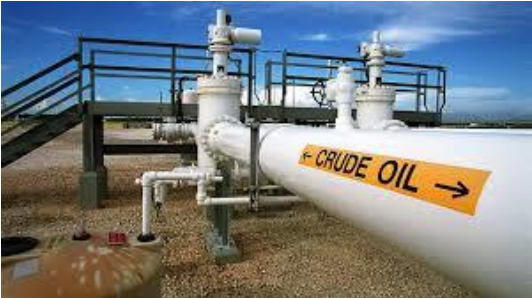
In the wake of crude oil volatility caused by the West Asia conflict, India’s ethanol manufacturers are advocating for an increase in the blending ratio beyond the current 20% (E20) mandate. While the program has significantly reduced import bills, it raises critical questions regarding long-term agricultural sustainability and national food security.
Key Summary Points
• Progress in Blending: India has achieved a remarkable leap in ethanol blending, rising from 1.5% a decade ago to 20% in 2025. This transition currently replaces approximately 45 million barrels of imported crude oil annually.
• Economic and Environmental Impact: The Petroleum Ministry estimates savings of ₹1.44 trillion between 2014 and 2025, alongside a carbon dioxide emission reduction equivalent to planting 300 million trees.
• Industry Push for E27 and Flex-Fuel: With an installed capacity of 20 billion litres (nearly double the 11 billion required for E20), manufacturers are lobbying for a 27% blending ratio and the mandatory adoption of Flex-Fuel Vehicles (FFVs).
• Agricultural Shift: High procurement prices have led to a \'crop shift,\' with area under maize, rice, and sugarcane increasing by 20%, 9%, and 13% respectively, while pulses and oilseeds cultivation has declined.
• Sustainability Concerns: The Economic Survey 2026 warns that incentivizing water-intensive crops for fuel could deplete water tables, increase the chemical fertilizer subsidy burden, and deepen India\'s dependence on imported edible oils.
• The EV Alternative: While ethanol addresses internal combustion engines, the slow adoption of Electric Vehicles (EVs)—currently at only 3% for passenger cars—remains a hurdle in achieving the 30% sales target by 2030.
Additional Important Keypoints
• Vehicle Compatibility: Older vehicles (pre-2021) face efficiency losses and potential hardware damage due to the corrosive nature of high-ethanol blends, a technical challenge for the existing fleet.
• Revenue for Farmers: The ethanol program currently generates an annual farm revenue of approximately ₹40,000 crore, providing a reliable income stream for sugarcane and grain farmers.
• Energy Sovereignty: Higher blending is viewed as a strategic tool to insulate the Indian economy from geopolitical shocks in the Middle East that drive up global Brent crude prices.
Constitutional & Legal Provisions
• Article 48A (DPSP): Mandates the State to protect and improve the environment; ethanol blending serves as a tool for reducing vehicular pollution.
• Article 39(b): Directs that the ownership and control of material resources are distributed to subserve the common good, justifying the diversion of food grains for energy security.
• National Policy on Biofuels, 2018 (Amended 2022): The primary regulatory framework that advanced the target for 20% ethanol blending from 2030 to the 2025-26 supply year.
• Industries (Development and Regulation) Act, 1951: Provides the legal basis for the central government to regulate the production and distribution of ethanol.
Definition of Key Words
• Flex-Fuel Vehicles (FFVs): Vehicles equipped with an internal combustion engine capable of running on any blend of gasoline and ethanol, up to 83% or even 100% (E100).
• First-Generation (1G) Ethanol: Biofuel produced directly from food crops like sugarcane juice, molasses, maize, and damaged food grains.
• Agri-Inflation: A rise in the price of agricultural commodities; a risk associated with diverting significant portions of food crops to fuel production.
Conclusion
The ethanol blending program is a double-edged sword for India. While it successfully addresses the immediate \'energy trilemma\' of security, equity, and sustainability, it inadvertently creates a \'food vs. fuel\' conflict. For a balanced trajectory, India must transition toward Second-Generation (2G) ethanol (made from agricultural waste) to ensure that energy independence does not come at the cost of nutritional security or ecological degradation.


Address : 506, 3rd EYE THREE (III), Opp. Induben Khakhrawala, Girish Cold Drink Cross Road, CG Road, Navrangpura, Ahmedabad, 380009.
Mobile : 8469231587 / 9586028957
Telephone : 079-40098991
E-mail: dics.upsc@gmail.com
Address: A-306, The Landmark, Urjanagar-1, Opp. Spicy Street, Kudasan – Por Road, Kudasan, Gandhinagar – 382421
Mobile : 9723832444 / 9723932444
E-mail: dics.gnagar@gmail.com
Address: 2nd Floor, 9 Shivali Society, L&T Circle, opp. Ratri Bazar, Karelibaugh, Vadodara, 390018
Mobile : 9725692037 / 9725692054
E-mail: dics.vadodara@gmail.com
Address: 403, Raj Victoria, Opp. Pal Walkway, Near Galaxy Circle, Pal, Surat-394510
Mobile : 8401031583 / 8401031587
E-mail: dics.surat@gmail.com
Address: 303,305 K 158 Complex Above Magson, Sindhubhavan Road Ahmedabad-380059
Mobile : 9974751177 / 8469231587
E-mail: dicssbr@gmail.com
Address: 57/17, 2nd Floor, Old Rajinder Nagar Market, Bada Bazaar Marg, Delhi-60
Mobile : 9104830862 / 9104830865
E-mail: dics.newdelhi@gmail.com