Ahmedabad
(Head Office)Address : 506, 3rd EYE THREE (III), Opp. Induben Khakhrawala, Girish Cold Drink Cross Road, CG Road, Navrangpura, Ahmedabad, 380009.
Mobile : 8469231587 / 9586028957
E-mail: dics.upsc@gmail.com

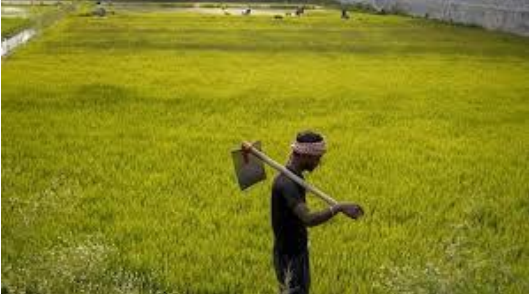
Summary of Key Highlights • Strategic Formation: The Maharashtra government has established a 10-member special task force, led by the Commissioner of Agriculture, to tackle the dual challenges of climate-induced agricultural distress and the rising trend of farmer suicides.• Scope of Study: The committee is mandated to investigate a multi-dimensional matrix of causes, including social, economic, psychological, and technical agricultural factors that contribute to rural mental health crises. • Proactive Prevention Model: Moving away from a \'post-facto compensation\' approach, the task force focuses on early intervention, income enhancement, and stabilizing farm livelihoods before distress reaches a critical stage. • Nashik Model Scalability: The initiative draws inspiration from a 2019 pilot project in Nashik district, which successfully reduced suicide rates through localized support systems and is now being adapted at the state level. • Integrated Support Systems: The framework aims to converge existing welfare schemes with new mental health support protocols, involving NGOs and semi-governmental bodies for ground-level implementation. • Data-Driven Intervention: With Maharashtra recording 781 suicides in the first nine months of 2025, the task force emphasizes improving the credit distribution mechanism, irrigation management, and crop insurance efficacy. Key Definitions • Agrarian Distress: A pervasive socio-economic condition characterized by low productivity, high debt, and lack of remunerative prices, leading to a decline in the standard of living for the farming community. • Climate Resilience in Agriculture: The capacity of agricultural systems to absorb and recover from climatic shocks (like unseasonal rain or drought) while maintaining productivity. • Tele MANAS: The \'Tele Mental Health Assistance and Networking Across States\' initiative, a 24/7 toll-free helpline (14416) providing mental health support, now being integrated into farm distress protocols. Constitutional & Legal Provisions • Article 47 (DPSP): Directs the State to raise the level of nutrition and the standard of living of its people and the improvement of public health, which includes the mental well-being of the agrarian workforce. • Article 38: The State shall strive to promote the welfare of the people by securing a social order in which justice—social, economic, and political—shall inform all institutions of national life. • Article 21: The Right to Life includes the right to livelihood and a dignified existence; the Supreme Court has often linked farmer welfare to this fundamental right. • The Mental Healthcare Act, 2017: Provides the legal framework for the right to access mental healthcare services, essential for the \'psychological support\' pillar of the task force. Four-Point Integrated Approach

Important Keypoints for UPSC • Vidarbha & Marathwada Crisis: These regions remain the epicenters of distress; the task force\'s regional action plans are critical for these specific agro-climatic zones. • The Debt Trap: Indebtedness remains a primary trigger; the task force\'s focus on \'mediator-free markets\' aims to increase the farmer\'s share in the consumer rupee. • Institutional Credit vs. Moneylenders: A significant percentage of suicides are linked to informal debt; improving formal credit reach is a core task force objective. • Climate Adaptation: The shift toward heat-tolerant and short-duration varieties of pulses and millets is being promoted as a long-term mitigation strategy. Conclusion The formation of this task force represents a paradigm shift from reactive governance to proactive resiliencebuilding. By treating farmer suicides as a complex socio-psychological and environmental issue rather than just a financial one, Maharashtra seeks to build a sustainable model that balances economic viability with human well-being in an era of climate uncertainty. UPSC Relevance • GS Paper II: Welfare schemes for vulnerable sections of the population; Issues relating to the development and management of Social Sector/Services relating to Health and Agriculture. • GS Paper III: Issues related to direct and indirect farm subsidies and minimum support prices; Public Distribution System; Land Reforms; Disaster Management (Climate Change). • Ethics (GS Paper IV): Empathy and compassion towards the weaker sections; Public service values and Ethics in Public administration.


Address : 506, 3rd EYE THREE (III), Opp. Induben Khakhrawala, Girish Cold Drink Cross Road, CG Road, Navrangpura, Ahmedabad, 380009.
Mobile : 8469231587 / 9586028957
E-mail: dics.upsc@gmail.com
Address: A-306, The Landmark, Urjanagar-1, Opp. Spicy Street, Kudasan – Por Road, Kudasan, Gandhinagar – 382421
Mobile : 9723832444 / 9723932444
E-mail: dics.gnagar@gmail.com
Address: 2nd Floor, 9 Shivali Society, L&T Circle, opp. Ratri Bazar, Karelibaugh, Vadodara, 390018
Mobile : 9725692037 / 9725692054
E-mail: dics.vadodara@gmail.com
Address: 403, Raj Victoria, Opp. Pal Walkway, Near Galaxy Circle, Pal, Surat-394510
Mobile : 8401031583 / 8401031587
E-mail: dics.surat@gmail.com
Address: 303,305 K 158 Complex Above Magson, Sindhubhavan Road Ahmedabad-380059
Mobile : 9974751177 / 8469231587
E-mail: dicssbr@gmail.com
Address: 57/17, 2nd Floor, Old Rajinder Nagar Market, Bada Bazaar Marg, Delhi-60
Mobile : 9104830862 / 9104830865
E-mail: dics.newdelhi@gmail.com