

Ahmedabad
(Head Office)Address : 506, 3rd EYE THREE (III), Opp. Induben Khakhrawala, Girish Cold Drink Cross Road, CG Road, Navrangpura, Ahmedabad, 380009.
Mobile : 8469231587 / 9586028957
Telephone : 079-40098991
E-mail: dics.upsc@gmail.com

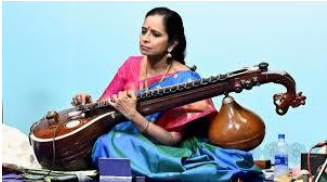
• Centenary Milestone: The Music Academy, Chennai, will host its 100th Annual Conference and Concerts (December 2026–January 2027). This landmark event celebrates a century of preserving and promoting the Carnatic music tradition and the fine arts. • Sangita Kalanidhi Recipient: Renowned Saraswati Veena exponent Jayanthi Kumaresh has been selected for the prestigious Sangita Kalanidhi award. This is significant as a veena artiste is receiving this honour after a hiatus of 34 years, coinciding with the centenary of her guru, S. Balachander. • Nritya Kalanidhi Award: Eminent Bharatanatyam dancer Narendra G. will be conferred with the Nritya Kalanidhi award, which recognizes excellence in the field of Indian classical dance. • Academic Leadership: As the Sangita Kalanidhidesignate, Jayanthi Kumaresh will preside over the academic sessions of the conference, which serve as a platform for scholarly discussions, demonstrations, and the evolution of Carnatic musicology. • Diverse Recognition: The Academy has also announced awards for other maestros, including vocalists Sugandha Kalamegam (Sangita Kala Acharya), mridangam player Thrissur C. Narendran, and various experts in musicology and dance accompaniment, reflecting a holistic approach to the performing arts. • National Instrument Focus: The award highlights the Saraswati Veena, often regarded as India’s national instrument. Jayanthi Kumaresh’s work in increasing the instrument’s popularity and her crossgenre collaborations are central to her selection for this centennial honour. Key Definitions • Sangita Kalanidhi: Widely considered the highest accolade in the field of Carnatic music, awarded annually by the Music Academy, Chennai. The recipient presides over the annual conference. • Saraswati Veena: A large plucked string instrument used in Carnatic classical music. It is a chordophone with four main strings and three drone strings, characterized by its deep, resonant tone. • Sadas: The final convocation or assembly held on January 1st, where the formal titles and awards are conferred upon the selected artistes in the presence of dignitaries. Constitutional and Legal Provisions • Article 29(1): Protects the right of any section of citizens to conserve their distinct language, script, or culture. The Music Academy’s role in preserving Carnatic music is an exercise in cultural conservation. • Article 51A(f): It is a Fundamental Duty of every Indian citizen to value and preserve the rich heritage of the country’s composite culture. • UNESCO Creative Cities Network (UCCN): Chennai is a member of the UCCN under the \'Music\' category (designated in 2017). The Music Academy’s annual \'December Season\' is a primary reason for this international recognition. • Copyright Act, 1957: Protects the original musical works and performances of classical artistes, ensuring the intellectual property rights of composers and performers are upheld in the digital and physical realms. Additional Key Points for Examination • The Lalgudi Legacy: Jayanthi Kumaresh belongs to the illustrious Lalgudi G. Jayaraman family, showcasing the \'Guru-Shishya Parampara\' (teacher-disciple tradition) where musical knowledge is passed through generations. • New Award Categories: To mark the 100th year, the Academy has instituted new awards like the Nritya Kala Acharya and specific awards for Dance Musicians (Vocal and Instrumental), emphasizing the integral role of support artistes. • Musicology: The inclusion of the Musicologist Award highlights that Indian classical music is not just a performing art but a rigorous academic discipline involving historical research and technical analysis. Conclusion The conferment of the Sangita Kalanidhi on Jayanthi Kumaresh during the Music Academy’s 100th conference is a symbolic marriage of tradition and revival. By honoring a veena player during this milestone year, the Academy reinforces the foundational role of the veena in Indian aesthetics. Such institutions and awards are vital for the \'intangible cultural heritage\' of India, ensuring that classical forms remain dynamic and relevant in a globalized world. UPSC Relevance • GS Paper I: Indian Culture - Salient aspects of Art Forms, Literature, and Architecture from ancient to modern times (specifically Carnatic music and Bharatanatyam). • GS Paper II: Management of Social Sector/Services relating to Education, Human Resources, and Culture. • Prelims: Identifying various classical instruments (Veena, Mridangam, Nagaswaram), regional music traditions, and the significance of the Madras Music Academy in the socio-cultural history of South India.


Address : 506, 3rd EYE THREE (III), Opp. Induben Khakhrawala, Girish Cold Drink Cross Road, CG Road, Navrangpura, Ahmedabad, 380009.
Mobile : 8469231587 / 9586028957
Telephone : 079-40098991
E-mail: dics.upsc@gmail.com
Address: A-306, The Landmark, Urjanagar-1, Opp. Spicy Street, Kudasan – Por Road, Kudasan, Gandhinagar – 382421
Mobile : 9723832444 / 9723932444
E-mail: dics.gnagar@gmail.com
Address: 2nd Floor, 9 Shivali Society, L&T Circle, opp. Ratri Bazar, Karelibaugh, Vadodara, 390018
Mobile : 9725692037 / 9725692054
E-mail: dics.vadodara@gmail.com
Address: 403, Raj Victoria, Opp. Pal Walkway, Near Galaxy Circle, Pal, Surat-394510
Mobile : 8401031583 / 8401031587
E-mail: dics.surat@gmail.com
Address: 303,305 K 158 Complex Above Magson, Sindhubhavan Road Ahmedabad-380059
Mobile : 9974751177 / 8469231587
E-mail: dicssbr@gmail.com
Address: 57/17, 2nd Floor, Old Rajinder Nagar Market, Bada Bazaar Marg, Delhi-60
Mobile : 9104830862 / 9104830865
E-mail: dics.newdelhi@gmail.com