




Ahmedabad
(Head Office)Address : 506, 3rd EYE THREE (III), Opp. Induben Khakhrawala, Girish Cold Drink Cross Road, CG Road, Navrangpura, Ahmedabad, 380009.
Mobile : 8469231587 / 9586028957
Telephone : 079-40098991
E-mail: dics.upsc@gmail.com

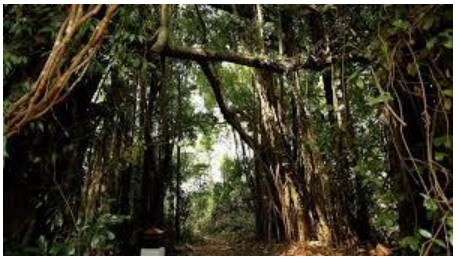
• Initiation of Restoration Program: The Kerala State Biodiversity Board (KSBB) has launched a pilot restoration project for sacred groves, focusing on reviving these culturally and ecologically significant sites in collaboration with local Biodiversity Management Committees (BMCs).
• Strategic Site Selection: In the initial phase, five specific groves have been identified across various districts: Ezhikkara (Ernakulam), Pattanchery (Palakkad), Villiappally (Kozhikode), Iritty (Kannur), and Uduma (Kasaragod).
• Core Conservation Activities: The project entails comprehensive biodiversity assessments, the identification of endangered species, the removal of invasive flora and plastic waste, and the rejuvenation of existing water bodies within the groves.
• Establishment of Kavu Nurseries: A specialized component involves creating kavu nurseries to propagate indigenous plant species specifically found in sacred groves, alongside the implementation of bio-fencing using native plants to protect the perimeter.
• Addressing Ecological Decline: The intervention seeks to counter the degradation caused by developmental pressures and evolving socio-cultural practices, which have led to a decline in the size and ecological health of these miniature forests.
• Reforestation Efforts: For effective ecological restoration, over 100 native and threatened species have been cataloged, with approximately 3,000 saplings slated for planting at the selected pilot sites. Key Definitions
• Sacred Groves (Kavu): Community-protected forest fragments of varying sizes, which are usually of significant religious importance to local communities and often harbor rich biodiversity.
• Biodiversity Management Committees (BMCs): Local bodies constituted under the Biological Diversity Act for the purpose of promoting conservation, sustainable use, and documentation of biological diversity.
• Bio-fencing: A method of creating a boundary using a dense growth of indigenous plants or hedges to prevent encroachment and protect the ecosystem naturally.
Constitutional & Legal Provisions
• Article 48A (DPSP): Mandates the State to protect and improve the environment and to safeguard the forests and wildlife of the country.
• Article 51A(g) (Fundamental Duties): Imposes a duty on every citizen of India to protect and improve the natural environment, including forests, lakes, rivers, and wildlife.
• Biological Diversity Act, 2002: The primary legal framework under which the KSBB operates to conserve biological resources and ensure fair and equitable sharing of benefits.
Additional Keypoints
• Ecological Services: Sacred groves act as critical carbon sinks, help in groundwater recharge (rejuvenation of ponds), and prevent soil erosion.
• Medicinal Reservoir: These ecosystems are repositories of rare, endemic, and medicinal plant species that are often lost in larger commercial forests.
• Local Participation: The reliance on BMCs ensures that conservation is bottom-up, leveraging traditional knowledge and community stewardship for long-term sustainability.
Conclusion
The restoration of sacred groves in Kerala represents a vital shift towards decentralised conservation. By combining traditional cultural reverence with scientific ecological practices—such as invasive species management and native plant propagation—the project addresses the twin challenges of biodiversity loss and habitat fragmentation. Such initiatives are essential for maintaining the ecological balance of the Western Ghats and preserving the state\'s unique natural heritage.
UPSC Relevance
• GS Paper III: Conservation, environmental pollution and degradation, environmental impact assessment; biodiversity hotspots and their preservation.
• GS Paper I: Social empowerment and communal harmony (sacred groves as symbols of community-led conservation and cultural identity).
• Prelims: Specific locations of pilot sites, functions of BMCs, and the role of State Biodiversity Boards under the Biological Diversity Act, 2002.


Address : 506, 3rd EYE THREE (III), Opp. Induben Khakhrawala, Girish Cold Drink Cross Road, CG Road, Navrangpura, Ahmedabad, 380009.
Mobile : 8469231587 / 9586028957
Telephone : 079-40098991
E-mail: dics.upsc@gmail.com
Address: A-306, The Landmark, Urjanagar-1, Opp. Spicy Street, Kudasan – Por Road, Kudasan, Gandhinagar – 382421
Mobile : 9723832444 / 9723932444
E-mail: dics.gnagar@gmail.com
Address: 2nd Floor, 9 Shivali Society, L&T Circle, opp. Ratri Bazar, Karelibaugh, Vadodara, 390018
Mobile : 9725692037 / 9725692054
E-mail: dics.vadodara@gmail.com
Address: 403, Raj Victoria, Opp. Pal Walkway, Near Galaxy Circle, Pal, Surat-394510
Mobile : 8401031583 / 8401031587
E-mail: dics.surat@gmail.com
Address: 303,305 K 158 Complex Above Magson, Sindhubhavan Road Ahmedabad-380059
Mobile : 9974751177 / 8469231587
E-mail: dicssbr@gmail.com
Address: 57/17, 2nd Floor, Old Rajinder Nagar Market, Bada Bazaar Marg, Delhi-60
Mobile : 9104830862 / 9104830865
E-mail: dics.newdelhi@gmail.com