Ahmedabad
(Head Office)Address : 506, 3rd EYE THREE (III), Opp. Induben Khakhrawala, Girish Cold Drink Cross Road, CG Road, Navrangpura, Ahmedabad, 380009.
Mobile : 8469231587 / 9586028957
E-mail: dics.upsc@gmail.com

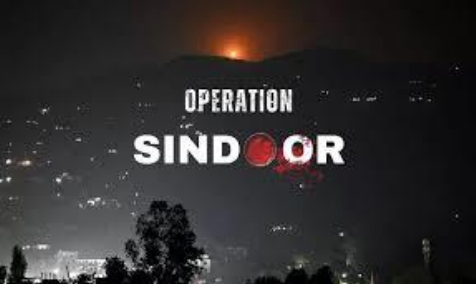
The visit of Admiral Samuel J. Paparo, Commander of the U.S. Indo-Pacific Command (INDO-PACOM), to New Delhi on February 15, 2026, has underscored a significant shift in global recognition of India\'s military capabilities. Admiral Paparo lauded the \'tactical execution\' and \'strategic restraint\' of Operation Sindoor (May 2025), a non-contact, high-tech military campaign launched by India against terror infrastructure in Pakistan. This endorsement signals a deepening \'unity of purpose\' between the world\'s oldest and largest democracies to maintain peace through strength in a volatile Indo-Pacific. • Recognition of Operation Sindoor: Admiral Paparo praised the precision and introspection following the May 2025 operation, which was triggered by the Pahalgam terror attack (April 2022/2025). He highlighted India\'s ability to conduct punitive strikes while managing the escalation ladder, effectively calling it a model for modern \'strategic restraint.\'• Technological Lessons in Modern Warfare: The INDO-PACOM chief noted the emergence of complex \'kill chains\' in the 21st century, where geography is secondary to the integration of sensors, AI, and space-based intelligence. He specifically flagged the use of Chinese-origin weaponry and guidance systems by Pakistan as a matter for \'constant vigilance.\' • Deepening Defense Acquisition: The relationship has transitioned from a buyer-seller model to a strategic partnership involving high-end platforms. Key mentions included the GE-414 jet engines, MQ-9B SkyGuardian drones, and MH-60R Romeo helicopters, alongside collaborative efforts in undersea domain awareness (UDA). • AI as a Security Frontier: Both nations have identified Artificial Intelligence (AI) as a dual-use critical technology. While the India AI Impact Summit 2026 focuses on social good, Admiral Paparo emphasized its military applications in enhancing lethality and survivability, proposing deeper cooperation under the iCET (initiative on Critical and Emerging Technology) framework. • The Indo-Pacific Pivot: The partnership is increasingly viewed through the lens of countering \'coercion and aggression\' (an indirect reference to China). INDO-PACOM recognizes India as a \'net security provider\' in the Indian Ocean Region, essential for ensuring freedom of navigation and a rules-based order. • Shift in Security Doctrine: Operation Sindoor marked the establishment of a \'New Normal\' where India utilizes the space below the nuclear threshold to strike terror targets deep within the mainland. This shift from \'reactive restraint\' to \'deterrence by punishment\' has been acknowledged by the U.S. as a sovereign and legitimate exercise of national interest. Key Definitions • Kill Chain: A military concept that identifies the structure of an attack: find, fix, track, target, engage, and assess. Modern \'long-range kill chains\' integrate space and cyber domains. • Operation Sindoor: A five-day military campaign (May 7–11, 2025) involving tri-services synergy to dismantle nine major terror camps in Pakistan following the Pahalgam attack. • INDO-PACOM: The oldest and largest of the United States\' unified combatant commands, responsible for the Indo-Pacific region, including the Indian Ocean. • Net Security Provider: A nation that addresses the security concerns of its neighbors and the wider region through capacity building, maritime patrol, and disaster relief. Constitutional & Legal Provisions • Article 51: Directive Principle of State Policy (DPSP) that mandates India to promote international peace and security and maintain just and honorable relations between nations. • Article 253: Empowers Parliament to make laws for implementing international treaties and agreements, which governs the legal framework for defense pacts like LEMOA, BECA, and COMCASA. • The Aircraft Act, 1934 & The IT Act, 2000: Legislative frameworks governing the use of drones (UAVs) and cybersecurity/AI applications in defense. • Section 132 of the Bharatiya Nagarik Suraksha Sanhita (BNSS): Provisions related to the use of military force for the maintenance of public order and national integrity. Additional Key Points • Tri-Service Synergy: Operation Sindoor was the first major demonstration of \'jointness\' after the appointment of the Chief of Defence Staff (CDS), involving the integrated Air Command and Control System (IACCS).• Chinese Footprint: The presence of Chinese technology in Pakistan’s air defense and missile guidance systems has prompted India and the U.S. to focus on Electronic Warfare (EW) and counter-space capabilities. • Maritime Domain Awareness (MDA): Both countries are expanding the Information Fusion CentreIndian Ocean Region (IFC-IOR) collaboration to track \'dark shipping\' and undersea threats. Conclusion The commendation of Operation Sindoor by the U.S. INDO-PACOM chief represents a global validation of India\'s matured military doctrine. By balancing punitive intent with tactical restraint, India has demonstrated that it can call out \'nuclear brinkmanship\' without triggering full-scale war. As defense ties move toward a \'steeply upward trajectory,\' the focus will shift from hardware acquisition to the co-development of AI-driven kill chains and maritime security, cementing the India-U.S. axis as the bedrock of Indo-Pacific stability. UPSC Relevance • GS Paper II: India and its neighborhood- relations; Bilateral, regional and global groupings and agreements involving India and/or affecting India’s interests. • GS Paper III: Security challenges and their management in border areas; Linkages of organized crime with terrorism; Challenges to internal security through communication networks; Science and Technology- developments and applications in defense. • Mains Context: Questions on \'India\'s New Security Doctrine,\' \'Strategic Autonomy vs. Strategic Partnership,\' and \'Role of AI in Modern Warfare.\'


Address : 506, 3rd EYE THREE (III), Opp. Induben Khakhrawala, Girish Cold Drink Cross Road, CG Road, Navrangpura, Ahmedabad, 380009.
Mobile : 8469231587 / 9586028957
E-mail: dics.upsc@gmail.com
Address: A-306, The Landmark, Urjanagar-1, Opp. Spicy Street, Kudasan – Por Road, Kudasan, Gandhinagar – 382421
Mobile : 9723832444 / 9723932444
E-mail: dics.gnagar@gmail.com
Address: 2nd Floor, 9 Shivali Society, L&T Circle, opp. Ratri Bazar, Karelibaugh, Vadodara, 390018
Mobile : 9725692037 / 9725692054
E-mail: dics.vadodara@gmail.com
Address: 403, Raj Victoria, Opp. Pal Walkway, Near Galaxy Circle, Pal, Surat-394510
Mobile : 8401031583 / 8401031587
E-mail: dics.surat@gmail.com
Address: 303,305 K 158 Complex Above Magson, Sindhubhavan Road Ahmedabad-380059
Mobile : 9974751177 / 8469231587
E-mail: dicssbr@gmail.com
Address: 57/17, 2nd Floor, Old Rajinder Nagar Market, Bada Bazaar Marg, Delhi-60
Mobile : 9104830862 / 9104830865
E-mail: dics.newdelhi@gmail.com