

Ahmedabad
(Head Office)Address : 506, 3rd EYE THREE (III), Opp. Induben Khakhrawala, Girish Cold Drink Cross Road, CG Road, Navrangpura, Ahmedabad, 380009.
Mobile : 8469231587 / 9586028957
E-mail: dics.upsc@gmail.com

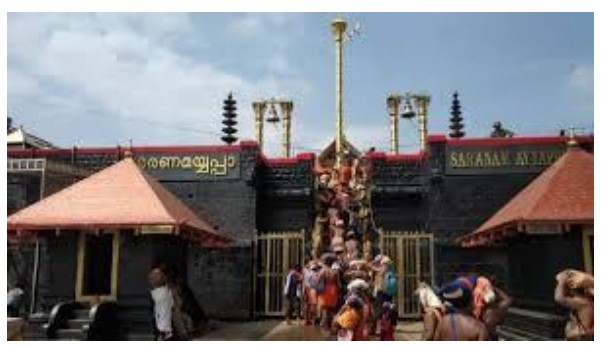
• Separation of Powers in Reform: The Centre argued before a nine-judge Supreme Court bench that the Constitution does not establish the judiciary as a reformatory overlord for the religious traditions of 1.4 billion citizens.
• Legislative Prerogative: The government contended that the mechanism of religious reform was intentionally entrusted to the legislature to ensure such changes reflect the will of the people and evolve at a democratic pace.
• Risks of Judicial Intervention: The Centre warned that if courts reform religion in the absence of legislation, it creates a situation with no limit on the judicial reformation of religious traditions, potentially opening every faith institutional arrangements to permanent constitutional challenge.
• Constitutional Intent of Article 25(2)(b): Solicitor General Tushar Mehta argued that Article 25(2)(b) specifically empowers the legislature, not courts, to frame laws for social welfare and reform of Hindu religious institutions.
• Judicial Counter-Argument: Justice Bagchi emphasized that the court’s role is to ensure constitutionalism prevails over majoritarianism, acting as a check even if a majority supports a particular religious practice that violates constitutional principles.
• Status of Denomination: The government is pitching for denomination status for the devotees of Lord Ayyappa, which would grant the community greater autonomy in managing their internal religious affairs.
Key Definitions
• Religious Denomination: A collection of individuals having a common faith, a common organization, and designated by a distinctive name; under Article 26, they enjoy autonomy in matters of religion.
• Constitutionalism: The principle that government authority is derived from and limited by a body of fundamental law (the Constitution) to prevent arbitrary exercise of power.
• Lakshman Rekha: A metaphorical term used in Indian legal discourse to describe the boundary or limit that one branch of government (Judiciary, Executive, or Legislature) should not cross into the domain of another.
Constitutional and Legal Provisions
• Article 25(1): Guarantees freedom of conscience and the right to freely profess, practice, and propagate religion, subject to public order, morality, and health.
• Article 25(2)(b): Empowers the State to make laws providing for social welfare and reform or the throwing open of Hindu religious institutions of a public character to all classes and sections of Hindus.
• Article 26: Grants religious denominations the right to manage their own affairs in matters of religion, establish institutions, and own property.
Additional Keypoints
• The Majoritarianism Debate: The bench discussed whether leaving reform solely to the legislature risks majoritarianism, where the rights of minorities or dissenting individuals within a faith might be suppressed by the political will of the majority.
• Essential Religious Practices (ERP): While not explicitly named in the snippet, this reference case stems from the judicial doctrine used to determine which religious practices are central to a faith and protected from state interference.
Conclusion
The Sabarimala reference highlights a fundamental tension between judicial activism for social justice and the legislative prerogative for gradual religious reform. The Centre stand emphasizes a strict interpretation of the separation of powers, suggesting that lasting social change must originate from the representative legislature to be culturally acceptable. Conversely, the judiciary maintains its role as the ultimate guardian of constitutional values, ensuring that no tradition—regardless of its age or popularity—trumps individual fundamental rights.
UPSC Relevance
• GS Paper II (Polity): Separation of powers, structure and functioning of the Judiciary, and significant provisions related to fundamental rights (Articles 25-28).
• GS Paper I (Society): Secularism, communalism, and the role of religion in a democratic society.
• Ethics (GS IV): The conflict between traditional religious values and modern constitutional morality.


Address : 506, 3rd EYE THREE (III), Opp. Induben Khakhrawala, Girish Cold Drink Cross Road, CG Road, Navrangpura, Ahmedabad, 380009.
Mobile : 8469231587 / 9586028957
E-mail: dics.upsc@gmail.com
Address: A-306, The Landmark, Urjanagar-1, Opp. Spicy Street, Kudasan – Por Road, Kudasan, Gandhinagar – 382421
Mobile : 9723832444 / 9723932444
E-mail: dics.gnagar@gmail.com
Address: 2nd Floor, 9 Shivali Society, L&T Circle, opp. Ratri Bazar, Karelibaugh, Vadodara, 390018
Mobile : 9725692037 / 9725692054
E-mail: dics.vadodara@gmail.com
Address: 403, Raj Victoria, Opp. Pal Walkway, Near Galaxy Circle, Pal, Surat-394510
Mobile : 8401031583 / 8401031587
E-mail: dics.surat@gmail.com
Address: 303,305 K 158 Complex Above Magson, Sindhubhavan Road Ahmedabad-380059
Mobile : 9974751177 / 8469231587
E-mail: dicssbr@gmail.com
Address: 57/17, 2nd Floor, Old Rajinder Nagar Market, Bada Bazaar Marg, Delhi-60
Mobile : 9104830862 / 9104830865
E-mail: dics.newdelhi@gmail.com