



Ahmedabad
(Head Office)Address : 506, 3rd EYE THREE (III), Opp. Induben Khakhrawala, Girish Cold Drink Cross Road, CG Road, Navrangpura, Ahmedabad, 380009.
Mobile : 8469231587 / 9586028957
E-mail: dics.upsc@gmail.com

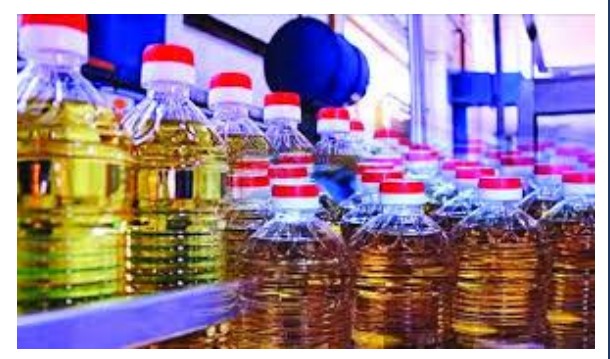
• Prime Minister Call for Reduction: Prime Minister Narendra Modi has urged Indian households to reduce cooking oil consumption by approximately 10% to improve public health and alleviate pressure on the national economy.
• Rising Import Bill: India currently imports nearly 60% of its edible oil requirements, with the import bill surging from ₹72,000 crore in 2019-20 to over ₹1.6 trillion in the 2024-25 oil year.
• Global Price Volatility: According to the FAO Food Price Index, global edible oil prices reached their highest level since July 2022 in April, driven by increased biofuel diversion in Indonesia and Malaysia and rising shipping costs due to West Asia conflicts.
• Structural Yield Gaps: India oilseed productivity remains significantly lower than global averages; for instance, soybean yields in Brazil and the US are three to four times higher than those in India.
• Domestic Cultivation Challenges: Oilseed crops are primarily grown by marginal farmers in rain-fed areas, and those with irrigation facilities often shift to cereals due to lower risks and better price support mechanisms.
• Governmental Strategic Goals: The Centre aims to meet 72% of domestic edible oil demand by 2031 through the National Mission on Edible Oils – Oil Palm (NMEO-OP) and by promoting high-yielding varieties.
Key Definitions
• Current Account Deficit (CAD): The shortfall between a country total exports and its total imports of goods, services, and transfers.
• Oil Year: The specific annual cycle used for accounting in the vegetable oil industry, which in India runs from November to October.
• Biofuel Diversion: The process where food crops (like palm oil) are used for fuel production instead of consumption, often increasing food prices when crude oil prices are high.
Constitutional and Legal Provisions
• Article 47: Directive Principle of State Policy (DPSP) that mandates the State to raise the level of nutrition and the standard of living and to improve public health.
• Article 301-305: Trade and commerce provisions within India that influence the movement and regulation of essential commodities like edible oils.
• Essential Commodities Act, 1955: Empowers the government to regulate the production, supply, and distribution of essential commodities (including edible oils) to prevent hoarding and price spikes.
Key Implementation Barriers
• The Inflation Paradox: While low import duties help contain retail food inflation, they simultaneously discourage domestic farmers by making locally produced oilseeds uncompetitive against cheaper imports.
• Irrigation Constraints: A lack of assured irrigation limits the productivity of traditional Indian oilseeds like mustard, sesame, and groundnut compared to international staples.
Conclusion
The push to reduce edible oil imports is a critical step toward achieving Atmanirbharta (self-reliance) in the agriculture sector. Success hinges on bridging the productivity gap through better seed technology and irrigation, while carefully balancing the trade-off between consumer price stability (food inflation) and remunerative prices for domestic oilseed farmers.
UPSC Relevance
• GS Paper III (Economy & Agriculture): Issues related to direct and indirect farm subsidies and minimum support prices; Public Distribution System; food security; and cropping patterns.
• GS Paper III (Environment/Energy): The nexus between edible oils and biofuels.
• Prelims: Specifics of the National Mission on Edible Oils – Oil Palm (NMEO-OP), FAO Food Price Index, and the impact of CAD and currency depreciation on the economy.


Address : 506, 3rd EYE THREE (III), Opp. Induben Khakhrawala, Girish Cold Drink Cross Road, CG Road, Navrangpura, Ahmedabad, 380009.
Mobile : 8469231587 / 9586028957
E-mail: dics.upsc@gmail.com
Address: A-306, The Landmark, Urjanagar-1, Opp. Spicy Street, Kudasan – Por Road, Kudasan, Gandhinagar – 382421
Mobile : 9723832444 / 9723932444
E-mail: dics.gnagar@gmail.com
Address: 2nd Floor, 9 Shivali Society, L&T Circle, opp. Ratri Bazar, Karelibaugh, Vadodara, 390018
Mobile : 9725692037 / 9725692054
E-mail: dics.vadodara@gmail.com
Address: 403, Raj Victoria, Opp. Pal Walkway, Near Galaxy Circle, Pal, Surat-394510
Mobile : 8401031583 / 8401031587
E-mail: dics.surat@gmail.com
Address: 303,305 K 158 Complex Above Magson, Sindhubhavan Road Ahmedabad-380059
Mobile : 9974751177 / 8469231587
E-mail: dicssbr@gmail.com
Address: 57/17, 2nd Floor, Old Rajinder Nagar Market, Bada Bazaar Marg, Delhi-60
Mobile : 9104830862 / 9104830865
E-mail: dics.newdelhi@gmail.com