
Ahmedabad
(Head Office)Address : 506, 3rd EYE THREE (III), Opp. Induben Khakhrawala, Girish Cold Drink Cross Road, CG Road, Navrangpura, Ahmedabad, 380009.
Mobile : 8469231587 / 9586028957
E-mail: dics.upsc@gmail.com

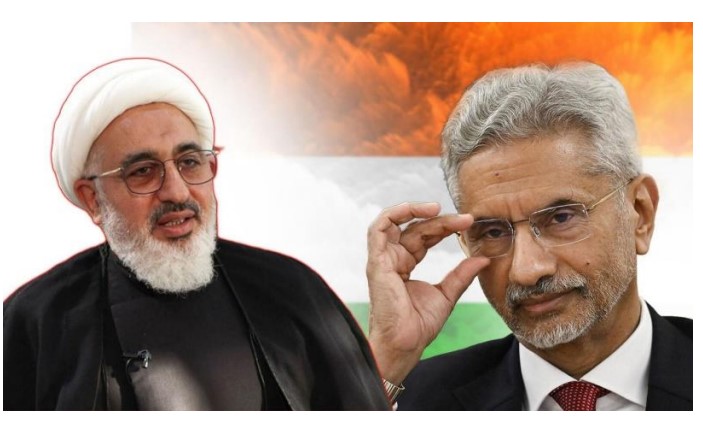
• Tehran Diplomatic Signal: For the first time, Iran has officially conveyed to New Delhi that it would welcome and work on a diplomatic initiative from India to de-escalate tensions in West Asia.
• Shift in Mediation Dynamics: Traditionally, countries like Egypt, Qatar, Oman, and recently Pakistan have acted as mediators between the US and Iran; however, Tehran now views India as a significant player capable of facilitating dialogue.
• Strategic Impartiality: Iran Deputy Foreign Minister, Kazem Gharibabadi, lauded India balanced view and impartiality, particularly in its role as the current chair of the BRICS grouping.
• BRICS Challenges: Consensus within the 11-member BRICS remains elusive, with internal divisions—specifically reported tensions with the UAE—preventing a unified declaration on the regional conflict.
• Strait of Hormuz Security: Amidst regional volatility, Iran is evaluating protocols for maritime services in the Strait of Hormuz but has explicitly designated India as a friendly nation, allowing the transit of 11 Indian vessels.
• India Principled Stand: While open to peace, New Delhi maintains a policy of not acting as a broker in global geopolitics, preferring substantive initiatives that align with its long-term strategic interests in the region.
Key Definitions
• Diplomatic Initiative: A proactive move by a state to influence a situation or resolve a conflict through negotiation, policy proposals, or international cooperation.
• Mediator: A neutral third party that facilitates communication and negotiation between disputing sides without engaging substantively in the core differences.
• Strait of Hormuz: A vital maritime chokepoint between the Persian Gulf and the Gulf of Oman, essential for global oil and gas supplies.
Constitutional and Legal Provisions
• Article 51: A Directive Principle of State Policy (DPSP) that mandates the State to promote international peace and security, maintain just and honorable relations between nations, and encourage settlement of international disputes by arbitration.
• Vienna Convention on Diplomatic Relations (1961): The international treaty that defines a framework for diplomatic relations between independent countries and specifies the privileges of a diplomatic mission.
• Maritime Zones Act, 1976: India legal framework defining its rights and jurisdiction over its territorial waters, contiguous zone, and exclusive economic zone (EEZ), relevant to protecting maritime trade in conflict zones.
Strategic Analysis & Keypoints
• India Link West Policy: This outreach aligns with India efforts to deepen engagement with West Asian powers like Iran, Saudi Arabia, and the UAE simultaneously.
• Energy Security: Given India\'s high dependence on energy imports passing through the Strait of Hormuz, any diplomatic success in this region directly secures India\'s economic stability.
• Chabahar Port Factor: India investment in the Chabahar port in Iran remains a cornerstone of its regional connectivity strategy, bypassing Pakistan to reach Central Asia.
Conclusion
As highlighted in Iran invitation for an Indian diplomatic initiative underscores New Delhi rising stature as a credible, neutral power in a polarized world. While India remains cautious about being labeled a broker, its potential as a facilitator could be instrumental in preventing further escalation in West Asia, thereby safeguarding its own energy security and regional connectivity projects.
UPSC Relevance
• GS Paper II (International Relations): Bilateral, regional, and global groupings and agreements involving India and/or affecting India interests; Effect of politics of developed and developing countries on India interests.
• GS Paper I: Regional geography and importance of maritime chokepoints like the Strait of Hormuz.
• Prelims: BRICS expansion, geographical location of the Strait of Hormuz, and India Connect Central Asia and Link West policies.


Address : 506, 3rd EYE THREE (III), Opp. Induben Khakhrawala, Girish Cold Drink Cross Road, CG Road, Navrangpura, Ahmedabad, 380009.
Mobile : 8469231587 / 9586028957
E-mail: dics.upsc@gmail.com
Address: A-306, The Landmark, Urjanagar-1, Opp. Spicy Street, Kudasan – Por Road, Kudasan, Gandhinagar – 382421
Mobile : 9723832444 / 9723932444
E-mail: dics.gnagar@gmail.com
Address: 2nd Floor, 9 Shivali Society, L&T Circle, opp. Ratri Bazar, Karelibaugh, Vadodara, 390018
Mobile : 9725692037 / 9725692054
E-mail: dics.vadodara@gmail.com
Address: 403, Raj Victoria, Opp. Pal Walkway, Near Galaxy Circle, Pal, Surat-394510
Mobile : 8401031583 / 8401031587
E-mail: dics.surat@gmail.com
Address: 303,305 K 158 Complex Above Magson, Sindhubhavan Road Ahmedabad-380059
Mobile : 9974751177 / 8469231587
E-mail: dicssbr@gmail.com
Address: 57/17, 2nd Floor, Old Rajinder Nagar Market, Bada Bazaar Marg, Delhi-60
Mobile : 9104830862 / 9104830865
E-mail: dics.newdelhi@gmail.com