




Ahmedabad
(Head Office)Address : 506, 3rd EYE THREE (III), Opp. Induben Khakhrawala, Girish Cold Drink Cross Road, CG Road, Navrangpura, Ahmedabad, 380009.
Mobile : 8469231587 / 9586028957
E-mail: dics.upsc@gmail.com

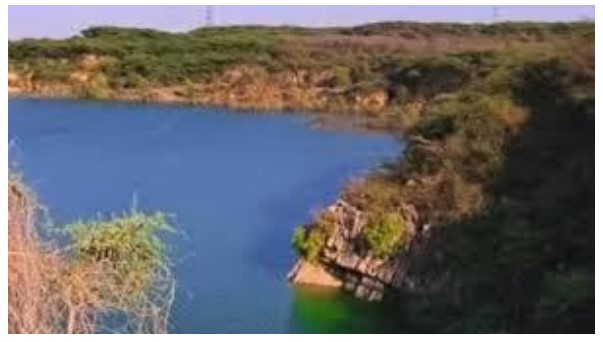
• Dominance of Invasive Flora: A 10-year management plan by the Wildlife Institute of India (WII) reveals that Prosopis juliflora, an invasive Mexican mesquite, now covers 63.48% (18.41 sq km) of the Asola Bhatti Wildlife Sanctuary.
• Threat to Native Ecosystems: Along with Lantana camara, these invasive species suppress native flora, alter habitat structures, and hinder groundwater recharge, posing a severe threat to the ecological recovery of the Aravalli habitat.
• Anthropogenic Pressures: The sanctuary faces significant stress from illegal encroachment (e.g., Sanjay Colony), waste dumping, greywater inflow, cattle entry, and the collection of fuelwood by fringe settlements.
• Wildlife Management Challenges: The massive influx of nearly 20,000 relocated Rhesus Macaques has exceeded the sanctuary natural carrying capacity, necessitating artificial feeding that costs nearly ₹1 crore annually.
• Administrative Gaps: The report highlights critical failures such as unscientific release of rescued animals, lack of standard operating procedures (SOPs), inadequate staff training, and poor inter-agency coordination.
• Proposed Restoration Strategy: The WII recommends a phased removal of invasive species coupled with intensive restoration using site-specific native vegetation like dhauk, palash, and gum acacia to stabilize soil and revive biodiversity.
Key Definitions
• Invasive Species: Non-native organisms that spread rapidly and cause significant environmental, economic, or human health harm by disrupting local ecosystems.
• Carrying Capacity: The maximum population size of a biological species that a specific environment can sustain indefinitely, given the food, habitat, water, and other available necessities.
• Biotic Pressure: Stress exerted on an ecosystem by living organisms, such as overgrazing by cattle or competition from invasive species.
Constitutional and Legal Provisions
• Article 48A: Directive Principle of State Policy (DPSP) mandating that the State shall endeavor to protect and improve the environment and safeguard the forests and wildlife of the country.
• Article 51A(g): Fundamental Duty of every citizen to protect and improve the natural environment, including forests, lakes, rivers, and wildlife.
• Wildlife (Protection) Act, 1972: Provides the legal framework for the declaration of Wildlife Sanctuaries and the management of protected areas.
• Environment (Protection) Act, 1986: Empowers the Central Government to take measures to protect and improve environmental quality and prevent pollution.
Ecological Context & Management Insights
• Impact of Prosopis juliflora: Introduced during the colonial era for afforestation, it has created monocultures that buffer local weather but ultimately combat desertification at the cost of native biodiversity.
• Restoration Flora: The plan suggests planting nitrogen-fixing and soil-binding species such as vetiver, munja, and babul to reclaim degraded land.
• Monitoring & Research: The WII emphasizes the need for continuous ecological monitoring and research-based management to address weak points in the current conservation framework.
Conclusion
The findings for Asola Bhatti, as detailed in the report underscore the fragile state of Delhi only wildlife sanctuary. Addressing the twin challenges of biological invasion and urban encroachment is vital for preserving the Aravalli Ridge role as a green lung for the National Capital Region.
UPSC Relevance
• GS Paper III (Environment): Conservation, environmental pollution and degradation, and environmental impact assessment.
• GS Paper II (Governance): Policy interventions for development in various sectors and issues arising out of their design and implementation.
• Prelims: Characteristics of invasive species (Lantana, Prosopis), Aravalli range ecology, and statutory bodies like the Wildlife Institute of India (WII).


Address : 506, 3rd EYE THREE (III), Opp. Induben Khakhrawala, Girish Cold Drink Cross Road, CG Road, Navrangpura, Ahmedabad, 380009.
Mobile : 8469231587 / 9586028957
E-mail: dics.upsc@gmail.com
Address: A-306, The Landmark, Urjanagar-1, Opp. Spicy Street, Kudasan – Por Road, Kudasan, Gandhinagar – 382421
Mobile : 9723832444 / 9723932444
E-mail: dics.gnagar@gmail.com
Address: 2nd Floor, 9 Shivali Society, L&T Circle, opp. Ratri Bazar, Karelibaugh, Vadodara, 390018
Mobile : 9725692037 / 9725692054
E-mail: dics.vadodara@gmail.com
Address: 403, Raj Victoria, Opp. Pal Walkway, Near Galaxy Circle, Pal, Surat-394510
Mobile : 8401031583 / 8401031587
E-mail: dics.surat@gmail.com
Address: 303,305 K 158 Complex Above Magson, Sindhubhavan Road Ahmedabad-380059
Mobile : 9974751177 / 8469231587
E-mail: dicssbr@gmail.com
Address: 57/17, 2nd Floor, Old Rajinder Nagar Market, Bada Bazaar Marg, Delhi-60
Mobile : 9104830862 / 9104830865
E-mail: dics.newdelhi@gmail.com