




Ahmedabad
(Head Office)Address : 506, 3rd EYE THREE (III), Opp. Induben Khakhrawala, Girish Cold Drink Cross Road, CG Road, Navrangpura, Ahmedabad, 380009.
Mobile : 8469231587 / 9586028957
E-mail: dics.upsc@gmail.com

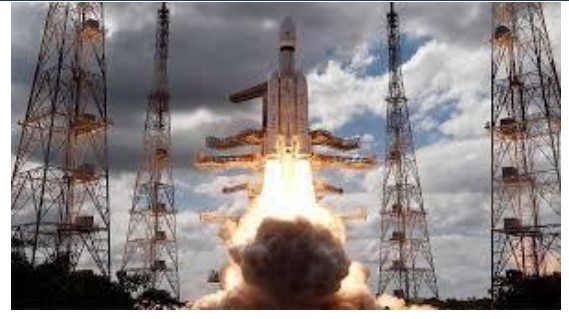
• Commercial Ramp-up: After successful development and trial phases, the Indian Space Research Organisation (ISRO) is set for a milestone year with five planned commercial missions of the Small Satellite Launch Vehicle (SSLV) in FY27.
• Strategic Objective: The SSLV is specifically designed to cater to the burgeoning global market for small satellites, offering on-demand launch services to Low Earth Orbit (LEO) with minimal turnaround time and infrastructure.
• Economic Projections: India space economy, currently valued at approximately $8.4 billion (2% of the global market), is projected to grow to $44 billion by 2033, aiming for an 8% global market share through such commercial ventures.
• Private Sector Participation: Mirroring the global NewSpace trend, two Indian private startups are also expected to launch their inaugural commercial small rocket missions in the current fiscal, signaling a shift toward a more inclusive domestic space ecosystem.
• Cost-Effectiveness: Small rockets are increasingly preferred by telecommunications (e.g., SpaceX, OneWeb) and surveillance firms as they allow for the deployment of satellite constellations in LEO at a fraction of the cost and risk associated with heavy-class launchers.
• Technological Maturation: This move comes nearly a decade after the SSLV inception and over two years since its last successful trial (SSLV-D2), marking the vehicle transition from an experimental platform to a reliable commercial workhorse.
Key Definitions & Concepts
• SSLV (Small Satellite Launch Vehicle): A three-stage all-solid vehicle with a capability to launch up to 500kg satellite mass into a 500km planar orbit.
• Low Earth Orbit (LEO): An orbit relatively close to Earth surface, typically at an altitude of less than 1,000 km but as low as 160 km above Earth, ideal for communication and remote sensing.
• On-Demand Launch: A service model where a rocket can be integrated and launched within a very short notice period (72 hours for SSLV), compared to months for larger rockets like PSLV or GSLV.
Constitutional & Legal Provisions
• Article 51A(h): Part of the Fundamental Duties, it encourages the development of scientific temper, humanism, and the spirit of inquiry and reform.
• Space Policy 2023: A landmark policy framework that enables end-to-end participation of Non-Government Entities (NGEs) in all domains of space activities, including building rockets and satellites.
• IN-SPACe (Indian National Space Promotion and Authorization Center): An autonomous agency under the Department of Space created to permit and oversee the activities of private enterprises in the space sector.
• NewSpace India Limited (NSIL): The commercial arm of ISRO, incorporated in 2019, which is primarily responsible for the commercial exploitation of ISRO’s research and development.
Additional Key Points for Analysis
• Market Dynamics: The shift toward Nano and Micro satellites (weighing between 1kg to 100kg) has created a supply-demand gap that the SSLV is uniquely positioned to fill due to its low launch cost.
• Global Positioning: By streamlining SSLV launches, India aims to compete with international players like Rocket Lab’s Electron, positioning itself as a cost-efficient global hub for satellite launches.
• Resource Optimization: Unlike the PSLV, which requires a large team and specialized assembly building, the SSLV can be assembled by a handful of people in a few days, allowing ISRO to focus its larger resources on deep-space missions like Gaganyaan and Chandrayaan.
Conclusion
ISRO transition of the SSLV to a full-scale commercial phase marks a significant evolution in India’s space strategy. By fostering a dual-track approach—where ISRO leads on heavy-lift and scientific missions while enabling commercial success in the small-launch segment—India is moving towardbecoming a dominant player in the global space economy. The success of these five missions will be a litmus test for the reliability of Indian space technology in a competitive international marketplace.
UPSC Relevance
• General Studies III: Science and Technology- developments and their applications and effects in everyday life; Achievements of Indians in science & technology; Indigenization of technology and developing new technology.
• General Studies II: Government policies and interventions for development in various sectors and issues arising out of their design and implementation.
• Prelims: Specifications of SSLV vs. PSLV; Roles of NSIL and IN-SPACe; India’s target share in the global space economy.


Address : 506, 3rd EYE THREE (III), Opp. Induben Khakhrawala, Girish Cold Drink Cross Road, CG Road, Navrangpura, Ahmedabad, 380009.
Mobile : 8469231587 / 9586028957
E-mail: dics.upsc@gmail.com
Address: A-306, The Landmark, Urjanagar-1, Opp. Spicy Street, Kudasan – Por Road, Kudasan, Gandhinagar – 382421
Mobile : 9723832444 / 9723932444
E-mail: dics.gnagar@gmail.com
Address: 2nd Floor, 9 Shivali Society, L&T Circle, opp. Ratri Bazar, Karelibaugh, Vadodara, 390018
Mobile : 9725692037 / 9725692054
E-mail: dics.vadodara@gmail.com
Address: 403, Raj Victoria, Opp. Pal Walkway, Near Galaxy Circle, Pal, Surat-394510
Mobile : 8401031583 / 8401031587
E-mail: dics.surat@gmail.com
Address: 303,305 K 158 Complex Above Magson, Sindhubhavan Road Ahmedabad-380059
Mobile : 9974751177 / 8469231587
E-mail: dicssbr@gmail.com
Address: 57/17, 2nd Floor, Old Rajinder Nagar Market, Bada Bazaar Marg, Delhi-60
Mobile : 9104830862 / 9104830865
E-mail: dics.newdelhi@gmail.com