

Ahmedabad
(Head Office)Address : 506, 3rd EYE THREE (III), Opp. Induben Khakhrawala, Girish Cold Drink Cross Road, CG Road, Navrangpura, Ahmedabad, 380009.
Mobile : 8469231587 / 9586028957
E-mail: dics.upsc@gmail.com

Core Summary
• Strategic Pause: U.S. President Donald Trump has paused Project Freedom, a maritime operation designed to escort merchant ships through the Strait of Hormuz, citing diplomatic progress with Tehran.
• Mediation Efforts: Pakistan has emerged as a key diplomatic intermediary, with both the U.S. and Iran exchanging proposals through Pakistani channels to finalize a complete and final agreement.
• Conditional Ceasefire: While active bombing has largely ceased since early April, the U.S. maintains a strict naval blockade on Iranian ports, using economic leverage to compel Iran toward a new deal.
• Conflict Timeline: The crisis escalated following U.S. and Israeli strikes starting February 28, 2026, leading Iran to effectively close the Strait of Hormuz—a vital global energy chokepoint.
• Security Risks: Despite the pause, recent hostilities included Iranian fire at U.S. destroyers and drone/missile attacks on UAE tankers, underscoring the volatility of the region maritime security.
• Diplomatic Warning: The U.S. administration has signaled that the pause is temporary; failure to reach a signed agreement will result in a resumption of forceful military action.
Key Definitions
• Project Freedom: A tactical U.S. military initiative aimed at providing safe passage for commercial vessels through contested waters in the Strait of Hormuz.
• Naval Blockade: An act of war whereby a country uses its navy to prevent vessels from entering or leaving another nation ports, intended to sever supply lines and economic trade.
• Project Escort/Convoy System: A maritime strategy where merchant ships travel in groups protected by naval warships to deter unconventional or asymmetric attacks.
Constitutional & Legal Provisions
• UNCLOS (1982): The United Nations Convention on the Law of the Sea governs Transit Passage through international straits. Iran’s closure of the Strait challenges the legal right of unimpeded navigation for all vessels.
• Article 51 of UN Charter: Pertains to the inherent right of individual or collective self-defense if an armed attack occurs against a Member of the United Nations.
• U.S. War Powers Resolution (1973): A federal law intended to check the U.S. president power to commit the United States to an armed conflict without the consent of the U.S. Congress.
• International Sanctions Law: The legal framework allowing nations or international bodies to impose economic penalties to influence the behavior of states violating international norms.
Additional Key Insights
• The Pakistan Factor: Pakistan role as a mediator highlights its strategic importance in Islamic world diplomacy and its ability to maintain back-channels between Washington and Tehran.
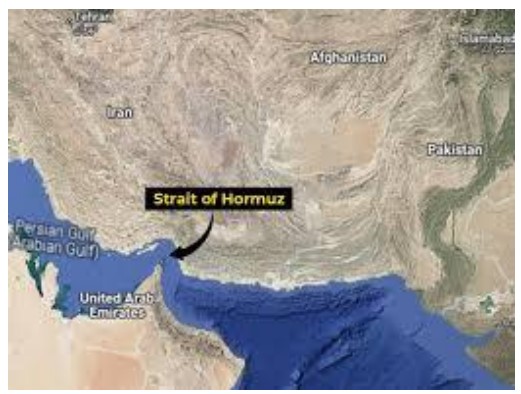
• Global Energy Volatility: The Strait of Hormuz carries roughly 1/5th of the world\'s total oil consumption; even a paused conflict keeps global oil futures and insurance premiums for shipping exceptionally high.
• Tactical Shift: The shift from Project Freedom (active escort) to a Blockade (passive containment) suggests a transition from kinetic warfare to a maximum pressure diplomatic strategy.
Conclusion
The pause in Project Freedom represents a critical inflection point in the 2026 West Asian crisis. While the threat of immediate naval confrontation has receded, the underlying blockade ensures that Iran remains under severe economic duress. The success of this diplomatic window depends on the mediation capacity of regional players like Pakistan and Iran willingness to accept a deal that likely involves significant concessions on its regional influence and nuclear program. For India, this deescalation is vital for stabilizing energy import costs and ensuring the safety of millions of expatriates in the Gulf.
UPSC Relevance
• GS Paper II: International Relations; Effect of policies and politics of developed and developing countries on India interests; Bilateral, regional and global groupings and agreements involving India and/or affecting India interests.
• GS Paper III: Security challenges and their management in border areas; Linkages of organized crime with terrorism; Energy security and its impact on the Indian economy.
• International Geography: Strategic importance of the Persian Gulf, Gulf of Oman, and the Strait of Hormuz as global maritime chokepoints.


Address : 506, 3rd EYE THREE (III), Opp. Induben Khakhrawala, Girish Cold Drink Cross Road, CG Road, Navrangpura, Ahmedabad, 380009.
Mobile : 8469231587 / 9586028957
E-mail: dics.upsc@gmail.com
Address: A-306, The Landmark, Urjanagar-1, Opp. Spicy Street, Kudasan – Por Road, Kudasan, Gandhinagar – 382421
Mobile : 9723832444 / 9723932444
E-mail: dics.gnagar@gmail.com
Address: 2nd Floor, 9 Shivali Society, L&T Circle, opp. Ratri Bazar, Karelibaugh, Vadodara, 390018
Mobile : 9725692037 / 9725692054
E-mail: dics.vadodara@gmail.com
Address: 403, Raj Victoria, Opp. Pal Walkway, Near Galaxy Circle, Pal, Surat-394510
Mobile : 8401031583 / 8401031587
E-mail: dics.surat@gmail.com
Address: 303,305 K 158 Complex Above Magson, Sindhubhavan Road Ahmedabad-380059
Mobile : 9974751177 / 8469231587
E-mail: dicssbr@gmail.com
Address: 57/17, 2nd Floor, Old Rajinder Nagar Market, Bada Bazaar Marg, Delhi-60
Mobile : 9104830862 / 9104830865
E-mail: dics.newdelhi@gmail.com