Ahmedabad
(Head Office)Address : 506, 3rd EYE THREE (III), Opp. Induben Khakhrawala, Girish Cold Drink Cross Road, CG Road, Navrangpura, Ahmedabad, 380009.
Mobile : 8469231587 / 9586028957
E-mail: dics.upsc@gmail.com

Core Summary
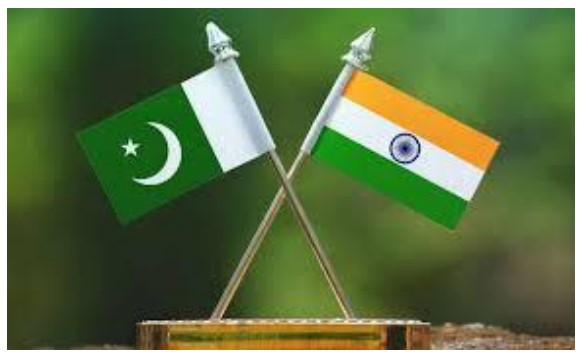
• Policy Shift: The Union Sports Ministry has formalized a new policy that explicitly separates bilateral sporting engagements from participation in global or multilateral events held in India.
• Open Door for Multilateralism: Pakistani athletes and teams are now permitted to compete on Indian soil for international tournaments, accompanied by a more supportive visa regime for players and officials.
• Bilateral Prohibition: The policy maintains a strict no to bilateral series; Indian teams will not travel to Pakistan for head-to-head matches, and Pakistani teams remain barred from playing bilateral matches in India.
• Strategic Intent: The move seeks to align with international sporting federations practices and protect the interests of Indian sportspersons who might otherwise face sanctions for nonparticipation in global events.
• Geopolitical Conditionality: While India will host Pakistani athletes, Indian participation in events hosted within Pakistan remains uncertain and contingent upon the prevailing security and geopolitical climate.
• Upcoming Calendar: This policy provides clarity for several high-profile events scheduled in India, including the 2026 World Badminton Championships, the 2029 ICC Champions Trophy, and the 2031 ODI World Cup.
Key Definitions
• Bilateral Ties: Political, economic, or cultural relations conducted between two sovereign states directly (e.g., an India vs. Pakistan cricket series).
• Multilateral Events: International competitions involving more than two nations, usually organized by global governing bodies like the IOC, FIFA, or ICC (e.g., Olympics or World Cups).
• Office Memorandum (OM): A common form of written communication within government departments, used to convey executive decisions or policy directives.
Constitutional & Legal Provisions
• Entry 10 & 13, Union List (Seventh Schedule): The Constitution grants the Central Government exclusive power over Foreign Affairs and Participation in international conferences, associations and other bodies, which includes international sports.
• Passport Act, 1967: Governs the issuance of passports and travel documents; the supportive visa regime mentioned in the policy falls under the executive discretion provided by this Act and the Foreigners Act, 1946.
• Article 19(1)(g): While citizens have the right to practice any profession, the state can impose reasonable restrictions in the interests of the sovereignty and integrity of India, often cited in the context of sports diplomacy.
• National Sports Development Code of India, 2011: A set of regulations that governs the functioning of National Sports Federations (NSFs) and their alignment with government policy.
Additional Key Insights
• Post-Crisis Normalization: The policy comes a year after significant security incidents (Pahalgam attacks and Operation Sindoor), indicating a shift toward nuanced engagement rather than total isolation.
• International Pressure: Global sporting bodies (like the IOC) have previously threatened to revoke India hosting rights if visas were denied to specific nationalities; this policy preemptively secures India\'s status as a global sporting hub.
• The Grey Zone: The policy removes ambiguity for events in India but retains strategic flexibility regarding Indian movement into Pakistan, keeping the Security First approach intact.
Conclusion
The new sports policy represents a pragmatic evolution in India neighborhood diplomacy. By decoupling global commitments from bilateral grievances, India maintains its standing as a reliable host for international tournaments without compromising its principled stance on cross-border issues. This de-hyphenation allows Indian athletes to compete for world titles on home soil while ensuring that the resumption of direct bilateral ties remains a lever of formal foreign policy rather than a sporting casualty.
UPSC Relevance
• GS Paper II: India and its neighborhood relations; Government policies and interventions for development in various sectors; International relations and the role of soft power.
• GS Paper IV (Ethics): The ethics of Sports Diplomacy—whether sports should be used as a political tool or kept entirely separate from bilateral conflicts.
• Current Affairs: Strategic significance of soft power in the Indo-Pak context and India growing role as a destination for global sporting infrastructure.


Address : 506, 3rd EYE THREE (III), Opp. Induben Khakhrawala, Girish Cold Drink Cross Road, CG Road, Navrangpura, Ahmedabad, 380009.
Mobile : 8469231587 / 9586028957
E-mail: dics.upsc@gmail.com
Address: A-306, The Landmark, Urjanagar-1, Opp. Spicy Street, Kudasan – Por Road, Kudasan, Gandhinagar – 382421
Mobile : 9723832444 / 9723932444
E-mail: dics.gnagar@gmail.com
Address: 2nd Floor, 9 Shivali Society, L&T Circle, opp. Ratri Bazar, Karelibaugh, Vadodara, 390018
Mobile : 9725692037 / 9725692054
E-mail: dics.vadodara@gmail.com
Address: 403, Raj Victoria, Opp. Pal Walkway, Near Galaxy Circle, Pal, Surat-394510
Mobile : 8401031583 / 8401031587
E-mail: dics.surat@gmail.com
Address: 303,305 K 158 Complex Above Magson, Sindhubhavan Road Ahmedabad-380059
Mobile : 9974751177 / 8469231587
E-mail: dicssbr@gmail.com
Address: 57/17, 2nd Floor, Old Rajinder Nagar Market, Bada Bazaar Marg, Delhi-60
Mobile : 9104830862 / 9104830865
E-mail: dics.newdelhi@gmail.com