


Ahmedabad
(Head Office)Address : 506, 3rd EYE THREE (III), Opp. Induben Khakhrawala, Girish Cold Drink Cross Road, CG Road, Navrangpura, Ahmedabad, 380009.
Mobile : 8469231587 / 9586028957
Telephone : 079-40098991
E-mail: dics.upsc@gmail.com

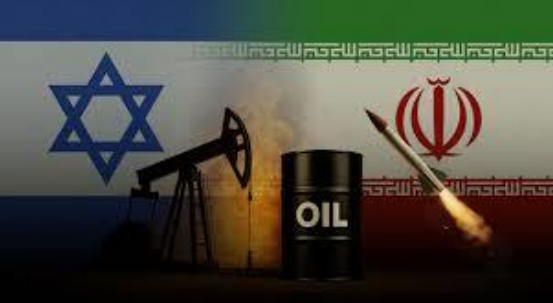
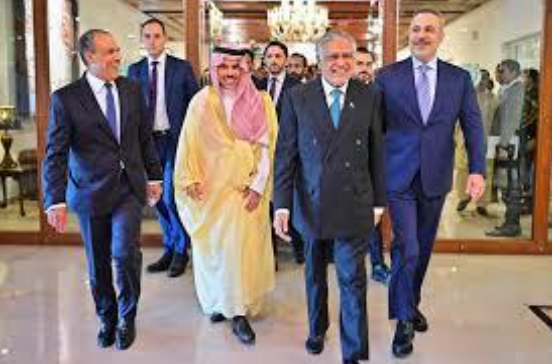
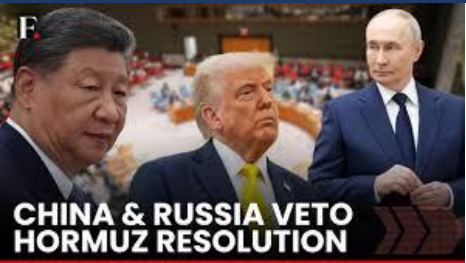
The ongoing conflict between the United States, Israel, and Iran has entered a critical phase, forcing a fundamental re-evaluation of the security architecture in West Asia as regional powers attempt to navigate the \'scorched earth\' policies and shifting American commitments. • Shift in Regional Strategy: The closure of the Strait of Hormuz and Iran’s strategy of targeting any USlinked interests in the Persian Gulf have moved regional states from a policy of \'insurance ecosystems\' (like the 2023 Saudi-Iran détente) toward a demand for a total strategic reset. • US Policy Ambiguity: The Trump administration’s suggestion that Gulf partners should financially contribute to the costs of the conflict has created anxieties regarding the reliability of the US security umbrella, leading states to seek more \'unilaterally active\' roles. • Pakistan’s Diplomatic Maneuvering: Leveraging its nuclear status and Islamic identity, Pakistan—under the leadership of Field Marshal Asim Munir—is attempting to insert itself as a mediator, seeking to strengthen ties with the US while re-entering the West Asian fold. • Intra-Gulf Consolidation: Traditional rivals, such as Saudi Arabia and Qatar, are increasingly sidelining historical differences to form a united front against immediate regional threats, even as they criticize the efficacy of established bodies like the Arab League. • Israeli Air Dominance: Israel’s demonstration of unfettered air power from the Red Sea to the Persian Gulf, including high-profile operations in 2025, has created a secondary layer of anxiety for Arab states regarding long-term regional power balances. • Search for New Guarantors: As the US achieves energy self-sufficiency, its leverage in the region is shifting from \'protecting oil supply\' to \'managing price volatility,\' prompting Gulf states to look toward Asian energy buyers, including India, as potential future security stakeholders. Key Definitions • Strait of Hormuz: A strategic chokepoint between the Persian Gulf and the Gulf of Oman; it is the world\'s most important oil artery, through which approximately 1/5th of global oil consumption passes. • Scorched Earth Policy: A military strategy that involves destroying anything that might be useful to the enemy while advancing through or withdrawing from a geographic location. • Strategic Hedging: A state\'s use of contradictory or multiple policy bets to protect itself against uncertainty, such as maintaining economic ties with Iran while relying on the US for defense. Constitutional & Legal Provisions • Article 51 (UN Charter): Concerns the inherent right of individual or collective self-defense if an armed attack occurs against a Member of the United Nations. • Article 51 of the Indian Constitution (DPSP): Mandates the State to promote international peace and security, maintain just and honorable relations between nations, and encourage settlement of international disputes by arbitration. • Maritime Zones Act, 1976: Indian legislation defining the limits of the territorial waters, contiguous zone, and exclusive economic zone (EEZ), relevant to protecting Indian energy interests in the Persian Gulf. Conclusion: The West Asian security architecture is undergoing its most significant transformation since the post-WWII era. The erosion of the \'Security for Oil\' pact between the US and the Gulf, combined with Iran’s regional brinkmanship, has left a vacuum. For the first time, regional powers are contemplating a security system that necessitates either a complete buy-in from Iran or a new cooperative framework involving major Asian consumers. The outcome of this war will determine whether the region moves toward a self-reliant Islamic security bloc or remains a fragmented playground for external powers. UPSC Relevance • GS Paper II (International Relations): Essential for topics like \'Effect of policies and politics of developed and developing countries on India\'s interests\' and \'Bilateral, regional and global groupings and agreements involving India.\' • GS Paper III (Energy Security): Impact of West Asian instability on India’s energy security, oil prices, and the \'Connect West\' policy. • Key Focus: The shifting role of Pakistan in the Middle East and its implications for India’s strategic interests in the Persian Gulf.


Address : 506, 3rd EYE THREE (III), Opp. Induben Khakhrawala, Girish Cold Drink Cross Road, CG Road, Navrangpura, Ahmedabad, 380009.
Mobile : 8469231587 / 9586028957
Telephone : 079-40098991
E-mail: dics.upsc@gmail.com
Address: A-306, The Landmark, Urjanagar-1, Opp. Spicy Street, Kudasan – Por Road, Kudasan, Gandhinagar – 382421
Mobile : 9723832444 / 9723932444
E-mail: dics.gnagar@gmail.com
Address: 2nd Floor, 9 Shivali Society, L&T Circle, opp. Ratri Bazar, Karelibaugh, Vadodara, 390018
Mobile : 9725692037 / 9725692054
E-mail: dics.vadodara@gmail.com
Address: 403, Raj Victoria, Opp. Pal Walkway, Near Galaxy Circle, Pal, Surat-394510
Mobile : 8401031583 / 8401031587
E-mail: dics.surat@gmail.com
Address: 303,305 K 158 Complex Above Magson, Sindhubhavan Road Ahmedabad-380059
Mobile : 9974751177 / 8469231587
E-mail: dicssbr@gmail.com
Address: 57/17, 2nd Floor, Old Rajinder Nagar Market, Bada Bazaar Marg, Delhi-60
Mobile : 9104830862 / 9104830865
E-mail: dics.newdelhi@gmail.com