





Ahmedabad
(Head Office)Address : 506, 3rd EYE THREE (III), Opp. Induben Khakhrawala, Girish Cold Drink Cross Road, CG Road, Navrangpura, Ahmedabad, 380009.
Mobile : 8469231587 / 9586028957
Telephone : 079-40098991
E-mail: dics.upsc@gmail.com

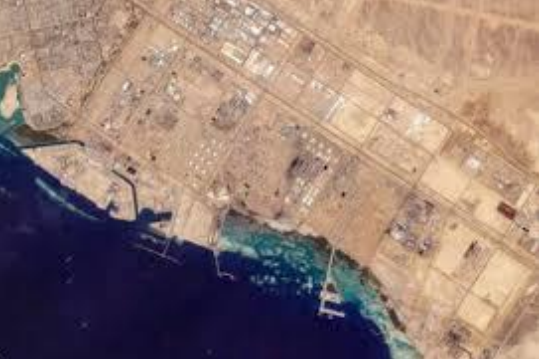
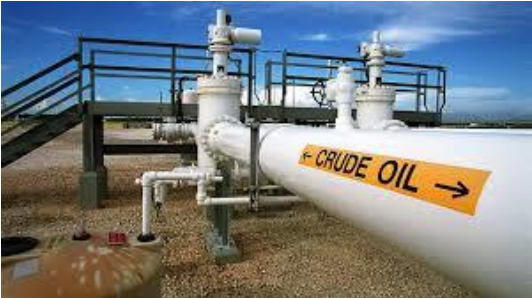
The transition of the West Asia conflict into a systematic \'energy war\' has triggered unprecedented volatility in global markets. The targeting of the South Pars-North Dome field—the world\'s largest natural gas reservoir— alongside Qatar’s Ras Laffan and Saudi infrastructure, marks a shift from tactical military strikes to the destruction of global energy lifelines. With Brent crude crossing $112 per barrel and the Strait of Hormuz effectively blockaded, the crisis represents a direct threat to India’s energy security and macroeconomic stability. • Targeting of South Pars: Israel’s March 18 strike on Iran’s South Pars field and the Asaluyeh onshore hub marks the first direct hit on upstream production. This field, shared with Qatar, holds 1,800 trillion cubic feet of gas, making its impairment a long-term blow to global transition fuel supplies. • Retaliation at Ras Laffan: Iran’s missile strikes on Qatar’s Ras Laffan Industrial City have caused extensive damage to the world’s largest LNG export plant. This has forced Qatar to suspend production and potentially declare force majeure, directly impacting India’s long-term LNG contracts. • Regional Infrastructure Contagion: The conflict has expanded to include strikes on Saudi Arabia’s SAMREF refinery and Jubail complexes, as well as the UAE’s Al Hosn gas field. This \'energy tit-fortat\' aims to maximize economic pain for all global stakeholders involved in the Gulf. • Hormuz Chokepoint Crisis: The blockade of the Strait of Hormuz, through which 20% of global oil flows, has reached a critical stage. While Iran allows limited traffic, the risk premium has pushed prices to a multi-year high, threatening to trigger global stagflation. • Environmental Fallout: Attacks on the Tehran refinery and oil depots have resulted in \'black rain\' and toxic smog in the Iranian capital, highlighting the secondary ecological disasters associated with energy infrastructure warfare. • Geopolitical Leadership Vacuum: Conflicting reports between Israeli military actions and the US administration regarding the approval of strikes on South Pars indicate a breakdown in traditional alliance coordination, adding a layer of unpredictability to the conflict\'s duration. Key Definitions • Upstream Production: The stage of the oil and gas industry involving exploration and extraction from the earth. • Condensate: A low-density mixture of hydrocarbon liquids present in raw natural gas, often used as a high-quality refinery feedstock. • Operation Epic Fury: The US-Israeli joint military campaign initiated on February 28, 2026, targeting Iranian leadership and strategic infrastructure. • Force Majeure: A legal clause in supply contracts that allows a party to skip deliveries due to extraordinary, unavoidable events like war or natural disasters. Constitutional & Legal Provisions • Article 51 (DPSP): Directs the State to promote international peace and security. India’s diplomatic \'middle path\' in the Gulf is rooted in this constitutional mandate to protect its 9 million-strong diaspora and energy interests. • Essential Commodities Act, 1955: Invoked by the Indian government to manage domestic fuel prices and prevent hoarding as global crude prices breach the $110 mark. • UNCLOS (United Nations Convention on the Law of the Sea): The legal framework governing the \'Right of Innocent Passage\' through international straits like Hormuz, which is currently being violated by the military blockade. Additional Strategic Keypoints • Strategic Petroleum Reserves (SPR): India’s current SPR capacity (5.33 MMT) provides roughly 9.5 days of cover. The current crisis underscores the urgent need for Phase II expansion at Chandikhol and Padur to enhance resilience. • Impact on Fertilizers: As a major importer of gas for urea production, the damage to Ras Laffan will lead to a spike in India’s fertilizer subsidy bill, affecting the fiscal deficit. • Refining Margins: While Indian refiners (RIL, Nayara) often benefit from high margins during crises, the sheer destruction of regional supply infrastructure may lead to a physical shortage of crude, regardless of price. Conclusion The 2026 Gulf crisis has evolved beyond a regional skirmish into a \'Supply Destruction\' event. The damage to South Pars and Ras Laffan is structural, meaning repairs could take years, not months. For India, this necessitates an immediate pivot toward non-Gulf energy suppliers and an accelerated deployment of green hydrogen and nuclear energy under the SHANTI Act to decouple the national economy from the volatile West Asian energy basket. UPSC Relevance • GS Paper II: International Relations (Effect of policies and politics of developed countries on India\'s interests; Indian Diaspora; Strategic Autonomy). • GS Paper III: Indian Economy and Energy Security (Infrastructure; Supply Chain Management; Environmental Pollution/Disaster Management). • Prelims: Mapping of the Persian Gulf (Asaluyeh, Kharg Island, Ras Laffan, Strait of Hormuz); IEA emergency response mechanisms; Petroleum vs. Natural Gas shares in India\'s energy mix.


Address : 506, 3rd EYE THREE (III), Opp. Induben Khakhrawala, Girish Cold Drink Cross Road, CG Road, Navrangpura, Ahmedabad, 380009.
Mobile : 8469231587 / 9586028957
Telephone : 079-40098991
E-mail: dics.upsc@gmail.com
Address: A-306, The Landmark, Urjanagar-1, Opp. Spicy Street, Kudasan – Por Road, Kudasan, Gandhinagar – 382421
Mobile : 9723832444 / 9723932444
E-mail: dics.gnagar@gmail.com
Address: 2nd Floor, 9 Shivali Society, L&T Circle, opp. Ratri Bazar, Karelibaugh, Vadodara, 390018
Mobile : 9725692037 / 9725692054
E-mail: dics.vadodara@gmail.com
Address: 403, Raj Victoria, Opp. Pal Walkway, Near Galaxy Circle, Pal, Surat-394510
Mobile : 8401031583 / 8401031587
E-mail: dics.surat@gmail.com
Address: 303,305 K 158 Complex Above Magson, Sindhubhavan Road Ahmedabad-380059
Mobile : 9974751177 / 8469231587
E-mail: dicssbr@gmail.com
Address: 57/17, 2nd Floor, Old Rajinder Nagar Market, Bada Bazaar Marg, Delhi-60
Mobile : 9104830862 / 9104830865
E-mail: dics.newdelhi@gmail.com