
Ahmedabad
(Head Office)Address : 506, 3rd EYE THREE (III), Opp. Induben Khakhrawala, Girish Cold Drink Cross Road, CG Road, Navrangpura, Ahmedabad, 380009.
Mobile : 8469231587 / 9586028957
E-mail: dics.upsc@gmail.com

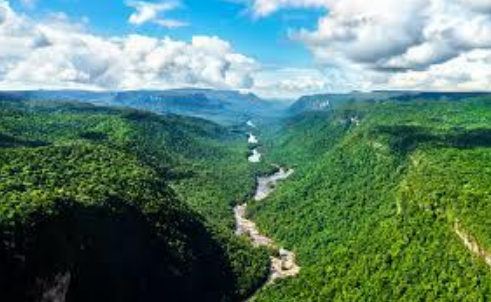
Context: The COP30 climate summit held in Belém, Brazil (November 2025), centered on the Tropical Forest Forever Facility (TFFF), a ground-breaking $125 billion proposal. Unlike traditional carbon credit models, the TFFF focuses on compensating nations for maintaining standing forests, moving beyond the narrative of merely \'reducing deforestation\' to rewarding existing ecological stewardship. • Innovative Finance Mechanism: The TFFF is structured not as a standard donation-based fund, but as a sophisticated investment vehicle designed to generate returns while rewarding long-term conservation. It has already secured over $5.5 billion in initial commitments, including a substantial $3 billion pledge from Norway. • Inclusion of Indigenous Peoples and Local Communities (IPLCs): A mandatory 20% of the performance-based payments are reserved for indigenous and local communities. This recognizes their outsized role in forest protection; however, critics point out that these groups still lack formal voting rights in the Fund’s primary governing bodies. • The \'Standing Forest\' vs. Market Logic: The facility addresses a long-standing gap in climate policy by paying for the preservation of intact forests. However, the Global Forest Coalition and other civil society groups warn that relying on market logic may fail to address structural drivers of deforestation like agribusiness, mining, and large-scale infrastructure. • Land Tenure and Territorial Rights: The Belém summit reinforced the scientific consensus that secure land rights are the most effective conservation tool. To support this, the Forest and Land Tenure Pledge committed $1.8 billion (2026-2030) to secure the territories of indigenous and Afro-descendant communities. • Digital Access and Eligibility Platform: To bridge the technical gap, Brazil, in partnership with the UNDP and FAO, launched a digital platform at COP30. This tool aims to help forest-rich nations and local communities navigate TFFF eligibility and build capacity without the interference of intermediaries. Key Definitions and Legal Provisions • Tropical Forest Forever Facility (TFFF): A multi-country fund proposed by Brazil to provide a continuous stream of income to tropical forest nations based on the area of forest they keep standing. • Phytotelmata/Ecosystem Services: The manifold benefits humans derive from nature, including carbon sequestration, water cycle regulation, and biodiversity maintenance. • Article 21 (Indian Context): The \'Right to Life\' has been interpreted by the Supreme Court to include the right to a clean environment, which aligns with global climate justice demands for forest protection. • Forest Rights Act (FRA), 2006 (India): A critical domestic benchmark for the TFFF\'s goals, as it recognizes the individual and community rights of forest-dwelling Scheduled Tribes and other traditional forest dwellers. Additional Key Points • Adequacy of Compensation: Early proposals suggested a rate of $4 per hectare, which many experts argue is insufficient to compete with the high opportunity costs of land-use change for agriculture or mining. • Colonialism in Conservation: Critics argue that if funds primarily flow to international consultants or government bureaucracies rather than the \'boots on the ground,\' the TFFF risks becoming a \'greenwashed\' version of old hierarchical aid models. • The \'Sponge City\' and Forest Connection: While urban areas focus on infrastructure, the preservation of tropical forests acts as the ultimate global \'sponge,\' regulating global precipitation and temperature. Conclusion The TFFF represents a transition from \'aid\' to \'payment for services.\' Its ultimate success will be measured not by the billions accumulated, but by the degree of power transferred to the indigenous communities who live within these forests. Without addressing the underlying pressures of extractive industries and ensuring absolute land tenure, financial mechanisms risk providing a superficial solution to a deep-seated structural crisis. UPSC Relevance • GS Paper III: Conservation, environmental pollution and degradation, environmental impact assessment; Investment models. • GS Paper II: Important International institutions, agencies and fora- their structure, mandate; Welfare schemes for vulnerable sections. • Mains Perspective: Analyze the shift from REDD+ to the TFFF model; The role of indigenous knowledge in climate change mitigation; Challenges of climate finance in the Global South. • Prelims: Locations (Belém, Amazon); Initiatives (TFFF, GATC, FCLP); COP30 themes.


Address : 506, 3rd EYE THREE (III), Opp. Induben Khakhrawala, Girish Cold Drink Cross Road, CG Road, Navrangpura, Ahmedabad, 380009.
Mobile : 8469231587 / 9586028957
E-mail: dics.upsc@gmail.com
Address: A-306, The Landmark, Urjanagar-1, Opp. Spicy Street, Kudasan – Por Road, Kudasan, Gandhinagar – 382421
Mobile : 9723832444 / 9723932444
E-mail: dics.gnagar@gmail.com
Address: 2nd Floor, 9 Shivali Society, L&T Circle, opp. Ratri Bazar, Karelibaugh, Vadodara, 390018
Mobile : 9725692037 / 9725692054
E-mail: dics.vadodara@gmail.com
Address: 403, Raj Victoria, Opp. Pal Walkway, Near Galaxy Circle, Pal, Surat-394510
Mobile : 8401031583 / 8401031587
E-mail: dics.surat@gmail.com
Address: 303,305 K 158 Complex Above Magson, Sindhubhavan Road Ahmedabad-380059
Mobile : 9974751177 / 8469231587
E-mail: dicssbr@gmail.com
Address: 57/17, 2nd Floor, Old Rajinder Nagar Market, Bada Bazaar Marg, Delhi-60
Mobile : 9104830862 / 9104830865
E-mail: dics.newdelhi@gmail.com