




Ahmedabad
(Head Office)Address : 506, 3rd EYE THREE (III), Opp. Induben Khakhrawala, Girish Cold Drink Cross Road, CG Road, Navrangpura, Ahmedabad, 380009.
Mobile : 8469231587 / 9586028957
Telephone : 079-40098991
E-mail: dics.upsc@gmail.com

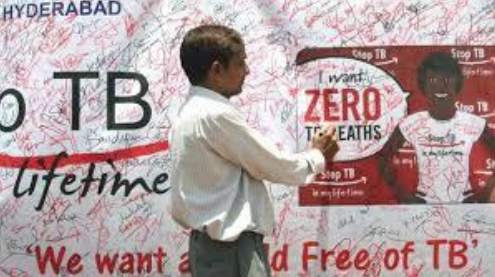
The fight against Tuberculosis (TB) in India is undergoing a paradigm shift from a purely biomedical approach to a community-led social movement. Central to this transformation is the \'TB Champion\'—survivors who leverage their lived experiences to navigate the complexities of stigma, treatment adherence, and social exclusion. As India strives for TB elimination by 2025, the integration of these empowered survivors into the National TB Elimination Programme (NTEP) marks a critical milestone in patient-centered care. Key Summary Points • Evolution of TB Champions: Moving beyond clinical recovery, survivors are now formally trained as \'TB Champions\' to act as peer supporters, dispelling the myth that TB patients prefer anonymity over advocacy after treatment. • Addressing the \'Biomedical Gap\': Early global responses focused solely on drugs and diagnostics; the current movement addresses the \'loneliness of the disease\' by providing essential emotional and psychological support. • Combating Stigma and Myths: Champions play a crucial role in reducing \'self-stigmatization\' and community discrimination, particularly among vulnerable groups like women, transgender individuals, and the elderly. • Improving Treatment Literacy: Through the \'Survivor to Champion\' curriculum adopted by the NTEP, these leaders improve patient understanding of shorter, less toxic regimens and nutritional support (Nikshay Poshan Yojana). • Last-Mile Advocacy: Champions serve as a bridge between health services and the community, conducting meetings and engaging panchayat leaders to ensure that symptoms are recognized and care is sought early. • Sustainability of Networks: While state-level survivor networks have formed, their long-term viability remains a challenge due to dependence on external funding, necessitating a shift toward selfsustaining socio-economic models. Key Definitions • TB Champion: A tuberculosis survivor who has undergone specialized training to provide peer counseling, advocacy, and community mobilization to support current patients. • Treatment Literacy: The ability of a patient to understand their diagnosis, the importance of adherence to medicine, and the management of potential side effects. • Social Exclusion: A process where individuals are blocked from rights, resources, and opportunities (like employment or marriage) due to the stigma associated with a disease like TB. Constitutional & Legal Provisions • Article 21: The Right to Life and Personal Liberty. The Supreme Court has interpreted this to include the right to health and the \'right to live with dignity,\' which is directly hindered by social stigma. • Article 15: Prohibits discrimination on grounds of religion, race, caste, sex, or place of birth. Advocacy for TB patients often intersects with protecting these rights for marginalized groups. • National Strategic Plan (NSP) 2017-2025: The official policy framework that prioritizes \'Pillar 4: Build,\' which focuses on strengthening social segments and community engagement for TB elimination. • Human Rights and TB: International covenants (to which India is a signatory) recognize the right of everyone to the enjoyment of the highest attainable standard of physical and mental health. Conclusion The success of India’s TB elimination targets rests not just on indigenous molecular tests or AI-enabled X-rays, but on the social capital provided by TB Champions. By transforming survivors into leaders, the movement addresses the socio-economic and psychological scars of the disease. However, for this to be a permanent fixture in public health, the government must move toward institutionalizing and funding these survivor-led networks as essential components of the primary healthcare delivery system. UPSC Relevance • GS Paper II: Issues relating to development and management of Social Sector/Services relating to Health; Role of Civil Society and Non-Governmental Organizations (NGOs). • GS Paper I: Social empowerment, communalism, and regionalism (impact of health on social structures). • Ethics (GS Paper IV): Empathy and compassion towards the weaker sections; Case studies on healthrelated stigma and public service delivery.


Address : 506, 3rd EYE THREE (III), Opp. Induben Khakhrawala, Girish Cold Drink Cross Road, CG Road, Navrangpura, Ahmedabad, 380009.
Mobile : 8469231587 / 9586028957
Telephone : 079-40098991
E-mail: dics.upsc@gmail.com
Address: A-306, The Landmark, Urjanagar-1, Opp. Spicy Street, Kudasan – Por Road, Kudasan, Gandhinagar – 382421
Mobile : 9723832444 / 9723932444
E-mail: dics.gnagar@gmail.com
Address: 2nd Floor, 9 Shivali Society, L&T Circle, opp. Ratri Bazar, Karelibaugh, Vadodara, 390018
Mobile : 9725692037 / 9725692054
E-mail: dics.vadodara@gmail.com
Address: 403, Raj Victoria, Opp. Pal Walkway, Near Galaxy Circle, Pal, Surat-394510
Mobile : 8401031583 / 8401031587
E-mail: dics.surat@gmail.com
Address: 303,305 K 158 Complex Above Magson, Sindhubhavan Road Ahmedabad-380059
Mobile : 9974751177 / 8469231587
E-mail: dicssbr@gmail.com
Address: 57/17, 2nd Floor, Old Rajinder Nagar Market, Bada Bazaar Marg, Delhi-60
Mobile : 9104830862 / 9104830865
E-mail: dics.newdelhi@gmail.com