







Ahmedabad
(Head Office)Address : 506, 3rd EYE THREE (III), Opp. Induben Khakhrawala, Girish Cold Drink Cross Road, CG Road, Navrangpura, Ahmedabad, 380009.
Mobile : 8469231587 / 9586028957
Telephone : 079-40098991
E-mail: dics.upsc@gmail.com

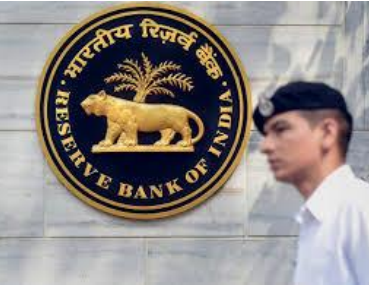
• Inaugural Implementation of BIS: Telangana has officially joined a pilot group of nine states adopting the Reserve Bank of India’s (RBI) Benchmark Issuance Strategy (BIS) for State Development Loans (SDLs) starting in the 2026-27 financial year. • Objective of the Strategy: The BIS framework is designed to enhance transparency and provide greater clarity to investors by issuing securities in specific, pre-announced \'benchmark tenor buckets\' rather than fragmented, irregular durations. • Enhancing Market Liquidity: By standardizing bond tenors, the RBI aims to create larger, more liquid benchmark bonds. This reduces market fragmentation, improves price discovery, and allows investors better visibility into the supply of state-issued debt. • Tenure Diversification: Under this strategy, Telangana has structured its first-quarter market borrowings of 18,900 crore across various tenures, ranging from mid-term (6-10 years) to long-term (over 25 years), to cater to different investor appetites. • Investor-Centric Reforms: The transition toward standardized benchmark bonds is a significant reform in the sub-national debt market, aligning state borrowing practices more closely with the Central Government’s \'gilt\' (government securities) market. • Fiscal Planning and Indent Submission: The Telangana government has already submitted its borrowing indent to the RBI, with specific tranches (e.g., 3,900 crore) targeting long-term buckets of 16- 25 years and above, reflecting a strategic move to lock in long-term capital. Key Definitions • Benchmark Issuance Strategy (BIS): A methodology where debt is issued in specific, standardized maturities to create large \'benchmark\' stocks that are easier to trade in the secondary market. • State Development Loans (SDLs): Dated securities issued by State Governments through an auction conducted by the RBI; the interest is paid half-yearly and the principal is repaid on the maturity date. • Price Discovery: The process by which the market determines the price of an asset (or the interest rate of a bond) through the interactions of buyers and sellers. • Market Fragmentation: A condition where a large number of small, illiquid bond issues exist, making it difficult for investors to buy or sell without significantly impacting the price. Constitutional and Legal Provisions • Article 293(3) of the Constitution: Stipulates that a State may not raise any loan without the consent of the Government of India if there is still outstanding any part of a loan which has been made to the State by the Union. • Fiscal Responsibility and Budget Management (FRBM) Act: Sets the institutional framework for state governments to limit their fiscal deficits and total outstanding debt as a percentage of GSDP. • RBI Act, 1934: Empowers the Reserve Bank to manage the public debt of the Union and the State Governments. • SEBI (Issue and Listing of Municipal Debt Securities) Regulations: While specifically for urban local bodies, these highlight the broader regulatory push toward transparent and liquid debt markets in India. Additional Key Points • Secondary Market Impact: Currently, SDLs often suffer from poor secondary market liquidity compared to Central Government Securities (G-Secs); BIS is the primary tool intended to bridge this gap. • Sensitivity and Consent: Adoption is based on the voluntary concurrence of state governments, reflecting the \'Cooperative Federalism\' approach in managing the nation\'s internal debt. • Borrowing Costs: Successful implementation of BIS can potentially lower the \'spread\' (the difference in interest rates) between G-Secs and SDLs, reducing the interest burden on state exchequers. Conclusion The adoption of the Benchmark Issuance Strategy by Telangana marks a sophisticated evolution in sub-national fiscal management. By moving toward standardized, liquid bond buckets, the state is likely to attract a more diverse investor base, including insurance companies and pension funds that seek long-term, transparent assets. As this pilot expands, it will likely lead to a more integrated and efficient sovereign debt market in India, providing states with more predictable access to capital. UPSC Relevance • GS Paper III: Indian Economy and issues relating to mobilization of resources; Government Budgeting; Effects of liberalization on the economy. • GS Paper II: Statutory, regulatory and various quasi-judicial bodies (Role of RBI); Issues and challenges pertaining to the federal structure (Article 293).


Address : 506, 3rd EYE THREE (III), Opp. Induben Khakhrawala, Girish Cold Drink Cross Road, CG Road, Navrangpura, Ahmedabad, 380009.
Mobile : 8469231587 / 9586028957
Telephone : 079-40098991
E-mail: dics.upsc@gmail.com
Address: A-306, The Landmark, Urjanagar-1, Opp. Spicy Street, Kudasan – Por Road, Kudasan, Gandhinagar – 382421
Mobile : 9723832444 / 9723932444
E-mail: dics.gnagar@gmail.com
Address: 2nd Floor, 9 Shivali Society, L&T Circle, opp. Ratri Bazar, Karelibaugh, Vadodara, 390018
Mobile : 9725692037 / 9725692054
E-mail: dics.vadodara@gmail.com
Address: 403, Raj Victoria, Opp. Pal Walkway, Near Galaxy Circle, Pal, Surat-394510
Mobile : 8401031583 / 8401031587
E-mail: dics.surat@gmail.com
Address: 303,305 K 158 Complex Above Magson, Sindhubhavan Road Ahmedabad-380059
Mobile : 9974751177 / 8469231587
E-mail: dicssbr@gmail.com
Address: 57/17, 2nd Floor, Old Rajinder Nagar Market, Bada Bazaar Marg, Delhi-60
Mobile : 9104830862 / 9104830865
E-mail: dics.newdelhi@gmail.com