


Ahmedabad
(Head Office)Address : 506, 3rd EYE THREE (III), Opp. Induben Khakhrawala, Girish Cold Drink Cross Road, CG Road, Navrangpura, Ahmedabad, 380009.
Mobile : 8469231587 / 9586028957
Telephone : 079-40098991
E-mail: dics.upsc@gmail.com

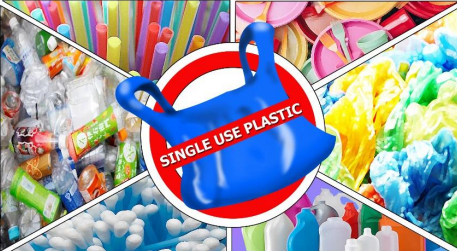
• Persistent Non-Compliance: A field study by the environmental group \'Toxics Link\' across four major Indian cities (Bhubaneswar, Delhi, Mumbai, and Guwahati) reveals that approximately 84% of surveyed locations continue to use banned single-use plastic items despite the national ban being in effect for over three years. • Regional Disparities in Enforcement: The study indicates varying levels of availability of banned items, with Bhubaneswar recording the highest at 89%, followed by Delhi (86%), Mumbai (85%), and Guwahati (76%), suggesting inconsistent state-level implementation. • Informal Sector Dominance: High availability is concentrated in informal markets, street vendors, and small commercial establishments, whereas organized retail spaces and malls showed significantly higher adherence to the regulatory framework. • Consumer-Driven Demand: Nearly 91% of vendors reported that customers actively demand plastic carry bags, and many perceive disposable plastic cutlery as more \'hygienic\' than reusable alternatives, creating a behavioral barrier to the transition. • Economic Constraints: Small-scale vendors cite the high cost of sustainable alternatives (such as wooden cutlery, bagasse plates, or thicker 120-micron bags) and the inherent convenience of SUPs as the primary reasons for continued usage. • Urgent Policy Recommendations: The report advocates for robust monitoring mechanisms, regular inspections, and coordinated action among regulatory agencies, aligning with global discussions held at the 2025 Intergovernmental Negotiating Committee on Plastic Pollution in Geneva. Key Definitions Single-Use Plastic (SUP): Plastic items intended to be used only once for the same purpose before being disposed of or recycled. These are often non-biodegradable and break down into microplastics. Microplastics: Small plastic pieces less than 5mm long which can be harmful to our ocean and aquatic life. Bagasse: The dry pulpy fibrous residue that remains after sugarcane stalks are crushed to extract their juice; it is used as a sustainable alternative for making disposable plates and bowls. Extended Producer Responsibility (EPR): A policy approach under which producers are given a significant responsibility—financial and/or physical—for the treatment or disposal of post-consumer products. Constitutional and Legal Provisions Article 48A (DPSP): Mandates that the State shall endeavor to protect and improve the environment. Article 51A(g) (Fundamental Duties): It is the duty of every citizen to protect and improve the natural environment. Plastic Waste Management (Amendment) Rules, 2021: The specific legal instrument that prohibited the manufacture, import, stocking, distribution, sale, and use of identified single-use plastic items with low utility and high littering potential. Environment Protection Act, 1986: Provides the central government the power to take all such measures as it deems necessary for the purpose of protecting and improving the quality of the environment. Additional Important Keypoints The ban specifically targets 19 items including plastic sticks for balloons, earbuds, candy sticks, thermocol for decoration, and thin carry bags. While the supply side (manufacturing) has seen some regulation, the \'last-mile\' retail presence remains the weakest link in the chain. The Toxics Link report emphasizes that without controlling the supply at the source and providing subsidies for eco-friendly alternatives, the informal market will continue to rely on cheap, illegal stocks. Furthermore, the role of Urban Local Bodies (ULBs) is critical, as they are the primary agencies responsible for on-ground inspections and imposing penalties. Conclusion The 2025 survey serves as a reality check for India’s environmental policy, highlighting that a \'legislative ban\' is insufficient without \'behavioral change\' and \'economic viability\' of alternatives. The continued prevalence of SUPs in 84% of sites suggests that the environmental cost of plastic is not yet reflected in market prices, necessitating a shift from mere prohibition to a circular economy model that incentivizes reuse and sustainable packaging. UPSC Relevance General Studies Paper III: Environmental pollution and degradation; Conservation; Challenges of solid waste management in urban areas. General Studies Paper II: Government policies and interventions for development in various sectors and issues arising out of their design and implementation. Preliminary Examination: Knowledge of the Plastic Waste Management Rules, the role of the Central Pollution Control Board (CPCB), and international conventions like the UNEA resolutions on plastic pollution.


Address : 506, 3rd EYE THREE (III), Opp. Induben Khakhrawala, Girish Cold Drink Cross Road, CG Road, Navrangpura, Ahmedabad, 380009.
Mobile : 8469231587 / 9586028957
Telephone : 079-40098991
E-mail: dics.upsc@gmail.com
Address: A-306, The Landmark, Urjanagar-1, Opp. Spicy Street, Kudasan – Por Road, Kudasan, Gandhinagar – 382421
Mobile : 9723832444 / 9723932444
E-mail: dics.gnagar@gmail.com
Address: 2nd Floor, 9 Shivali Society, L&T Circle, opp. Ratri Bazar, Karelibaugh, Vadodara, 390018
Mobile : 9725692037 / 9725692054
E-mail: dics.vadodara@gmail.com
Address: 403, Raj Victoria, Opp. Pal Walkway, Near Galaxy Circle, Pal, Surat-394510
Mobile : 8401031583 / 8401031587
E-mail: dics.surat@gmail.com
Address: 303,305 K 158 Complex Above Magson, Sindhubhavan Road Ahmedabad-380059
Mobile : 9974751177 / 8469231587
E-mail: dicssbr@gmail.com
Address: 57/17, 2nd Floor, Old Rajinder Nagar Market, Bada Bazaar Marg, Delhi-60
Mobile : 9104830862 / 9104830865
E-mail: dics.newdelhi@gmail.com