







Ahmedabad
(Head Office)Address : 506, 3rd EYE THREE (III), Opp. Induben Khakhrawala, Girish Cold Drink Cross Road, CG Road, Navrangpura, Ahmedabad, 380009.
Mobile : 8469231587 / 9586028957
Telephone : 079-40098991
E-mail: dics.upsc@gmail.com

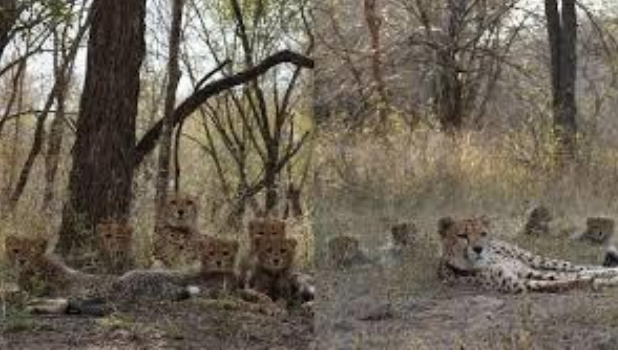
The celebration of the third birthday of Mukhi, India’s first native-born cheetah in over seven decades, marks a significant milestone for Project Cheetah. Beyond the survival numbers, the project’s success is increasingly defined by the advanced veterinary interventions that have saved several cheetahs from life-threatening musculoskeletal and soft tissue injuries. • Success of Native-Born Populations: Mukhi’s journey from a cub with a complete diaphyseal fracture to a mother of five cubs illustrates the biological adaptation of the species to the Indian terrain. Her recovery and subsequent successful breeding signify the long-term viability of the reintroduction program at Kuno National Park. • Advanced Veterinary Interventions: Since the launch of the project in September 2022, there have been six major documented clinical interventions involving five cheetahs. These cases include complex surgeries for fractures (paw, tail, and humerus), amputations, and management of viral infections like the feline calicivirus. • Managing Interspecies and Intraspecies Conflict: A significant cause of injuries has been identified as highspeed chases and territorial fights among coalition groups (e.g., the Gaurav-Shaurya and Agni-Vayu coalitions). Managing these interactions through \'quarantine bomas\' and constant monitoring is critical for reducing mortality. • Technological and Medical Expertise: The project has successfully moved from reliance on international experts to a highly experienced indigenous team of veterinarians and range officers. This internal capacity building is essential for the scaling of cheetah reintroduction to other sites like the Gandhi Sagar Wildlife Sanctuary. • Rehabilitation Protocols: The recovery of cheetahs like Nirva and Nabha involved long-term monitoring in restricted enclosures, specialized antiseptic dressing, and supportive care for infections. The ability of these animals to return to the wild after major amputations or dental abscesses proves the resilience of the species. • Shift from Introduction to Stabilization: With the current population including healthy cubs and recovering adults, the focus is shifting from the mere \'introduction\' of cheetahs to the \'stabilization\' of a self-sustaining population within the Indian ecosystem. Key Definitions • Project Cheetah: The world\'s first intercontinental large wild carnivore translocation project, aiming to reintroduce cheetahs to India after they were declared extinct in the country in 1952. • Diaphyseal Fracture: A break occurring in the shaft (diaphysis) of a long bone, such as the humerus or femur, which requires intensive surgical or rehabilitative care in wild animals. • Quarantine Boma: A specialized, high-fenced enclosure used to house wild animals for medical observation, acclimatization, or protection from predators before full release. Constitutional and Legal Provisions • Article 48A (DPSP): Mandates that the State shall endeavor to protect and improve the environment and to safeguard the forests and wildlife of the country. Project Cheetah is a direct fulfillment of this constitutional directive. • Article 51A(g) (Fundamental Duties): It shall be the duty of every citizen of India to protect and improve the natural environment including forests, lakes, rivers, and wildlife, and to have compassion for living creatures. • Wildlife (Protection) Act, 1972: The overarching legal framework that governs the protection of scheduled animals. The cheetah is placed under Schedule I, providing it the highest level of legal protection and necessitating stringent conservation measures. Conclusion The survival and thriving of cheetahs like Mukhi despite severe injuries underscore the success of the \'HumanAnimal-Technology\' interface in modern conservation. While initial critics focused on mortality rates, the current data suggests that Kuno’s environment is conducive to growth, provided that veterinary oversight remains proactive. The success here serves as a blueprint for future rewilding projects involving other extinct or highly endangered species in India. UPSC Relevance • GS Paper III (Environment & Biodiversity): Crucial for topics related to \'Conservation,\' \'Environmental Impact Assessment,\' and \'Wildlife Reintroduction Programs.\' The project is a major case study in biodiversity restoration. • GS Paper III (Science & Technology): Relevant for understanding \'Indigenous Veterinary Technology\' and its application in wildlife management. • Prelims: Mapping of Kuno National Park (Madhya Pradesh) and Gandhi Sagar Wildlife Sanctuary; understanding the differences between African and Asiatic cheetahs; and the role of the National Tiger Conservation Authority (NTCA) in managing the project.


Address : 506, 3rd EYE THREE (III), Opp. Induben Khakhrawala, Girish Cold Drink Cross Road, CG Road, Navrangpura, Ahmedabad, 380009.
Mobile : 8469231587 / 9586028957
Telephone : 079-40098991
E-mail: dics.upsc@gmail.com
Address: A-306, The Landmark, Urjanagar-1, Opp. Spicy Street, Kudasan – Por Road, Kudasan, Gandhinagar – 382421
Mobile : 9723832444 / 9723932444
E-mail: dics.gnagar@gmail.com
Address: 2nd Floor, 9 Shivali Society, L&T Circle, opp. Ratri Bazar, Karelibaugh, Vadodara, 390018
Mobile : 9725692037 / 9725692054
E-mail: dics.vadodara@gmail.com
Address: 403, Raj Victoria, Opp. Pal Walkway, Near Galaxy Circle, Pal, Surat-394510
Mobile : 8401031583 / 8401031587
E-mail: dics.surat@gmail.com
Address: 303,305 K 158 Complex Above Magson, Sindhubhavan Road Ahmedabad-380059
Mobile : 9974751177 / 8469231587
E-mail: dicssbr@gmail.com
Address: 57/17, 2nd Floor, Old Rajinder Nagar Market, Bada Bazaar Marg, Delhi-60
Mobile : 9104830862 / 9104830865
E-mail: dics.newdelhi@gmail.com