


Ahmedabad
(Head Office)Address : 506, 3rd EYE THREE (III), Opp. Induben Khakhrawala, Girish Cold Drink Cross Road, CG Road, Navrangpura, Ahmedabad, 380009.
Mobile : 8469231587 / 9586028957
Telephone : 079-40098991
E-mail: dics.upsc@gmail.com

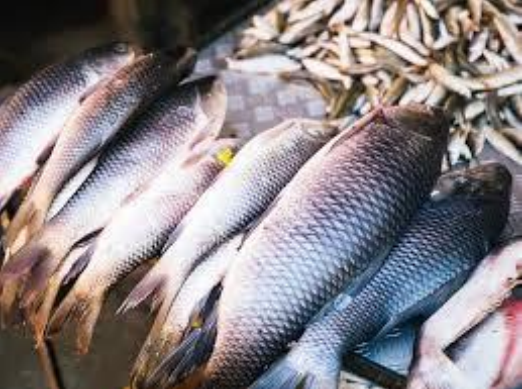
At the 14th WTO Ministerial Conference in Yaoundé, Cameroon, India strongly advocated for the protection of small-scale, traditional, and artisanal fishers against rigid global subsidy disciplines. Commerce Minister Piyush Goyal emphasized that global rules must distinguish between the \'polluter\' industrial fleets of developed nations and the \'livelihood-based\' fishing communities of developing countries.
Key Summary Points for UPSC
• Livelihood vs. Industrial Fishing: India highlighted that its fisheries sector supports over 9 million families through sustainable, traditional methods, unlike the heavily mechanized, distant-water industrial fleets of developed nations.
• Subsidy Disparity: India pointed out a massive global inequity; its annual subsidy is barely $15 per fisher family, whereas developed nations provide tens of thousands of dollars, contributing significantly to global overfishing.
• Special and Differential Treatment (S&DT): India demanded a 25-year transition period for developing nations to adjust to new rules and a permanent \'carve-out\' (exemption) for small-scale fishers to ensure food and livelihood security.
• Phase II Negotiations: The discussions focused on shaping the \'Phase II\' disciplines of the WTO Agreement on Fisheries Subsidies, specifically targeting subsidies that contribute to \'overcapacity and overfishing.\'
• Sustainability Stewardship: India cited its long-standing conservation measures, such as mandatory annual fishing bans (monsoon bans), as evidence of its commitment to sustainability pre-dating global mandates.
• The \'Polluter Pays\' Principle: New Delhi maintained that the onus of discipline should lie on the heavily subsidized industrial fleets responsible for depleting global fish stocks, rather than subsistence fishers.
Additional Important Keypoints
• Per Capita Intensity: India proposed that subsidy disciplines should be calculated based on \'per capita intensity\' (subsidy per person) rather than aggregate figures to reflect the true socio-economic context.
• Common But Differentiated Responsibilities (CBDR): India successfully bridged environmental conservation with equity by applying the CBDR principle—originally from climate negotiations—to the fisheries sector.
• Food Security Linkage: For India, fisheries are not just a trade issue but a critical component of national food security and rural employment.
Constitutional & Legal Provisions
• Article 21 of the Constitution: The Right to Life includes the right to livelihood; the government’s stand at the WTO is a defense of the constitutional right of 9 million fisher families.
• Article 48A (DPSP): Directs the State to protect and improve the environment and safeguard the forests and wildlife, which includes marine biodiversity.
• Entry 21, State List (Seventh Schedule): Fisheries is primarily a state subject, but the Union Government handles international treaties and trade (Entry 10 & 14, Union List).
• The Territorial Waters, Continental Shelf, Exclusive Economic Zone and Other Maritime Zones Act, 1976: Provides the legal framework for India’s sovereign rights over its 200-nautical-mile EEZ.
Definition of Key Words
• Artisanal Fishing: Small-scale, low-technology, low-capital fishing practices undertaken by individual households using traditional boats.
• Distant-Water Fishing: Industrial-scale fishing conducted by vessels outside their own country\'s Exclusive Economic Zone (EEZ), often in the high seas or other nations\' waters.
• Overcapacity: When a fishing fleet has the technical capacity to catch more fish than can be sustainably harvested from a particular stock.
• WTO Ministerial Conference (MC): The highest decision-making body of the World Trade Organization, which usually meets every two years.
Conclusion
India’s position at the WTO MC14 reflects a \'human-centric\' approach to global trade. By demanding a 25-year transition and a permanent carve-out for small fishers, India is challenging the \'one-size-fits-all\' regulatory model. The outcome of these negotiations will determine whether international trade law prioritizes the environmental \'cleanup\' of industrial excess or the protection of the world’s most vulnerable subsistence communities.
UPSC Relevance
• GS Paper II (International Relations): Important International institutions (WTO), their structure, and mandate; Effect of policies and politics of developed and developing countries on India’s interests.
• GS Paper III (Economy): Issues related to direct and indirect farm subsidies and minimum support prices; WTO-related issues.


Address : 506, 3rd EYE THREE (III), Opp. Induben Khakhrawala, Girish Cold Drink Cross Road, CG Road, Navrangpura, Ahmedabad, 380009.
Mobile : 8469231587 / 9586028957
Telephone : 079-40098991
E-mail: dics.upsc@gmail.com
Address: A-306, The Landmark, Urjanagar-1, Opp. Spicy Street, Kudasan – Por Road, Kudasan, Gandhinagar – 382421
Mobile : 9723832444 / 9723932444
E-mail: dics.gnagar@gmail.com
Address: 2nd Floor, 9 Shivali Society, L&T Circle, opp. Ratri Bazar, Karelibaugh, Vadodara, 390018
Mobile : 9725692037 / 9725692054
E-mail: dics.vadodara@gmail.com
Address: 403, Raj Victoria, Opp. Pal Walkway, Near Galaxy Circle, Pal, Surat-394510
Mobile : 8401031583 / 8401031587
E-mail: dics.surat@gmail.com
Address: 303,305 K 158 Complex Above Magson, Sindhubhavan Road Ahmedabad-380059
Mobile : 9974751177 / 8469231587
E-mail: dicssbr@gmail.com
Address: 57/17, 2nd Floor, Old Rajinder Nagar Market, Bada Bazaar Marg, Delhi-60
Mobile : 9104830862 / 9104830865
E-mail: dics.newdelhi@gmail.com