





Ahmedabad
(Head Office)Address : 506, 3rd EYE THREE (III), Opp. Induben Khakhrawala, Girish Cold Drink Cross Road, CG Road, Navrangpura, Ahmedabad, 380009.
Mobile : 8469231587 / 9586028957
Telephone : 079-40098991
E-mail: dics.upsc@gmail.com

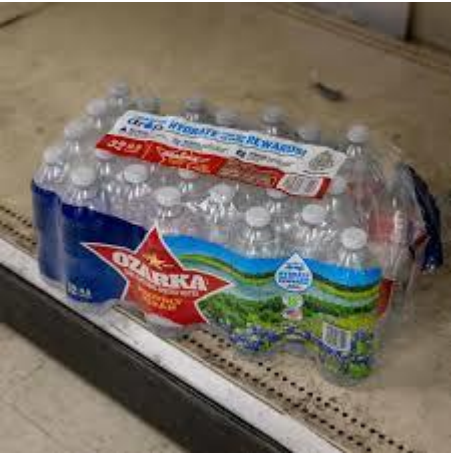
The shift from municipal tap water to packaged drinking water in India reflects a declining trust in public infrastructure. However, emerging scientific evidence suggests that the perceived safety of bottled water is being undermined by invisible contaminants, specifically microplastics and chemical leaching, posing significant long-term health and environmental challenges. Key Summary of Emerging Concerns • The Myth of Purity: While bottled water is regulated for microbiological safety (bacteria/pathogens), it is increasingly found to be a primary vector for microplastics—particles smaller than 5mm. • Widespread Contamination: Studies across Nagpur, Mumbai, and Andhra Pradesh have detected microplastics in 100% of samples, with local brands often showing higher concentrations (up to 212 particles/litre) than national ones. • Chemical Leaching: Plastic containers are prone to leaching antimony, phthalates, and plasticizers into the water, a process accelerated by India\'s high ambient temperatures and UV exposure during transport and storage. • Regulatory Lag: Current FSSAI and BIS standards focus on short-term contaminants but lack protocols for testing microplastics or the cumulative effect of long-term exposure to multiple plastic additives. • Environmental Feedback Loop: The proliferation of single-use plastic bottles contributes to a waste crisis where degrading plastic fragments re-enter the ecosystem, eventually contaminating the very water sources used for bottling. • Infrastructural Dependency: Over-reliance on bottled water highlights a systemic failure in municipal water supply, necessitating a shift toward strengthened public utilities and transparent water quality disclosure. Definitions of Key Concepts • Microplastics: Small plastic pieces less than 5mm in length which can be harmful to our ocean and aquatic life, and increasingly, human health. • Nanoplastics: Particles even smaller than microplastics (typically <1 micrometre) that can cross biological barriers (like the gut or blood-brain barrier) and currently elude standard detection methods. • Chemical Leaching: The process by which chemicals from plastic packaging migrate into the liquid content, often triggered by heat or prolonged shelf life. Constitutional & Legal Provisions

Additional Key Insights • The Nagpur Study: Highlights the disparity between local and national brands, suggesting that smaller bottling units often operate with minimal oversight and sub-standard filtration. • Detection Thresholds: A critical gap exists where nanoplastics remain outside the purview of safety regulations because they are \'invisible\' to current standardized testing equipment. • Point-of-Use (POU) Alternatives: Rather than bottled water, experts suggest POU filtration (like RO or UV systems) and public water ATMs as more sustainable and potentially safer long-term solutions.Conclusion The challenge of bottled water in India is a dual crisis of public health and environmental governance. While it remains a temporary necessity in disaster-prone areas, its \'routine\' status is unsustainable. Addressing this requires a \'Right to Water\' approach that prioritizes the rejuvenation of municipal supply lines and the modernization of FSSAI standards to include microplastic limits, ensuring that \'safe\' water does not come at the cost of long-term biological or ecological integrity. UPSC Relevance • GS Paper II: Statutory, regulatory and various quasi-judicial bodies (FSSAI/BIS); Issues relating to development and management of Social Sector/Services relating to Health. • GS Paper III: Environmental pollution and degradation; Science and Technology- developments and their applications and effects in everyday life (Microplastics/Nanotechnology). • Essay: Interplay between consumerism, environmental sustainability, and public health.


Address : 506, 3rd EYE THREE (III), Opp. Induben Khakhrawala, Girish Cold Drink Cross Road, CG Road, Navrangpura, Ahmedabad, 380009.
Mobile : 8469231587 / 9586028957
Telephone : 079-40098991
E-mail: dics.upsc@gmail.com
Address: A-306, The Landmark, Urjanagar-1, Opp. Spicy Street, Kudasan – Por Road, Kudasan, Gandhinagar – 382421
Mobile : 9723832444 / 9723932444
E-mail: dics.gnagar@gmail.com
Address: 2nd Floor, 9 Shivali Society, L&T Circle, opp. Ratri Bazar, Karelibaugh, Vadodara, 390018
Mobile : 9725692037 / 9725692054
E-mail: dics.vadodara@gmail.com
Address: 403, Raj Victoria, Opp. Pal Walkway, Near Galaxy Circle, Pal, Surat-394510
Mobile : 8401031583 / 8401031587
E-mail: dics.surat@gmail.com
Address: 303,305 K 158 Complex Above Magson, Sindhubhavan Road Ahmedabad-380059
Mobile : 9974751177 / 8469231587
E-mail: dicssbr@gmail.com
Address: 57/17, 2nd Floor, Old Rajinder Nagar Market, Bada Bazaar Marg, Delhi-60
Mobile : 9104830862 / 9104830865
E-mail: dics.newdelhi@gmail.com