





Ahmedabad
(Head Office)Address : 506, 3rd EYE THREE (III), Opp. Induben Khakhrawala, Girish Cold Drink Cross Road, CG Road, Navrangpura, Ahmedabad, 380009.
Mobile : 8469231587 / 9586028957
Telephone : 079-40098991
E-mail: dics.upsc@gmail.com

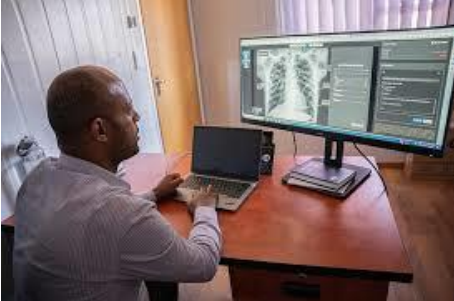
In the lead-up to World Tuberculosis (TB) Day (March 24), the World Health Organization (WHO) has introduced pivotal recommendations for TB diagnostics. These include the use of near point-of-care (nPOC) molecular tests, tongue swab samples, and sputum pooling. For India, which aims for TB elimination by 2025, these technological advancements—ranging from AI-driven screening to decentralized molecular testing—are essential to bridging the gap between undetected cases and timely treatment. Key Summary Points • WHO Diagnostic Breakthroughs: The formal endorsement of nPOC molecular tests and tongue swabs marks a shift away from infrastructure-heavy labs. These tools are particularly vital for children and those unable to produce sputum samples. • AI-Enabled Screening: Portable chest X-rays (CXR) integrated with Artificial Intelligence are being deployed in mobile vans under the Pradhan Mantri TB Mukt Bharat Abhiyaan. This allows for \'active case-finding\' in remote and tribal areas, bypassing the need for onsite radiologists. • Transition from Microscopy to Molecular: India is moving away from low-sensitivity sputum smear microscopy toward Nucleic Acid Amplification Tests (NAAT) like CBNAAT and the indigenous Truenat. The goal is 100% upfront molecular testing to detect drug resistance early. • Tackling Asymptomatic and Extra-Pulmonary TB: National surveys indicate a high prevalence of asymptomatic TB, necessitating non-symptom-based screening. Furthermore, AI-enabled ultrasound and molecular tests are being explored to address Extra-Pulmonary TB, which constitutes 25% of India\'s burden. • Systemic Strengthening: Effective elimination requires \'diagnostic network optimization\'—ensuring that screening leads immediately to sample collection and that patients with non-TB lung lesions (e.g., lung cancer) receive appropriate referrals. • The \'Test and Treat\' Paradigm: New biomarkers are needed to predict disease progression in those with latent TB infection, facilitating more targeted and persuasive TB Preventive Therapy (TPT) in both public and private sectors. Key Definitions • Point-of-Care (POC) Testing: Diagnostic testing performed at or near the site of patient care, providing rapid results to inform immediate clinical decisions. • Sputum Pooling: A strategy where samples from multiple individuals are tested together to increase efficiency and reduce costs in low-prevalence settings; if a pool is positive, individual samples are then tested. • Drug-Resistant TB (DR-TB): A form of TB caused by bacteria that do not respond to at least isoniazid and rifampicin, the two most powerful first-line anti-TB drugs. Constitutional & Legal Provisions • Article 21: The Right to Life includes the right to health. The Supreme Court has repeatedly held that the State has a constitutional obligation to provide health facilities and eliminate diseases that threaten life. • Article 47: A Directive Principle of State Policy (DPSP) that mandates the State to regard the raising of the level of nutrition and the standard of living of its people and the improvement of public health as among its primary duties. • National Strategic Plan (NSP) 2017-2025: A policy framework aimed at eliminating TB in India by 2025, five years ahead of the global Sustainable Development Goal (SDG) target of 2030. • Nikshay Poshan Yojana: A centrally sponsored scheme under the National Health Mission providing financial incentive of 500/month for nutritional support to TB patients. Conclusion The evolution of a \'comprehensive diagnostic toolbox\'—combining AI, molecular biology, and non-invasive sampling—is the most potent lever for TB elimination. By streamlining procurement through the ICMR and ensuring decentralized access, India can reduce out-of-pocket expenditure and break the chain of transmission. The focus must now shift toward robust implementation research to ensure these innovations translate into realworld recovery for the most vulnerable populations. UPSC Relevance • GS Paper II: Issues relating to development and management of Social Sector/Services relating to Health; Government policies and interventions for development in various sectors. • GS Paper III: Science and Technology- developments and their applications and effects in everyday life; Achievements of Indians in science & technology; Indigenization of technology. • Prelims Focus: TB vs. MDR-TB, NAAT/Truenat technology, WHO recommendations, and India’s \'Nikshay\' portal.


Address : 506, 3rd EYE THREE (III), Opp. Induben Khakhrawala, Girish Cold Drink Cross Road, CG Road, Navrangpura, Ahmedabad, 380009.
Mobile : 8469231587 / 9586028957
Telephone : 079-40098991
E-mail: dics.upsc@gmail.com
Address: A-306, The Landmark, Urjanagar-1, Opp. Spicy Street, Kudasan – Por Road, Kudasan, Gandhinagar – 382421
Mobile : 9723832444 / 9723932444
E-mail: dics.gnagar@gmail.com
Address: 2nd Floor, 9 Shivali Society, L&T Circle, opp. Ratri Bazar, Karelibaugh, Vadodara, 390018
Mobile : 9725692037 / 9725692054
E-mail: dics.vadodara@gmail.com
Address: 403, Raj Victoria, Opp. Pal Walkway, Near Galaxy Circle, Pal, Surat-394510
Mobile : 8401031583 / 8401031587
E-mail: dics.surat@gmail.com
Address: 303,305 K 158 Complex Above Magson, Sindhubhavan Road Ahmedabad-380059
Mobile : 9974751177 / 8469231587
E-mail: dicssbr@gmail.com
Address: 57/17, 2nd Floor, Old Rajinder Nagar Market, Bada Bazaar Marg, Delhi-60
Mobile : 9104830862 / 9104830865
E-mail: dics.newdelhi@gmail.com