







Ahmedabad
(Head Office)Address : 506, 3rd EYE THREE (III), Opp. Induben Khakhrawala, Girish Cold Drink Cross Road, CG Road, Navrangpura, Ahmedabad, 380009.
Mobile : 8469231587 / 9586028957
Telephone : 079-40098991
E-mail: dics.upsc@gmail.com

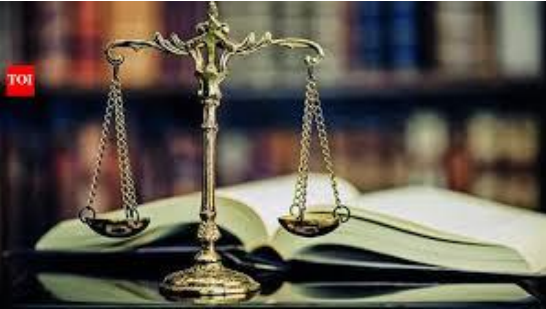
The recent controversy surrounding the Supreme Court\'s reaction to NCERT Class 8 textbooks has reignited the national debate on the boundaries of \'Criminal Contempt\' and the necessity of protecting academic freedom within a democratic framework. • The NCERT Controversy: The Supreme Court recently shelved a textbook and sidelined its authors due to content perceived as denigrating the judiciary, leading to the formation of a new committee of legal experts to oversee educational content regarding the legal system. • Nature of Contempt Power: Contempt is broadly classified into \'Civil\' (disobedience of court orders) and \'Criminal\' (scandalizing the court or lowering its authority). The latter is intended to protect the institution’s public image, which is the bedrock of judicial power. • The \'Broad Shoulders\' Doctrine: Prominent jurists have historically advocated for restraint, suggesting that the judiciary’s dignity is best maintained through the quality of its judgments rather than the suppression of criticism or the use of contempt as a shield for judicial ego. • Substratum of Judicial Power: Unlike the Executive or Legislature, the Judiciary possesses neither \'the sword\' nor \'the purse\'; its authority relies entirely on public trust and goodwill, which can be undermined by reckless or ill-motivated reports. • Balancing Criticism and Institutions: While \'fair comment\' on matters of public interest is a protected right, the law draws a line at criticism that is unfounded in fact or intended to shake public confidence, as this diminishes the court\'s capacity to exercise \'Judicial Review.\' • Internal Challenges: The judiciary faces systemic hurdles in tackling internal issues like corruption and infrastructure; however, experts argue that \'onboarding criticism\' affirms the Rule of Law and helps honest judges by identifying necessary reforms. Key Definitions • Criminal Contempt: Any publication or act which scandalizes or lowers the authority of a court, prejudices judicial proceedings, or obstructs the administration of justice. • Judicial Review: The power of the judiciary to examine the constitutionality of legislative enactments and executive orders, ensuring they align with the fundamental law of the land. • Scandalizing the Court: An archaic but active legal term referring to any hostile criticism that attributes improper motives to judges or the court, thereby shaking public confidence in the legal system. Constitutional & Legal Provisions • Article 129: Declares the Supreme Court to be a \'Court of Record\' and grants it the power to punish for contempt of itself. • Article 215: Grants similar powers to High Courts to act as courts of record and punish for contempt. • Article 19(1)(a) vs. 19(2): While the Constitution guarantees \'Freedom of Speech and Expression,\' Article 19(2) allows the State to impose reasonable restrictions in relation to \'Contempt of Court.\' • Contempt of Courts Act, 1971: The statutory framework that defines civil and criminal contempt and outlines the procedures and limitations for initiating such proceedings. Conclusion: The intersection of academic content and judicial dignity highlights a delicate constitutional balance. While the judiciary must protect its institutional integrity from motivated denigration, it must also act as the ultimate guardian of free speech. A \'broad-shouldered\' approach to criticism, coupled with a transparent curriculum that honestly apprises students of both the triumphs and challenges of the legal system, is essential for a robust democracy. Ultimately, judicial respect is earned through fairness and objectivity, not through the silencing of academic discourse. UPSC Relevance • GS Paper II (Polity): Highly relevant for topics such as \'Structure, organization and functioning of the Judiciary,\' \'Separation of powers between various organs,\' and \'Fundamental Rights\' (specifically Freedom of Speech vs. Contempt). • GS Paper IV (Ethics): Relevant to the \'Searchlight Inward\' concept—professional ethics for judges and the moral responsibility of institutions to tolerate constructive criticism. • Essay/Current Affairs: The role of NCERT in nation-building and the debate over \'Judicial Activism\' vs. \'Judicial Restraint.\'


Address : 506, 3rd EYE THREE (III), Opp. Induben Khakhrawala, Girish Cold Drink Cross Road, CG Road, Navrangpura, Ahmedabad, 380009.
Mobile : 8469231587 / 9586028957
Telephone : 079-40098991
E-mail: dics.upsc@gmail.com
Address: A-306, The Landmark, Urjanagar-1, Opp. Spicy Street, Kudasan – Por Road, Kudasan, Gandhinagar – 382421
Mobile : 9723832444 / 9723932444
E-mail: dics.gnagar@gmail.com
Address: 2nd Floor, 9 Shivali Society, L&T Circle, opp. Ratri Bazar, Karelibaugh, Vadodara, 390018
Mobile : 9725692037 / 9725692054
E-mail: dics.vadodara@gmail.com
Address: 403, Raj Victoria, Opp. Pal Walkway, Near Galaxy Circle, Pal, Surat-394510
Mobile : 8401031583 / 8401031587
E-mail: dics.surat@gmail.com
Address: 303,305 K 158 Complex Above Magson, Sindhubhavan Road Ahmedabad-380059
Mobile : 9974751177 / 8469231587
E-mail: dicssbr@gmail.com
Address: 57/17, 2nd Floor, Old Rajinder Nagar Market, Bada Bazaar Marg, Delhi-60
Mobile : 9104830862 / 9104830865
E-mail: dics.newdelhi@gmail.com