





Ahmedabad
(Head Office)Address : 506, 3rd EYE THREE (III), Opp. Induben Khakhrawala, Girish Cold Drink Cross Road, CG Road, Navrangpura, Ahmedabad, 380009.
Mobile : 8469231587 / 9586028957
Telephone : 079-40098991
E-mail: dics.upsc@gmail.com

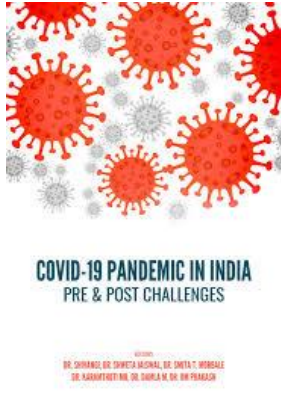
• Absence of Formal Inquiry and Unofficial Reckoning: Unlike many developed nations such as the UK, New Zealand, and Sweden, India has not conducted a formal government inquiry into its pandemic management. In the absence of state-led accountability, a body of literature from medical experts, policy analysts, and journalists has emerged as an \'unofficial reckoning,\' highlighting the systemic gaps in the clinical, logistical, and human dimensions of the 2020-2022 period. • Logistical Disruption and Migrant Crisis: The sudden imposition of a nationwide lockdown with only four hours\' notice is identified as the defining feature of the crisis. The suspension of the Indian Railways without a contingency plan for millions in transit led to a massive humanitarian migration on foot. While \'Shramik Specials\' were eventually introduced, the initial lack of logistical foresight created a deep disconnect between state policy and the reality of the informal workforce. • Healthcare Infrastructure and Oxygen Supply Chain: Critical failures were documented in the scaling of ICU capacity and ventilators, which reportedly fell by 30% to 46% between the first and second waves as the government prematurely declared victory. Furthermore, the slow installation of Pressure Swing Adsorption (PSA) oxygen plants—with only 38 installed against a target of 500 by the peak of the second wave— exposed the lethality of \'logistical bottlenecks\' in life-saving infrastructure. • The \'Counting Problem\' and Excess Mortality: A central theme is the significant discrepancy between official state data and ground realities. While local registers in cities like Lucknow documented 101 cremations in a single day, the official state count stood at 14. By 2025, data from the Office of the Registrar General indicated a 25.9% spike in registered deaths for 2021 (1.02 crore), suggesting that the \'state’s capacity to not count\' became a tool for managing public perception. • Vulnerability of Frontline and Ground Workers: The pandemic highlighted the lack of institutional protection for ground-level actors. This included schoolteachers forced into election duty despite pregnancy, ASHA workers operating with minimal support, and over 500 journalists who died in the line of duty without being officially recognized or compensated as \'frontline workers.\' • Depoliticization of State Failure: Despite the colossal human cost, the pandemic failed to emerge as a significant electoral or \'poll issue.\' In many rural areas, the catastrophe was internalized as \'divine intervention\' rather than \'state failure.\' This sociological shift reflects a broader challenge in democratic accountability, where those who bore the highest costs of policy failure remain unheard in the national political discourse. Key Definitions and Legal Provisions Epidemic Diseases Act, 1897: The colonial-era legislation invoked by the Union and State governments to exercise emergency powers during COVID-19; it has been criticized for being outdated and focused on \'policing\' rather than \'public health.\' Disaster Management Act, 2005: The primary legal framework used to implement the lockdown and coordinate the National Executive Committee (NEC) and State Executive Committees (SEC). Universal Health Coverage (UHC): A healthcare system where all individuals have access to the health services they need without suffering financial hardship. Pressure Swing Adsorption (PSA): A technology used to separate oxygen from a gas mixture under pressure; PSA plants became the primary solution for on-site hospital oxygen generation. Excess Mortality: The difference between the observed number of deaths in a specific period and the expected number of deaths based on historical trends. Conclusion Six years after the onset of COVID-19, the core issue is no longer debating the success or failure of specific maneuvers, but acknowledging the structural invisibility of those who suffered most. The Indian state\'s response demonstrated high-level mobilization but low-level empathy for the marginalized. Until the \'counting problem\' is addressed and the human costs of policy failures are integrated into future disaster frameworks, India remains vulnerable to the same systemic blind spots in subsequent public health emergencies. UPSC Relevance GS Paper II (Governance & Social Justice): Relevant for \'Issues relating to development and management of Social Sector/Services relating to Health.\' The pandemic serves as a case study for the limitations of the Epidemic Diseases Act and the need for a comprehensive Public Health Act.


Address : 506, 3rd EYE THREE (III), Opp. Induben Khakhrawala, Girish Cold Drink Cross Road, CG Road, Navrangpura, Ahmedabad, 380009.
Mobile : 8469231587 / 9586028957
Telephone : 079-40098991
E-mail: dics.upsc@gmail.com
Address: A-306, The Landmark, Urjanagar-1, Opp. Spicy Street, Kudasan – Por Road, Kudasan, Gandhinagar – 382421
Mobile : 9723832444 / 9723932444
E-mail: dics.gnagar@gmail.com
Address: 2nd Floor, 9 Shivali Society, L&T Circle, opp. Ratri Bazar, Karelibaugh, Vadodara, 390018
Mobile : 9725692037 / 9725692054
E-mail: dics.vadodara@gmail.com
Address: 403, Raj Victoria, Opp. Pal Walkway, Near Galaxy Circle, Pal, Surat-394510
Mobile : 8401031583 / 8401031587
E-mail: dics.surat@gmail.com
Address: 303,305 K 158 Complex Above Magson, Sindhubhavan Road Ahmedabad-380059
Mobile : 9974751177 / 8469231587
E-mail: dicssbr@gmail.com
Address: 57/17, 2nd Floor, Old Rajinder Nagar Market, Bada Bazaar Marg, Delhi-60
Mobile : 9104830862 / 9104830865
E-mail: dics.newdelhi@gmail.com