


Ahmedabad
(Head Office)Address : 506, 3rd EYE THREE (III), Opp. Induben Khakhrawala, Girish Cold Drink Cross Road, CG Road, Navrangpura, Ahmedabad, 380009.
Mobile : 8469231587 / 9586028957
Telephone : 079-40098991
E-mail: dics.upsc@gmail.com

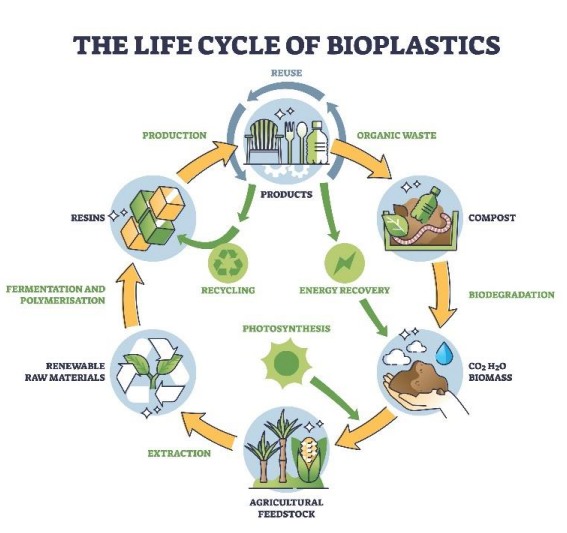
Context: The Department of Consumer Affairs is formulating an ambitious roadmap to replace conventional plastic sachets with biodegradable alternatives. This initiative targets one of the most pervasive sources of environmental litter, starting with high-volume categories like pan masala and gutkha, to mitigate soil pollution and urban drainage systemic failures. Analysis of the Sachet-Waste Challenge and Government Strategy • The \'Small Format\' Crisis: While sachets offer affordability and convenience, they represent a significant portion of annual plastic waste. According to the Central Pollution Control Board (CPCB), nearly 40% of these small packs remain uncollected due to their size, leading to the choking of urban drainage systems and longterm soil degradation. • Failure of Multi-layered Laminates: Current shifts to paper-based laminates have proven insufficient as they often utilize plastic-based adhesives and mixed materials that are neither truly biodegradable nor economically viable for recyclers to collect and process. • Targeted Pilot Phase: The government plans a phased transition, identifying pan masala and gutkha sachets as the primary targets for the pilot. These products contribute disproportionately to litter in both rural and urban landscapes due to their high consumption volume (tens of billions annually). • Broad Industry Impact: The plan extends beyond tobacco products to include the Fast-Moving Consumer Goods (FMCG) sector, encompassing personal care (shampoos, detergents) and food products (spices, coffee, dairy whiteners) that rely on sub-10g packaging. • Economic Viability Concerns: Leading FMCG players have flagged the \'cost-premium\' of biodegradable materials compared to traditional polymers. Success will depend on the government’s ability to facilitate the development of cost-effective, scalable, and durable plastic-free alternatives. • Tackling the Informal Sector: A significant hurdle remains the widespread use of non-compliant plastic packaging in the informal sector, where enforcement of the Plastic Waste Management Rules is historically weak. Essential Definitions • Biodegradable Plastic: Plastics that can be decomposed by the action of living organisms, usually bacteria, into water, carbon dioxide, and biomass under specific environmental conditions. • Multi-layered Packaging (MLP): Packaging material which has at least one layer of plastic as the main ingredient in combination with one or more layers of other materials such as aluminium foil or paper. • Single-Use Plastic (SUP): Plastic items intended to be used once for the same purpose before being disposed of or recycled. Constitutional and Legal Framework • Article 48A (DPSP): Mandates that the State shall endeavor to protect and improve the environment and to safeguard the forests and wildlife of the country. • Article 51A(g) (Fundamental Duties): It shall be the duty of every citizen of India to protect and improve the natural environment including forests, lakes, rivers, and wildlife. • Plastic Waste Management (Amendment) Rules, 2021: This framework provides the legal basis for the ban on identified single-use plastic items and sets the stage for Extended Producer Responsibility (EPR). • Environment Protection Act, 1986: The umbrella legislation under which the central government issues notifications to regulate or prohibit the use of hazardous substances, including specific types of plastic packaging. Conclusion The shift toward biodegradable sachets is a necessary evolution in India’s \'Circular Economy\' journey. However, the transition must be supported by robust Research & Development (R&D) to bring down costs and a stringent enforcement mechanism that holds both the formal and informal sectors accountable. Moving from \'recyclability\' to \'biodegradability\' for small-format packaging may be the only viable solution to the persistent problem of uncollectible plastic litter. UPSC Relevance • GS Paper III (Environment & Economy): Conservation, environmental pollution and degradation; Government budgeting and subsidies for green technology; Challenges of waste management in the FMCG sector. • GS Paper II (Governance): Policy intervention for development in various sectors and issues arising out of their design and implementation.


Address : 506, 3rd EYE THREE (III), Opp. Induben Khakhrawala, Girish Cold Drink Cross Road, CG Road, Navrangpura, Ahmedabad, 380009.
Mobile : 8469231587 / 9586028957
Telephone : 079-40098991
E-mail: dics.upsc@gmail.com
Address: A-306, The Landmark, Urjanagar-1, Opp. Spicy Street, Kudasan – Por Road, Kudasan, Gandhinagar – 382421
Mobile : 9723832444 / 9723932444
E-mail: dics.gnagar@gmail.com
Address: 2nd Floor, 9 Shivali Society, L&T Circle, opp. Ratri Bazar, Karelibaugh, Vadodara, 390018
Mobile : 9725692037 / 9725692054
E-mail: dics.vadodara@gmail.com
Address: 403, Raj Victoria, Opp. Pal Walkway, Near Galaxy Circle, Pal, Surat-394510
Mobile : 8401031583 / 8401031587
E-mail: dics.surat@gmail.com
Address: 303,305 K 158 Complex Above Magson, Sindhubhavan Road Ahmedabad-380059
Mobile : 9974751177 / 8469231587
E-mail: dicssbr@gmail.com
Address: 57/17, 2nd Floor, Old Rajinder Nagar Market, Bada Bazaar Marg, Delhi-60
Mobile : 9104830862 / 9104830865
E-mail: dics.newdelhi@gmail.com