


Ahmedabad
(Head Office)Address : 506, 3rd EYE THREE (III), Opp. Induben Khakhrawala, Girish Cold Drink Cross Road, CG Road, Navrangpura, Ahmedabad, 380009.
Mobile : 8469231587 / 9586028957
Telephone : 079-40098991
E-mail: dics.upsc@gmail.com

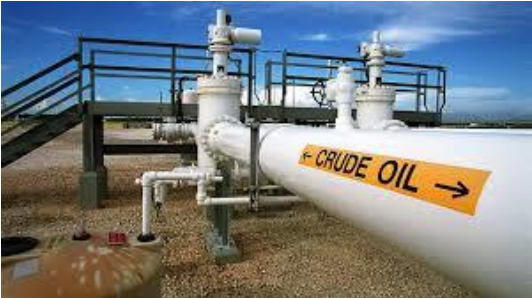
• Ideological Warfare and Regime Change: Unlike previous conflicts focused on nuclear containment, the current U.S.-Israel campaign against Iran is fundamentally aimed at dismantling the \'radical ideology\' driving the Iranian state. The objective is a \'regime change\' to neutralize Iran’s role as the \'great disrupter\' of West Asia and sever its support for non-state actors like Hezbollah, the Houthis, and Iraqi militias. • Iranian Strategy of Asymmetric Escalation: Facing superior firepower, Iran has transitioned from \'strategic restraint\' to a widened conflict. By targeting regional infrastructure and U.S. security umbrellas in the Gulf, Iran is exposing the vulnerability of Gulf states and putting global energy security at risk to force an early American withdrawal. • Mixed Messaging from Washington: While President Trump seeks a rapid resolution—modeled after \'transactional\' settlements in Venezuela or Syria—Iran’s ability to disrupt the Strait of Hormuz makes a quick exit difficult. This has led to contradictory U.S. signals, including asking India to purchase more Russian oil to stabilize global prices amidst the volatility. • Regional Power Vacuum: A significantly weakened Iran may empower other regional players like Türkiye, Saudi Arabia, and Pakistan. This shift threatens to rewrite the security architecture of West Asia, potentially pushing Gulf states deeper into the U.S. security fold while creating new ambitions for intermediate powers. • Global Strategic Bandwidth: The conflict distracts the U.S. from the Indo-Pacific, potentially emboldening Russia in Ukraine and China regarding Taiwan. For India, a distracted U.S. is counterproductive to its goal of securing greater American focus on the China-centric threats in the Indian Ocean. • Need for a Robust Regional Policy: The crisis highlights that India\'s \'aggregation of bilateral relations\' is insufficient. A more proactive, balanced regional policy is required to manage contradictions between allies (e.g., Saudi-UAE tensions) and protect Indian investments like the Chabahar port amidst the intensifying West Asian chaos. Key Definitions • Proxy War: A conflict where third parties (often non-state actors) fight on behalf of or with the support of larger powers, who do not engage each other directly. • Regime Change: The forced replacement of one government regime with another, often through military intervention or supported internal uprisings. • Strategic Restraint: A policy of deliberately limiting the use of force or avoiding escalation in response to provocations, often to prevent a larger, more destructive conflict. Constitutional & Legal Framework • Article 51: A Directive Principle of State Policy (DPSP) that mandates the State to promote international peace and security, maintain just and honorable relations between nations, and foster respect for international law. • The Passports Act, 1967: Provides the legal framework for the Union government to regulate the travel of its citizens and ensure their protection abroad through diplomatic channels during foreign conflicts. • Allocation of Business Rules, 1961: Governs how the Ministry of External Affairs (MEA) manages foreign policy and represents India\'s interests in international forums like the UN. Additional Important Keypoints • Energy Security Vulnerability: With the Strait of Hormuz at risk, India faces an \'imported inflation\' threat, as West Asian oil remains its primary energy source. • Abraham Accords: These normalization agreements between Israel and Arab states (UAE, Bahrain) are being tested as the conflict forces Arab populations to reconcile normalization with regional instability. • The China-Russia Factor: Both nations benefit from the U.S. being \'bogged down\' in a long-term West Asian conflict, reducing the pressure on their respective theaters of interest. Conclusion The Iran war represents a fundamental reordering of West Asian geopolitics. For India, the conflict is not merely a distant military engagement but a direct threat to its economic stability and strategic neighborhood. Moving beyond a \'reactive\' mode to a \'proactive\' regional policy is now essential to navigate the tightening space between U.S. demands, Chinese ambitions, and the volatility of West Asian power shifts. UPSC Relevance • GS Paper II: Bilateral, regional and global groupings and agreements involving India and/or affecting India’s interests; Effect of policies and politics of developed and developing countries on India’s interests; Important International institutions. • GS Paper III: Energy security; Linkages between development and spread of extremism (Proxy wars). • Prelims: Mapping (Strait of Hormuz, Persian Gulf), International Relations (Abraham Accords, I2U2), and Indian Diaspora statistics.


Address : 506, 3rd EYE THREE (III), Opp. Induben Khakhrawala, Girish Cold Drink Cross Road, CG Road, Navrangpura, Ahmedabad, 380009.
Mobile : 8469231587 / 9586028957
Telephone : 079-40098991
E-mail: dics.upsc@gmail.com
Address: A-306, The Landmark, Urjanagar-1, Opp. Spicy Street, Kudasan – Por Road, Kudasan, Gandhinagar – 382421
Mobile : 9723832444 / 9723932444
E-mail: dics.gnagar@gmail.com
Address: 2nd Floor, 9 Shivali Society, L&T Circle, opp. Ratri Bazar, Karelibaugh, Vadodara, 390018
Mobile : 9725692037 / 9725692054
E-mail: dics.vadodara@gmail.com
Address: 403, Raj Victoria, Opp. Pal Walkway, Near Galaxy Circle, Pal, Surat-394510
Mobile : 8401031583 / 8401031587
E-mail: dics.surat@gmail.com
Address: 303,305 K 158 Complex Above Magson, Sindhubhavan Road Ahmedabad-380059
Mobile : 9974751177 / 8469231587
E-mail: dicssbr@gmail.com
Address: 57/17, 2nd Floor, Old Rajinder Nagar Market, Bada Bazaar Marg, Delhi-60
Mobile : 9104830862 / 9104830865
E-mail: dics.newdelhi@gmail.com