


Ahmedabad
(Head Office)Address : 506, 3rd EYE THREE (III), Opp. Induben Khakhrawala, Girish Cold Drink Cross Road, CG Road, Navrangpura, Ahmedabad, 380009.
Mobile : 8469231587 / 9586028957
Telephone : 079-40098991
E-mail: dics.upsc@gmail.com

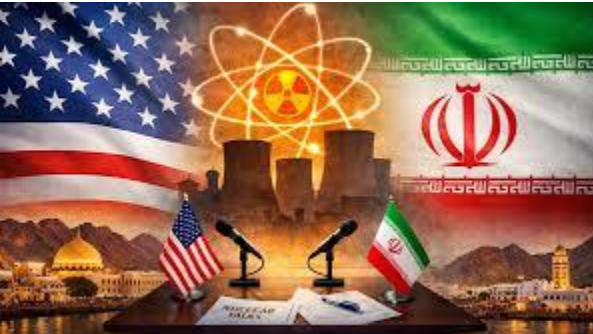
The geopolitical landscape of West Asia is currently defined by a sharp contradiction between the U.S. executive assessment and independent intelligence regarding Iran’s nuclear capabilities. While the White House asserts that Tehran is nearing weapons-grade material, nuclear experts and international monitors suggest that the program remains largely incapacitated following military strikes in mid-2024. Key Highlights and Summary • Discrepancy in Threat Perception: The Trump administration claims Iran is within days of producing fissile material. Conversely, experts from the IAEA and organizations like the Institute for Science and International Security report a \'de facto suspension\' of enrichment activities. • Impact of \'Operation Midnight Hammer\': U.S. B-2 bombers and cruise missiles significantly damaged key facilities at Fordow, Natanz, and Isfahan in June 2025. Experts estimate these strikes set the program back by 1 to 2 years, with high-purity uranium stockpiles currently buried under rubble. • Hardening of Defenses: Satellite imagery indicates that while enrichment is stalled, Iran is \'hardening\' its remaining sites by pouring concrete and expanding tunnel networks under Pickaxe Mountain (Natanz) to protect against future aerial bombardments. • Missile and Space Program Concerns: Despite the nuclear stall, Iran\'s development of Space Launch Vehicles (SLVs) is viewed as a proxy for Intercontinental Ballistic Missile (ICBM) technology. The U.S. Defense Intelligence Agency suggests an ICBM capability could be achieved by 2035. • Intelligence Penetration: High-profile operations, including the targeted killing of over a dozen nuclear scientists last summer, demonstrate deep intelligence penetration by Israel and the U.S., creating a \'low confidence\' environment for Iran to attempt a clandestine \'breakout.\' • Diplomatic Crossroads: Upcoming talks in Geneva are viewed as a \'last-ditch\' effort. The U.S. demands a comprehensive \'permanent deal\' covering nuclear activities, ballistic missiles, and regional proxy support as a prerequisite to avoiding further military action. Constitutional and Legal Provisions • NPT (Non-Proliferation Treaty): As a signatory, Iran is legally committed to peaceful nuclear use. The current lack of IAEA inspections, however, challenges the \'Safeguards Agreement\' framework. • U.N. Security Council Resolution 2231: This resolution, which once underpinned the JCPOA, remains the legal touchstone for international sanctions and the \'snapback\' mechanism. • U.S. War Powers Resolution: This governs the President’s ability to initiate military action (like Operation Midnight Hammer) without a formal declaration of war by Congress, often justified under \'national security interests.\' • IAEA Mandate: The International Atomic Energy Agency is the sole global \'nuclear watchdog\' authorized to verify that nuclear materials are not diverted to weapons. Key Definitions • Breakout Time: The duration required for a country to produce enough weapons-grade uranium ($90\%$ $U-235$) for a single nuclear explosive device. • Fissile Material: Radioactive isotopes (like U-235 or Pu-239) capable of sustaining a nuclear fission chain reaction, essential for nuclear weapons. • Hardening: The process of making a facility resistant to the effects of a nuclear or conventional strike, typically through deep underground burial or reinforced concrete. • Enrichment: The process of increasing the percentage of U-235 in natural uranium; 5\% is typically for power, while 60\%+ is considered near-weapons grade. Conclusion The situation presents a classic case of \'coercive diplomacy.\' While physical evidence suggests Iran\'s nuclear infrastructure is currently \'on hold\' due to military setbacks, the U.S. administration is utilizing the rhetoric of an imminent threat to secure broader concessions on regional influence and missile technology. The primary risk remains a \'miscalculation\' where political posturing triggers a pre-emptive regional war despite the technical stall in nuclear advancement. UPSC Relevance • GS Paper II: International Relations; Effect of policies and politics of developed and developing countries on India’s interests (Energy security and the 8 million-strong Indian diaspora in the Gulf). • GS Paper III: Science and Technology (Nuclear energy basics); Internal and External Security (Proliferation of WMDs). • Strategic Significance: India\'s \'Strategic Autonomy\' is tested as it balances ties with the U.S. while maintaining its investments in Iran\'s Chabahar Port, which serves as a gateway to Central Asia, bypassing Pakistan.


Address : 506, 3rd EYE THREE (III), Opp. Induben Khakhrawala, Girish Cold Drink Cross Road, CG Road, Navrangpura, Ahmedabad, 380009.
Mobile : 8469231587 / 9586028957
Telephone : 079-40098991
E-mail: dics.upsc@gmail.com
Address: A-306, The Landmark, Urjanagar-1, Opp. Spicy Street, Kudasan – Por Road, Kudasan, Gandhinagar – 382421
Mobile : 9723832444 / 9723932444
E-mail: dics.gnagar@gmail.com
Address: 2nd Floor, 9 Shivali Society, L&T Circle, opp. Ratri Bazar, Karelibaugh, Vadodara, 390018
Mobile : 9725692037 / 9725692054
E-mail: dics.vadodara@gmail.com
Address: 403, Raj Victoria, Opp. Pal Walkway, Near Galaxy Circle, Pal, Surat-394510
Mobile : 8401031583 / 8401031587
E-mail: dics.surat@gmail.com
Address: 303,305 K 158 Complex Above Magson, Sindhubhavan Road Ahmedabad-380059
Mobile : 9974751177 / 8469231587
E-mail: dicssbr@gmail.com
Address: 57/17, 2nd Floor, Old Rajinder Nagar Market, Bada Bazaar Marg, Delhi-60
Mobile : 9104830862 / 9104830865
E-mail: dics.newdelhi@gmail.com