





Ahmedabad
(Head Office)Address : 506, 3rd EYE THREE (III), Opp. Induben Khakhrawala, Girish Cold Drink Cross Road, CG Road, Navrangpura, Ahmedabad, 380009.
Mobile : 8469231587 / 9586028957
Telephone : 079-40098991
E-mail: dics.upsc@gmail.com

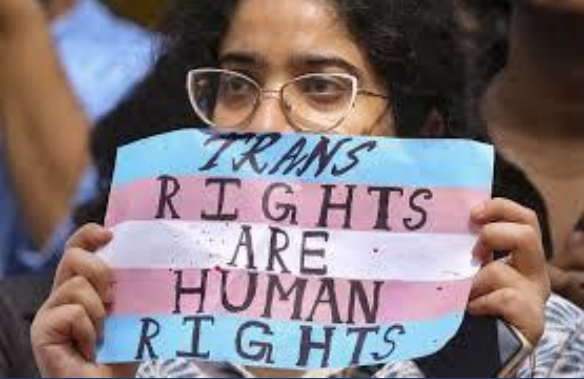
The Rajasthan High Court, in the case of Ganga Kumari v. State of Rajasthan (2026), has issued a landmark ruling regarding the reservation and identity rights of transgender persons. The court criticized the state\'s existing policy and raised serious constitutional concerns over the newly passed Transgender Persons (Protection of Rights) Amendment Bill, 2026. Summary of the High Court Ruling • Interim Weightage: The Court directed the Rajasthan government to grant 3% additional weightage in marks to transgender candidates for state government jobs and admissions to educational institutions as an interim measure. • Criticism of OBC Classification: The Bench termed the state’s January 2023 notification—which placed all transgender persons in the Other Backward Classes (OBC) category—as a \'mere facade\' and an \'eyewash.\' • Substantive Equality vs. Formal Ritual: The Court observed that since many transgender persons already belong to SC/ST categories, placing them in the OBC list provides no real benefit and may even dilute their existing entitlements. • Concerns over 2026 Amendment Bill: The Court flagged that the Parliament’s recent Amendment Bill, which mandates administrative certification for gender identity, risks reducing an \'inviolable aspect of personhood\' into a \'State-mediated entitlement.\' • Right to Self-Identity: Reaffirming the NALSA (2014) principles, the Court stated that \'Selfhood is not a matter of concession\' but a fundamental right under Articles 14, 15, 16, and 21. • Directive for Policy Framework: The state was ordered to constitute a committee to conduct a socioeconomic study and formulate a dedicated reservation framework (preferably horizontal) that gives actual effect to the Supreme Court’s mandate. Key Constitutional & Legal Provisions • Article 14 & 15: Guarantees equality before the law and prohibits discrimination on grounds of \'sex,\' which the Judiciary interprets to include \'gender identity.\' • Article 16: Provides for equality of opportunity in public employment. The HC noted that the state is under a \'constitutional obligation\' to provide tangible reservation for the marginalized transgender community. • Article 21: The right to life and personal liberty includes the right to live with dignity and the right to self-determine one\'s gender identity. • NALSA vs. Union of India (2014): The foundational Supreme Court judgment that recognized transgender persons as the \'Third Gender\' and upheld the right to self-perceived gender identity without medical intervention. Definitions of Key Terms • Horizontal Reservation: A form of reservation that cuts across vertical categories (like SC, ST, OBC). For example, a 1% horizontal quota for transgenders means they are selected from within their respective social categories (SC-Transgender, General-Transgender, etc.). • Vertical Reservation: Reservations specifically for social groups like SC, ST, and OBC. The Rajasthan government’s attempt to put all transgenders in the OBC category is a vertical approach that ignores their pre-existing caste identities. • Self-Perceived Gender Identity: The internal sense of being male, female, or third gender, regardless of the sex assigned at birth. Comparison: 2019 Act vs. 2026 Amendment Bill Feature Transgender Persons Act, 2019 Amendment Bill, 2026 Identity Recognition Based on self-perceived identity. Conditioned upon medical/administrative certification. Verification Simple application to District Magistrate. Mandatory scrutiny by a Medical Board. Definition Broad (includes trans-men, trans-women). Narrower; specifically lists socio-cultural groups (e.g., Kinners, Eunuchs). Conclusion The Rajasthan High Court’s intervention underscores the \'omissive discrimination\' where states fail to provide functional reservation despite judicial mandates. By granting the 3% marks weightage, the Court has moved beyond theoretical rights to practical empowerment. However, the conflict between the 2026 Amendment\'s \'medicalized\' approach and the NALSA \'self-identity\' principle suggests a looming constitutional challenge in higher courts. UPSC Relevance • GS Paper II: Welfare schemes for vulnerable sections; Mechanisms, laws, institutions, and Bodies constituted for the protection and betterment of these vulnerable sections. • GS Paper IV: Social Justice and Ethics (Rights of marginalized communities). • Essay/Interview: Issues of identity, dignity, and the role of the \'State as a Facilitator\' versus \'State as a Gatekeeper\' for human rights.


Address : 506, 3rd EYE THREE (III), Opp. Induben Khakhrawala, Girish Cold Drink Cross Road, CG Road, Navrangpura, Ahmedabad, 380009.
Mobile : 8469231587 / 9586028957
Telephone : 079-40098991
E-mail: dics.upsc@gmail.com
Address: A-306, The Landmark, Urjanagar-1, Opp. Spicy Street, Kudasan – Por Road, Kudasan, Gandhinagar – 382421
Mobile : 9723832444 / 9723932444
E-mail: dics.gnagar@gmail.com
Address: 2nd Floor, 9 Shivali Society, L&T Circle, opp. Ratri Bazar, Karelibaugh, Vadodara, 390018
Mobile : 9725692037 / 9725692054
E-mail: dics.vadodara@gmail.com
Address: 403, Raj Victoria, Opp. Pal Walkway, Near Galaxy Circle, Pal, Surat-394510
Mobile : 8401031583 / 8401031587
E-mail: dics.surat@gmail.com
Address: 303,305 K 158 Complex Above Magson, Sindhubhavan Road Ahmedabad-380059
Mobile : 9974751177 / 8469231587
E-mail: dicssbr@gmail.com
Address: 57/17, 2nd Floor, Old Rajinder Nagar Market, Bada Bazaar Marg, Delhi-60
Mobile : 9104830862 / 9104830865
E-mail: dics.newdelhi@gmail.com