






Ahmedabad
(Head Office)Address : 506, 3rd EYE THREE (III), Opp. Induben Khakhrawala, Girish Cold Drink Cross Road, CG Road, Navrangpura, Ahmedabad, 380009.
Mobile : 8469231587 / 9586028957
Telephone : 079-40098991
E-mail: dics.upsc@gmail.com

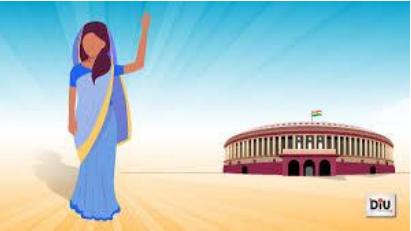
The implementation of the Constitution (One Hundred and Sixth Amendment) Act, 2023, has entered a critical new phase with reports suggesting a significant shift in government strategy. Originally, the Act\'s operationalisation was contingent upon a fresh Census and a subsequent delimitation exercise. However, the current discourse indicates a move to decouple the reservation from the upcoming Census (expected to include caste enumeration) by potentially utilizing 2011 Census data. This plan is coupled with a monumental proposal to expand the Lok Sabha\'s strength by approximately 50%, increasing it from 543 to 816 seats. While aimed at expediting gender justice, these structural changes raise complex questions regarding federal parity, the northsouth demographic divide, and the representational accuracy of decade-old data in a rapidly urbanizing India. • Expedited Implementation: The government appears set to bypass the earlier requirement of waiting for the next Census, aiming to implement the 1/3rd women\'s reservation ahead of the 2029 general elections. • Massive Legislative Expansion: A proposal to increase Lok Sabha seats by nearly 50% (to 816) is being considered to accommodate the reservation without reducing the absolute number of seats available for general candidates. • Delimitation Concerns: Lifting the 1970s-era freeze on seat allocation risks deepening the north-south divide; northern states with higher fertility rates stand to gain more absolute seats than southern states that successfully stabilized their populations. • Data Reliability: Using 2011 Census data for a 2026- 27 exercise is contested, as it overlooks massive demographic shifts, migration patterns, and urbanization that have occurred over the last 15 years. • Sub-quota Demands: The move to act before the next Census may temporarily sideline demands for an \'OBC sub-quota\' within the women’s reservation, a point of significant contention among opposition parties. • Operational Ambiguity: Critical details regarding the rotation of reserved constituencies remain unresolved, which is essential for ensuring candidate continuity and legislative accountability. Key Definitions & Technical Terms • Delimitation: The act of redrawing boundaries of Lok Sabha and Assembly seats to represent changes in population over time, ensuring \'one citizen, one vote, one value.\' • First-Past-The-Post (FPTP): An electoral system where the candidate with the most votes in a constituency wins, regardless of whether they secure an absolute majority • Nari Shakti Vandan Adhiniyam: The official name for the 106th Constitutional Amendment Act providing 33% reservation for women in legislative bodies. • Federal Compact: The underlying agreement between the Union and States in India to maintain a balance of power and representation, currently strained by demographic asymmetries. Constitutional & Legal Provisions • Article 82: Provides for the readjustment of seats in the Lok Sabha after each Census; however, the 42nd and 84th Amendments froze this until the first Census after 2026. • Article 330A & 332A: Newly inserted by the 106th Amendment to provide reservation for women in the Lok Sabha and State Legislative Assemblies respectively. • Article 170: Governs the composition of State Legislative Assemblies and the delimitation of their constituencies. • The Constitution (106th Amendment) Act, 2023: Specifically mandates that women’s reservation will come into effect after delimitation is undertaken based on the first Census conducted after the Act\'s commencement. Additional Key Points for Examination • The 2026 Deadline: The constitutional freeze on delimitation expires in 2026, making the upcoming years a \'foundational moment\' for India\'s representative democracy. • Economic Divergence: Southern states contribute disproportionately to India’s GDP; a reduction in their political weight via population-based delimitation could lead to \'taxation without proportionate representation\' concerns. • Global Precedents: Many mature democracies use a \'cap\' or a \'weighted formula\' for seat allocation to protect the interests of regions that have achieved demographic stability. Conclusion The proposed \'decoupling\' of women’s reservation from the new Census marks a significant tactical shift in Indian politics. While it fulfills a long-standing demand for gender parity, the concurrent expansion of the Parliament and the potential use of outdated data create a complex \'structural reconfiguration.\' To ensure that this reform strengthens rather than weakens the democratic fabric, it must be balanced against the principles of federalism and the need for accurate, updated demographic representation. UPSC Relevance • GS Paper II (Polity & Governance): Constitutional Amendments; Parliament and State Legislatures— structure, functioning, conduct of business, powers & privileges; Federalism and the North-South divide; Issues related to women. • GS Paper I (Social Issues): Population and associated issues; Women\'s empowerment.


Address : 506, 3rd EYE THREE (III), Opp. Induben Khakhrawala, Girish Cold Drink Cross Road, CG Road, Navrangpura, Ahmedabad, 380009.
Mobile : 8469231587 / 9586028957
Telephone : 079-40098991
E-mail: dics.upsc@gmail.com
Address: A-306, The Landmark, Urjanagar-1, Opp. Spicy Street, Kudasan – Por Road, Kudasan, Gandhinagar – 382421
Mobile : 9723832444 / 9723932444
E-mail: dics.gnagar@gmail.com
Address: 2nd Floor, 9 Shivali Society, L&T Circle, opp. Ratri Bazar, Karelibaugh, Vadodara, 390018
Mobile : 9725692037 / 9725692054
E-mail: dics.vadodara@gmail.com
Address: 403, Raj Victoria, Opp. Pal Walkway, Near Galaxy Circle, Pal, Surat-394510
Mobile : 8401031583 / 8401031587
E-mail: dics.surat@gmail.com
Address: 303,305 K 158 Complex Above Magson, Sindhubhavan Road Ahmedabad-380059
Mobile : 9974751177 / 8469231587
E-mail: dicssbr@gmail.com
Address: 57/17, 2nd Floor, Old Rajinder Nagar Market, Bada Bazaar Marg, Delhi-60
Mobile : 9104830862 / 9104830865
E-mail: dics.newdelhi@gmail.com