


Ahmedabad
(Head Office)Address : 506, 3rd EYE THREE (III), Opp. Induben Khakhrawala, Girish Cold Drink Cross Road, CG Road, Navrangpura, Ahmedabad, 380009.
Mobile : 8469231587 / 9586028957
Telephone : 079-40098991
E-mail: dics.upsc@gmail.com

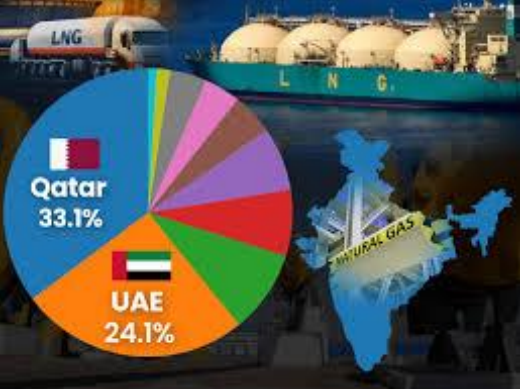
Amidst the escalating Iran war and the subsequent blockade of the Strait of Hormuz, India is strategically pivoting toward African energy markets. Four state-run oil majors—IOCL, BPCL, HPCL, and GAIL—are in preliminary government-to-government talks with Angola’s Sonangol to secure long-term contracts for Liquefied Petroleum Gas (LPG) and Liquefied Natural Gas (LNG) to mitigate a severe domestic supply crunch.
Key Summary Points for UPSC
• Strategic Pivot to Africa: India is seeking to ink \'term contracts\' with Angola’s national oil company, Sonangol, marking a significant shift from its traditional heavy reliance on West Asian suppliers like Qatar and the UAE.
• Impact of Hormuz Blockade: Approximately 90% of India’s LPG imports have been disrupted due to the closure of the Strait of Hormuz, forcing the government to prioritize domestic supplies and restrict LPG booking intervals to 25 days in urban and 45 days in rural areas.
• Logistical Advantage: Sourcing from Central Africa (Angola) offers a logistical edge, with transit times being 10- 15 days shorter than shipments from North America, providing a faster response to the domestic shortage.
• Diversification of Energy Basket: India currently imports nearly 60% of its LPG and 50% of its natural gas requirements; the Angola deal represents a move toward \'energy sovereignty\' by de-risking the supply chain from Middle Eastern geopolitical volatility.
• Technical Synergy: Angola’s LNG projects produce essential components such as Ethane (C2), Propane (C3), and Butane (C4), which are critical feedstocks for LPG production, making it a highly compatible partner for India’s energy needs.
• State-Led Diplomacy: The negotiations involve a \'G2G\' (Government-to-Government) framework, highlighting the role of energy diplomacy in India’s foreign policy during global conflicts.
Additional Important Keypoints
• Supply Chain Resilience: The current crisis underscores the vulnerability of \'Just-in-Time\' energy imports and the necessity for a more geographically distributed network of suppliers.
• Role of Sonangol: As a major stakeholder (22%) in the Chevron-operated Angola LNG project, Sonangol’s cooperation is pivotal for India to secure stable, long-term volumes.
• Energy-Security Linkage: The \'West Asia War\' has transformed energy procurement from a commercial activity into a core national security priority for the Indian government.
Constitutional & Legal Provisions
• Entry 53, Union List (Seventh Schedule): Grants the Central Government exclusive power over \'Regulation and development of oilfields and mineral oil resources; petroleum and petroleum products.\'
• Essential Commodities Act, 1955: Invoked during such shortages to regulate the delivery, distribution, and pricing of LPG to prevent hoarding and ensure equitable access.
• Article 73 of the Constitution: Extends the executive power of the Union to matters with respect to which Parliament has power to make laws, facilitating international energy treaties and G2G agreements.
• National Policy on Biofuels & Integrated Energy Policy: While focusing on renewables, these policies emphasize the \'diversification of import sources\' as a primary pillar of India’s energy security strategy.
Definition of Key Words
• Strait of Hormuz: A narrow waterway between the Gulf of Oman and the Persian Gulf; it is the world\'s most important oil chokepoint, through which 1/5th of global oil consumption passes.
• LPG (Liquefied Petroleum Gas): A flammable mixture of hydrocarbon gases, primarily propane and butane, used as fuel in heating appliances and vehicles.
• Term Contracts: Long-term agreements between a buyer and seller for the supply of a specific quantity of a commodity over a fixed period, often at a predetermined pricing formula.
• C2, C3, C4: Chemical shorthand for Ethane, Propane, and Butane; these are the building blocks of the petrochemical industry and the primary constituents of cooking gas.
Conclusion
India’s move to eye Angolan gas is a pragmatic response to the \'energy hostage\' situation created by the Strait of Hormuz blockade. While West Asia will remain a primary partner due to geographical proximity and existing infrastructure, the \'Angola Pivot\' marks the beginning of a more resilient, multi-polar energy procurement strategy. Success in these talks will not only ease the current domestic cooking gas shortage but also set a precedent for deeper Indo-African strategic ties.
UPSC Relevance
• GS Paper II (International Relations): Bilateral, regional, and global groupings and agreements involving India and/or affecting India’s interests; Effect of politics of developed and developing countries on India\'s energy security.
• GS Paper III (Economy & Energy): Infrastructure: Energy; Changes in industrial policy and their effects on industrial growth; Mobilization of resources.


Address : 506, 3rd EYE THREE (III), Opp. Induben Khakhrawala, Girish Cold Drink Cross Road, CG Road, Navrangpura, Ahmedabad, 380009.
Mobile : 8469231587 / 9586028957
Telephone : 079-40098991
E-mail: dics.upsc@gmail.com
Address: A-306, The Landmark, Urjanagar-1, Opp. Spicy Street, Kudasan – Por Road, Kudasan, Gandhinagar – 382421
Mobile : 9723832444 / 9723932444
E-mail: dics.gnagar@gmail.com
Address: 2nd Floor, 9 Shivali Society, L&T Circle, opp. Ratri Bazar, Karelibaugh, Vadodara, 390018
Mobile : 9725692037 / 9725692054
E-mail: dics.vadodara@gmail.com
Address: 403, Raj Victoria, Opp. Pal Walkway, Near Galaxy Circle, Pal, Surat-394510
Mobile : 8401031583 / 8401031587
E-mail: dics.surat@gmail.com
Address: 303,305 K 158 Complex Above Magson, Sindhubhavan Road Ahmedabad-380059
Mobile : 9974751177 / 8469231587
E-mail: dicssbr@gmail.com
Address: 57/17, 2nd Floor, Old Rajinder Nagar Market, Bada Bazaar Marg, Delhi-60
Mobile : 9104830862 / 9104830865
E-mail: dics.newdelhi@gmail.com