






Ahmedabad
(Head Office)Address : 506, 3rd EYE THREE (III), Opp. Induben Khakhrawala, Girish Cold Drink Cross Road, CG Road, Navrangpura, Ahmedabad, 380009.
Mobile : 8469231587 / 9586028957
Telephone : 079-40098991
E-mail: dics.upsc@gmail.com

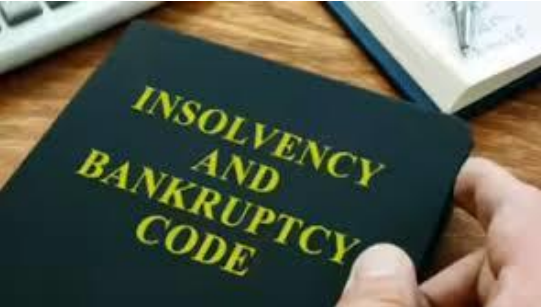
The Rajya Sabha has passed the Insolvency and Bankruptcy Code (Amendment) Bill, 2026, which significantly enhances the powers of the Resolution Professional (RP) and the Adjudicatory Authority to investigate and reverse transactions made by a distressed firm prior to the commencement of insolvency proceedings. • Extended Look-Back Period: The amendment expands the \'look-back\' period for identifying \'avoidance transactions,\' such as undervalued, preferential, or fraudulent deals, allowing for deeper historical scrutiny of a company\'s financial conduct before it entered bankruptcy. • Inclusion of Related-Party Transactions: The Bill specifically targets asset stripping and fund diversion by promoters through related-party transactions, ensuring that assets moved out of the company to evade creditors can be clawed back into the liquidation or resolution estate. • Streamlining the CIRP: By providing a clearer legal framework for the scrutiny of pre-bankruptcy deals, the Bill aims to reduce litigation delays in the Corporate Insolvency Resolution Process (CIRP), thereby improving the recovery rate for financial and operational creditors. • Empowering the Resolution Professional: RPs are now mandated to file applications for the reversal of \'vulnerable transactions\' within a stricter timeline, and the Adjudicating Authority (NCLT) is empowered to pass summary orders to restore the status quo of the corporate debtor’s assets. • Curbing Promoter Malpractice: The amendment serves as a deterrent against \'strategic defaults\' where promoters intentionally weaken the company\'s balance sheet through clandestine transfers to shell companies or family-held entities before filing for insolvency. • Inter-Agency Coordination: The Minister noted that the expanded scrutiny would involve better data sharing between the Insolvency and Bankruptcy Board of India (IBBI), the Enforcement Directorate (ED), and the SFIO to track \'proceeds of crime\' or diverted funds. Key Definitions • Avoidance Transactions: Specific transactions (Preferential, Undervalued, Fraudulent, or Extortionate) made by the debtor before the insolvency start date that are deemed unfair to creditors and can be nullified by the NCLT. • Look-Back Period: The specific timeframe (currently 1 to 2 years depending on the nature of the transaction) prior to the insolvency commencement date during which the company\'s financial deals are eligible for judicial review. Constitutional & Legal Provisions • Insolvency and Bankruptcy Code (IBC), 2016: The principal legislation that consolidated the laws relating to reorganization and insolvency resolution of corporate persons, partnership firms, and individuals. • Sections 43 to 51 of IBC: These sections deal specifically with the \'Avoidance of Transactions,\' including preferential and undervalued transactions, which the 2026 Bill seeks to strengthen. • Entry 9, List III (Concurrent List): Bankruptcy and Insolvency are subjects under the Concurrent List of the Seventh Schedule, giving both Parliament and State Legislatures the power to make laws, though Central law prevails in case of conflict. • Article 19(1)(g) & Article 300A: While citizens have the right to practice any profession or carry on trade, the State can impose reasonable restrictions; similarly, the right to property is a legal right that can be regulated by laws like the IBC to ensure the \'common good.\' Conclusion: The 2026 IBC Amendment is a critical step toward maturing India\'s insolvency regime. By extending the look-back period and tightening the net around related-party deals, the government is addressing the \'information asymmetry\' that often allows promoters to hollow out firms before creditors can intervene. This move reinforces the \'creditor-in-control\' model and ensures that the IBC remains a tool for genuine business resolution rather than a safe haven for strategic defaulters. UPSC Relevance • GS Paper III (Economy): Essential for topics like \'Inclusive growth and issues arising from it,\' \'Government Budgeting,\' and \'Effects of liberalization on the economy.\' • GS Paper II (Governance): Analysis of \'Statutory, regulatory and various quasi-judicial bodies\' like the NCLT and IBBI.


Address : 506, 3rd EYE THREE (III), Opp. Induben Khakhrawala, Girish Cold Drink Cross Road, CG Road, Navrangpura, Ahmedabad, 380009.
Mobile : 8469231587 / 9586028957
Telephone : 079-40098991
E-mail: dics.upsc@gmail.com
Address: A-306, The Landmark, Urjanagar-1, Opp. Spicy Street, Kudasan – Por Road, Kudasan, Gandhinagar – 382421
Mobile : 9723832444 / 9723932444
E-mail: dics.gnagar@gmail.com
Address: 2nd Floor, 9 Shivali Society, L&T Circle, opp. Ratri Bazar, Karelibaugh, Vadodara, 390018
Mobile : 9725692037 / 9725692054
E-mail: dics.vadodara@gmail.com
Address: 403, Raj Victoria, Opp. Pal Walkway, Near Galaxy Circle, Pal, Surat-394510
Mobile : 8401031583 / 8401031587
E-mail: dics.surat@gmail.com
Address: 303,305 K 158 Complex Above Magson, Sindhubhavan Road Ahmedabad-380059
Mobile : 9974751177 / 8469231587
E-mail: dicssbr@gmail.com
Address: 57/17, 2nd Floor, Old Rajinder Nagar Market, Bada Bazaar Marg, Delhi-60
Mobile : 9104830862 / 9104830865
E-mail: dics.newdelhi@gmail.com