







Ahmedabad
(Head Office)Address : 506, 3rd EYE THREE (III), Opp. Induben Khakhrawala, Girish Cold Drink Cross Road, CG Road, Navrangpura, Ahmedabad, 380009.
Mobile : 8469231587 / 9586028957
Telephone : 079-40098991
E-mail: dics.upsc@gmail.com

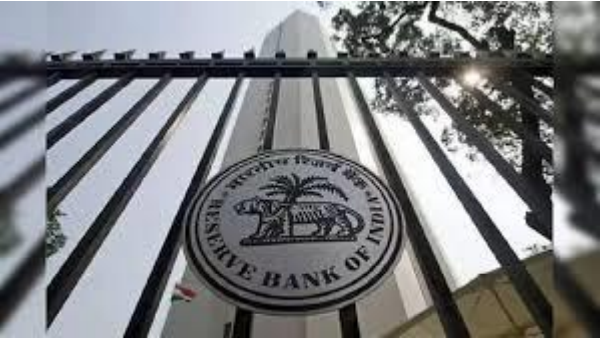
The Controller General of Accounts (CGA) has introduced two pivotal tools—the Government Bank Dashboard and the Government Bank Manual—to modernize the management of government business by authorized banks. These initiatives mark a shift toward real-time monitoring and standardized operational protocols to ensure the integrity of public fund transitions. Core Summary of the CGA Initiatives • Standardized Framework: The Government Bank Manual establishes a uniform set of operational procedures, reporting obligations, and reconciliation timelines for all banks handling government transactions. • Risk Mitigation: By defining clear compliance requirements, the manual aims to reduce ambiguity and operational risks, ensuring that public money is handled with high accountability. • Real-Time Monitoring: The Government Bank Dashboard provides a data-driven platform to track Key Performance Indicators (KPIs) such as remittance timelines and transaction success rates in real-time. • Proactive Oversight: This digital shift moves the CGA\'s role from reactive, post-facto auditing to proactive performance management and immediate corrective interventions. • Enhanced Accountability: The initiatives institutionalize objective benchmarks for banks, reinforcing the shared responsibility of financial institutions in safeguarding the exchequer. • Future Integration: The roadmap includes the incorporation of advanced analytics, strengthened cybersecurity safeguards, and deeper digital integration to further modernize the banking ecosystem. Key Definitions • Controller General of Accounts (CGA): The principal advisor to the Government of India on accounting matters, responsible for establishing and maintaining a technically sound management accounting system. • Government Business: Refers to the various financial activities conducted by banks on behalf of the government, including tax collection, pension payments, and the disbursement of various subsidies. • Reconciliation: The process of ensuring that two sets of records (e.g., the bank\'s statement and the government\'s accounting books) are in agreement. Constitutional and Legal Provisions • Article 150: The accounts of the Union and of the States shall be kept in such form as the President may, on the advice of the Comptroller and Auditor-General of India, prescribe. The CGA performs the actual accounting functions for the Union. • Allocation of Business Rules, 1961: Defines the duties of the CGA under the Department of Expenditure, Ministry of Finance, including the preparation of Appropriation and Finance Accounts. • Payment and Settlement Systems Act, 2007: Provides the legal framework for the regulation and supervision of payment systems in India, relevant to how banks process electronic government transactions. Additional Key Points • Efficiency in DBT: These tools will indirectly improve the efficiency of Direct Benefit Transfer (DBT) schemes by ensuring bank-end processing is seamless and transparent.• Public Financial Management System (PFMS): The new dashboard complements the existing PFMS by providing a specific \'banking lens\' to the movement of funds. • Cybersecurity Focus: With the move toward real-time digital monitoring, the CGA emphasized that the next phase will prioritize robust cyber-defense mechanisms for banking data. • Capacity Building: The reform includes institutional training for bank officials to align their internal processes with the new Government Bank Manual. Conclusion: The launch of the Government Bank Dashboard and Manual represents a significant milestone in India\'s public financial management. By leveraging technology for \'proactive oversight\' rather than \'post-facto correction,\' the government is ensuring that the banking interface—a critical link in the delivery of public services—operates with maximum transparency and minimal leakage. UPSC Relevance: • GS Paper II: Statutory, regulatory and various quasi-judicial bodies (CGA vs. CAG); Transparency and accountability in governance. • GS Paper III: Indian Economy and issues relating to planning, mobilization of resources, and budgeting; E-governance- applications, models, successes, and limitations. • Prelims: Roles and responsibilities of the CGA; Difference between CGA and CAG; Key features of the PFMS and new banking dashboards.


Address : 506, 3rd EYE THREE (III), Opp. Induben Khakhrawala, Girish Cold Drink Cross Road, CG Road, Navrangpura, Ahmedabad, 380009.
Mobile : 8469231587 / 9586028957
Telephone : 079-40098991
E-mail: dics.upsc@gmail.com
Address: A-306, The Landmark, Urjanagar-1, Opp. Spicy Street, Kudasan – Por Road, Kudasan, Gandhinagar – 382421
Mobile : 9723832444 / 9723932444
E-mail: dics.gnagar@gmail.com
Address: 2nd Floor, 9 Shivali Society, L&T Circle, opp. Ratri Bazar, Karelibaugh, Vadodara, 390018
Mobile : 9725692037 / 9725692054
E-mail: dics.vadodara@gmail.com
Address: 403, Raj Victoria, Opp. Pal Walkway, Near Galaxy Circle, Pal, Surat-394510
Mobile : 8401031583 / 8401031587
E-mail: dics.surat@gmail.com
Address: 303,305 K 158 Complex Above Magson, Sindhubhavan Road Ahmedabad-380059
Mobile : 9974751177 / 8469231587
E-mail: dicssbr@gmail.com
Address: 57/17, 2nd Floor, Old Rajinder Nagar Market, Bada Bazaar Marg, Delhi-60
Mobile : 9104830862 / 9104830865
E-mail: dics.newdelhi@gmail.com