




Ahmedabad
(Head Office)Address : 506, 3rd EYE THREE (III), Opp. Induben Khakhrawala, Girish Cold Drink Cross Road, CG Road, Navrangpura, Ahmedabad, 380009.
Mobile : 8469231587 / 9586028957
Telephone : 079-40098991
E-mail: dics.upsc@gmail.com

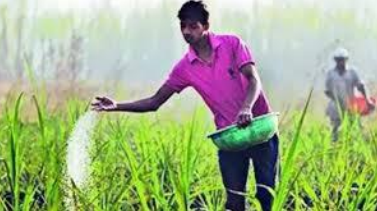
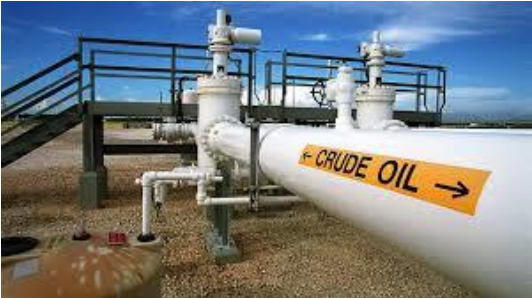
The escalating conflict in West Asia has triggered significant concerns regarding India\'s fertilizer security. While India is less import-dependent on finished fertilizers compared to energy, a deeper analysis reveals a high reliance on the region for critical feedstocks. This dependency exposes the Indian agricultural sector to global supply shocks, price volatility, and a ballooning fiscal subsidy burden. • Effective Import Reliance: Although the headline import figure for finished fertilizers is approximately 30%, the effective dependence rises to nearly 69% when including essential feedstocks such as natural gas, rock phosphate, phosphoric acid, sulphur, and ammonia. • Geopolitical Chokepoints: The Strait of Hormuz is a vital artery for the fertilizer trade. Approximately 45% of global sulphur, 34% of urea, and 23% of DAP and ammonia supplies originate from countries directly involved in or adjacent to the West Asia conflict. • Product-Specific Vulnerabilities: While urea import dependence is roughly 20%, India faces much higher risks for Diammonium Phosphate (DAP) at 50-60%, while Muriate of Potash (MOP) is almost 100% imported. • Fiscal Subsidy Burden: To insulate farmers from global price spikes, the Centre absorbs the additional costs. Past crises, such as the Russia-Ukraine war, saw the fertilizer subsidy bill swell to 2.5 times the initial budget, straining the national fiscal deficit. • Transmission to Food Inflation: Historically, global food and fertilizer prices move in tandem. Disruptions in West Asia risk \'imported inflation,\' where high input costs eventually manifest as rising domestic cereal and food prices. • Diversification and Buffers: India is actively exploring alternative suppliers in Morocco, Indonesia, and Belarus to mitigate West Asian risks. Currently, a national stock of 18 million tonnes provides a safety buffer for approximately two months of consumption. Key Definitions • Feedstock: Raw materials used in an industrial process to create a finished product. In fertilizer production, natural gas is the primary feedstock for urea, while rock phosphate is essential for phosphatic fertilizers. • Imported Inflation: A general rise in prices within a country attributed to an increase in the cost of imported goods, such as essential raw materials or energy. • Kharif Season: The monsoon sowing season in India (typically June to October) which requires the highest volume of fertilizer application for crops like paddy and maize. Constitutional & Legal Provisions • Entry 33 (Concurrent List): The Seventh Schedule empowers both the Centre and States to regulate the production, supply, and distribution of \'Fertilizers,\' ensuring coordinated legislative action during crises. • Essential Commodities Act, 1955: Fertilizers are declared as an \'essential commodity.\' The government uses this Act to regulate prices, prevent hoarding, and ensure equitable distribution across states. • Article 39 (b) & (c): These Directive Principles guide the State to ensure that the ownership and control of material resources are distributed to subserve the common good and prevent the concentration of wealth, forming the basis for fertilizer subsidies. Conclusion The \'fertilizer squeeze\' underscores the fragile link between global geopolitics and domestic food security. For India, achieving \'Atmanirbharta\' (self-reliance) in this sector requires not just increasing domestic manufacturing capacity, but also securing long-term overseas assets for raw materials. In the short term, maintaining strategic reserves and diversifying the import basket remain the only viable defenses against West Asian instability. UPSC Relevance • GS Paper III: Issues related to direct and indirect farm subsidies; Minimum Support Prices; Food security; Effects of liberalization on the economy. • GS Paper II: India and its neighborhood- relations; Bilateral, regional and global groupings and agreements involving India and/or affecting India’s interests. • Prelims: Mapping of the Strait of Hormuz and West Asian mineral hubs; Classification of fertilizers (Urea, DAP, MOP) and their chemical compositions.


Address : 506, 3rd EYE THREE (III), Opp. Induben Khakhrawala, Girish Cold Drink Cross Road, CG Road, Navrangpura, Ahmedabad, 380009.
Mobile : 8469231587 / 9586028957
Telephone : 079-40098991
E-mail: dics.upsc@gmail.com
Address: A-306, The Landmark, Urjanagar-1, Opp. Spicy Street, Kudasan – Por Road, Kudasan, Gandhinagar – 382421
Mobile : 9723832444 / 9723932444
E-mail: dics.gnagar@gmail.com
Address: 2nd Floor, 9 Shivali Society, L&T Circle, opp. Ratri Bazar, Karelibaugh, Vadodara, 390018
Mobile : 9725692037 / 9725692054
E-mail: dics.vadodara@gmail.com
Address: 403, Raj Victoria, Opp. Pal Walkway, Near Galaxy Circle, Pal, Surat-394510
Mobile : 8401031583 / 8401031587
E-mail: dics.surat@gmail.com
Address: 303,305 K 158 Complex Above Magson, Sindhubhavan Road Ahmedabad-380059
Mobile : 9974751177 / 8469231587
E-mail: dicssbr@gmail.com
Address: 57/17, 2nd Floor, Old Rajinder Nagar Market, Bada Bazaar Marg, Delhi-60
Mobile : 9104830862 / 9104830865
E-mail: dics.newdelhi@gmail.com