


Ahmedabad
(Head Office)Address : 506, 3rd EYE THREE (III), Opp. Induben Khakhrawala, Girish Cold Drink Cross Road, CG Road, Navrangpura, Ahmedabad, 380009.
Mobile : 8469231587 / 9586028957
Telephone : 079-40098991
E-mail: dics.upsc@gmail.com

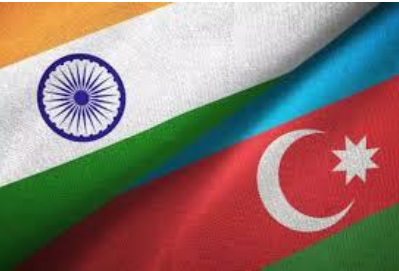
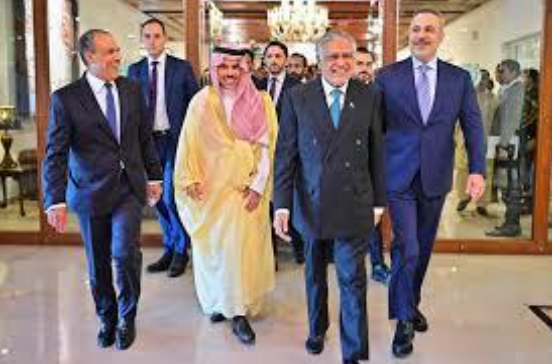
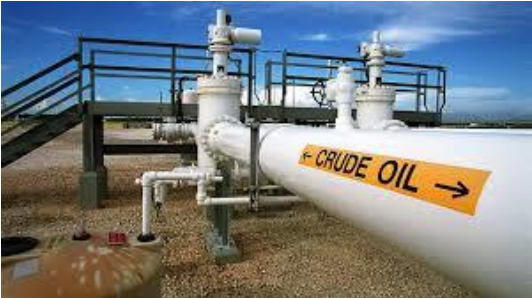
• Diplomatic Thaw Post-Operation Sindoor: Following a period of strained relations triggered by India\'s \'Operation Sindoor\' (strikes on Pakistani sites in 2024-25) and Azerbaijan\'s subsequent condemnation, both nations have initiated a \'reset\' during the 6th round of Foreign Office Consultations in Baku. • Complex Geopolitical Alignments: The bilateral relationship is complicated by a \'de-facto\' axis formation; Azerbaijan maintains a close strategic partnership with Pakistan (especially regarding Nagorno-Karabakh), while India has strengthened defense ties with Armenia, leading to mutual diplomatic apprehensions. • Energy Security and Investment: Azerbaijan remains a vital energy partner for India, with crude oil accounting for 98% of its exports to New Delhi. Significantly, ONGC Videsh (OVL) holds a 2.7% participating interest in the ACG oil fields and a 2.3% stake in the Baku-Tbilisi-Ceyhan (BTC) pipeline. • Counter-Terrorism Consensus: The inclusion of \'the fight against cross-border terrorism\' in the official joint statement is a major shift, indicating that Baku may be moderating its stance on India\'s security operations in exchange for broader economic and technological cooperation. • Diversification of Bilateral Trade: Beyond hydrocarbons, the discussions emphasized expanding cooperation into pharmaceuticals, technology, tourism, and people-to-people exchanges, aiming to move the relationship toward a more resilient, multi-sectoral partnership. • Strategic Connectivity (INSTC): While not explicitly detailed in the brief, Azerbaijan is a crucial node in the International North-South Transport Corridor (INSTC). A stable relationship with Baku is essential for India’s terrestrial connectivity to Russia and Europe, bypassing traditional maritime bottlenecks. Constitutional & Legal Context • Article 51 (DPSP): This diplomatic reset aligns with India\'s constitutional mandate to promote international peace and security and maintain just and honorable relations between nations. • Bilateral Investment Treaty (BIT): While discussions are ongoing, the protection of ONGC Videsh\'s assets in Azerbaijan is governed by international commercial laws and bilateral agreements ensuring the security of foreign direct investment (FDI). • United Nations Charter: Both nations reaffirmed their commitment to resolving differences through \'open dialogue and discussion,\' adhering to the principle of peaceful settlement of disputes under the UN framework. Key Definitions • Operation Sindoor: A 2025 Indian military operation involving targeted strikes on terror launchpads/sites within Pakistani territory, which briefly became a flashpoint in Indo-Azerbaijani relations. • Nagorno-Karabakh: A landlocked region in the South Caucasus that is the subject of a long-standing territorial and ethnic conflict between Azerbaijan and Armenia. • Foreign Office Consultations (FOC): A formal institutional mechanism between the foreign ministries of two countries to review the entire gamut of bilateral relations and exchange views on regional and global issues. Conclusion: The 6th Foreign Office Consultations signify a pragmatic transition in India\'s \'Extended Neighborhood\' policy. By decoupling energy interests from the Armenia-Azerbaijan conflict, New Delhi is successfully practicing \'Strategic Autonomy.\' For Azerbaijan, engaging with the world’s fastest-growing economy offers a hedge against over-dependence on regional blocs. However, the true test of this reset will lie in how both nations navigate their respective \'special relationships\' with Armenia and Pakistan in the future. UPSC Relevance • GS Paper II (International Relations): Bilateral, regional and global groupings and agreements involving India and/or affecting India’s interests; Effect of policies and politics of developed and developing countries on India’s interests. • GS Paper III (Economy & Security): Energy security and the role of Indian PSUs (ONGC Videsh) in global oil assets; Cross-border terrorism and internal security implications.


Address : 506, 3rd EYE THREE (III), Opp. Induben Khakhrawala, Girish Cold Drink Cross Road, CG Road, Navrangpura, Ahmedabad, 380009.
Mobile : 8469231587 / 9586028957
Telephone : 079-40098991
E-mail: dics.upsc@gmail.com
Address: A-306, The Landmark, Urjanagar-1, Opp. Spicy Street, Kudasan – Por Road, Kudasan, Gandhinagar – 382421
Mobile : 9723832444 / 9723932444
E-mail: dics.gnagar@gmail.com
Address: 2nd Floor, 9 Shivali Society, L&T Circle, opp. Ratri Bazar, Karelibaugh, Vadodara, 390018
Mobile : 9725692037 / 9725692054
E-mail: dics.vadodara@gmail.com
Address: 403, Raj Victoria, Opp. Pal Walkway, Near Galaxy Circle, Pal, Surat-394510
Mobile : 8401031583 / 8401031587
E-mail: dics.surat@gmail.com
Address: 303,305 K 158 Complex Above Magson, Sindhubhavan Road Ahmedabad-380059
Mobile : 9974751177 / 8469231587
E-mail: dicssbr@gmail.com
Address: 57/17, 2nd Floor, Old Rajinder Nagar Market, Bada Bazaar Marg, Delhi-60
Mobile : 9104830862 / 9104830865
E-mail: dics.newdelhi@gmail.com