







Ahmedabad
(Head Office)Address : 506, 3rd EYE THREE (III), Opp. Induben Khakhrawala, Girish Cold Drink Cross Road, CG Road, Navrangpura, Ahmedabad, 380009.
Mobile : 8469231587 / 9586028957
Telephone : 079-40098991
E-mail: dics.upsc@gmail.com

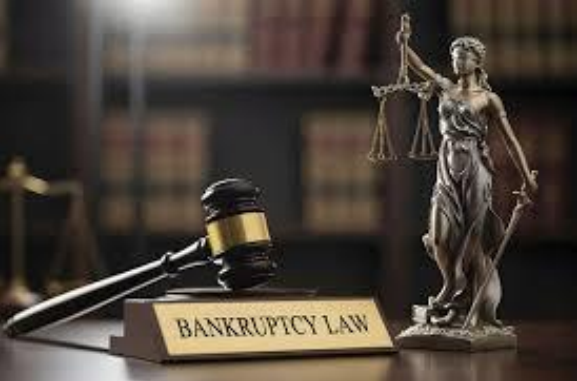
The Lok Sabha has passed the Insolvency and Bankruptcy Code (Amendment) Bill, 2025, which introduces 12 pivotal reforms to the existing 2016 framework. These amendments, based on the recommendations of the Baijayant Panda-led Select Committee, aim to reduce judicial bottlenecks, enhance transparency, and align Indian insolvency laws with global best practices. • Introduction of CIIRP: The Bill replaces the underutilized \'fast-track\' process with the CreditorInitiated Insolvency Resolution Process (CIIRP). This allows financial creditors (holding at least 51% of the debt) to initiate an out-of-court resolution. Unlike the standard process, the existing management remains in control (debtor-in-possession) under the supervision of a Resolution Professional (RP). • Mandatory Admission & Strict Timelines: To curb delays, the Bill mandates that the National Company Law Tribunal (NCLT) admit applications within 14 days solely on the proof of default. It removes discretionary grounds for rejection. Furthermore, resolution plans must be approved or rejected within 30 days of receipt, and liquidation must conclude within 180 days. • Recognition of \'Clean Slate\' Principle: The amendment codifies the \'clean slate\' doctrine, clarifying that once a resolution plan is approved, the corporate debtor starts fresh. All past claims not included in the plan are extinguished, providing much-needed certainty to successful bidders and protecting them from \'surprise\' legacy liabilities. • Group and Cross-Border Insolvency: For the first time, a framework is introduced to handle the insolvency of corporate groups collectively (shared NCLT bench and RP). It also creates an enabling provision for Cross-Border Insolvency, allowing Indian authorities to coordinate with foreign jurisdictions where a debtor may hold assets or creditors. • Enhanced Creditor Oversight in Liquidation: The Committee of Creditors (CoC) is now empowered to supervise the liquidation process and replace the liquidator if necessary. Additionally, a new 12th amendment requires the CoC to record written reasons for selecting a specific resolution plan, significantly boosting transparency and accountability. • Deterrence against Frivolous Litigation: To prevent the misuse of the legal process to stall recoveries, the Bill introduces heavy financial penalties ranging from Rs 1 lakh to Rs 2 crore for filing \'frivolous or vexatious\' applications before the Adjudicating Authority. Key Definitions • CIIRP (Creditor-Initiated Insolvency Resolution Process): A hybrid, largely out-of-court mechanism where creditors initiate resolution while the debtor maintains day-to-day operations under a monitor. • Clean Slate Doctrine: A legal principle ensuring that an entity emerging from insolvency is not burdened by undisclosed or past liabilities that were not part of the approved resolution plan. • Information Utility (IU): A centralized electronic database that stores evidence of active debt and defaults, which the Bill now recognizes as \'sufficient proof\' for case admission. Constitutional and Legal Provisions • Article 246 (Union List - Entry 9 & 43): The Parliament has exclusive power to make laws regarding \'Banking\' and \'Incorporation, regulation and winding up of corporations,\' which forms the basis for the IBC. • Section 12A of IBC: Amended to restrict the withdrawal of cases. Once a case is admitted and reaches the stage of inviting resolution plans, withdrawal is prohibited to ensure the process remains \'in rem\' (affecting the public/all creditors) rather than a private settlement. • Section 240A: Provides specific exemptions for MSMEs, allowing their promoters to bid for their own companies, a provision further streamlined in the 2025 Bill through lower voting thresholds. Conclusion The 2025 amendments mark a shift from \'judicial-heavy\' to \'creditor-led\' insolvency management. By integrating cross-border frameworks and tightening timelines, the Bill directly addresses the \'twin balance sheet\' challenge and supports the banking sector’s health. As of late 2025, the IBC has already facilitated the recovery of over Rs 4.11 lakh crore, and these reforms are expected to further improve the recovery rate, which currently stands at roughly 32% of admitted claims. UPSC Relevance • GS Paper III (Economy): High relevance for \'Effects of liberalization on the economy,\' \'Changes in industrial policy,\' and \'Banking reforms.\' The IBC is a cornerstone of India\'s Ease of Doing Business (EoDB) strategy. • GS Paper II (Governance): Important for \'Statutory, regulatory and various quasi-judicial bodies\' (NCLT, IBBI). The Bill’s focus on reducing judicial pendency is a key governance theme.


Address : 506, 3rd EYE THREE (III), Opp. Induben Khakhrawala, Girish Cold Drink Cross Road, CG Road, Navrangpura, Ahmedabad, 380009.
Mobile : 8469231587 / 9586028957
Telephone : 079-40098991
E-mail: dics.upsc@gmail.com
Address: A-306, The Landmark, Urjanagar-1, Opp. Spicy Street, Kudasan – Por Road, Kudasan, Gandhinagar – 382421
Mobile : 9723832444 / 9723932444
E-mail: dics.gnagar@gmail.com
Address: 2nd Floor, 9 Shivali Society, L&T Circle, opp. Ratri Bazar, Karelibaugh, Vadodara, 390018
Mobile : 9725692037 / 9725692054
E-mail: dics.vadodara@gmail.com
Address: 403, Raj Victoria, Opp. Pal Walkway, Near Galaxy Circle, Pal, Surat-394510
Mobile : 8401031583 / 8401031587
E-mail: dics.surat@gmail.com
Address: 303,305 K 158 Complex Above Magson, Sindhubhavan Road Ahmedabad-380059
Mobile : 9974751177 / 8469231587
E-mail: dicssbr@gmail.com
Address: 57/17, 2nd Floor, Old Rajinder Nagar Market, Bada Bazaar Marg, Delhi-60
Mobile : 9104830862 / 9104830865
E-mail: dics.newdelhi@gmail.com