


Ahmedabad
(Head Office)Address : 506, 3rd EYE THREE (III), Opp. Induben Khakhrawala, Girish Cold Drink Cross Road, CG Road, Navrangpura, Ahmedabad, 380009.
Mobile : 8469231587 / 9586028957
Telephone : 079-40098991
E-mail: dics.upsc@gmail.com

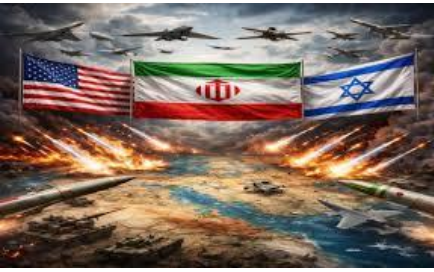
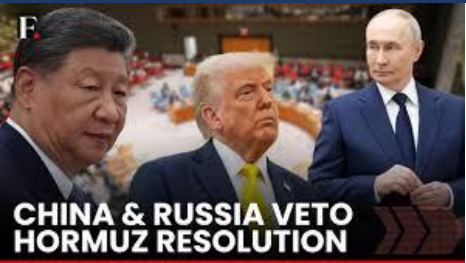
• Escalation into Large-Scale Conflict: What began as a localized confrontation has devolved into \'Operation Epic Fury,\' a joint U.S.-Israeli military campaign against Iran launched on February 28, 2026. Despite the assassination of top Iranian leadership, including Supreme Leader Ayatollah Ali Khamenei, the conflict has moved beyond a \'limited strike\' into a war of attrition aimed at regime change, with the potential for ground troop commitment. • Iranian Strategic Endurance: Contrary to expectations of a state collapse, Iran has maintained its command structure and secured its uranium stockpiles. Under the new leadership of Mojtaba Khamenei, the regime is leveraging \'strategic endurance,\' utilizing its vast geography and acclimatized forces to sustain a prolonged conflict that air power alone cannot resolve. • Weaponization of Global Infrastructure: The conflict has shifted from purely military targets to the \'weaponization of infrastructure.\' By blockading the Strait of Hormuz—a chokepoint for 30% of global oil shipments—Iran has triggered a global energy crisis. This tactic exploits the economic vulnerabilities of the U.S. and its allies, who face surging prices and supply disruptions. • Fracturing of Western Alliances: A significant \'collateral damage\' of the war is the visible rift within NATO and among U.S. allies. Many European nations have refused to assist in reopening the Strait of Hormuz, opting instead for a cautious distance from the U.S.-Israeli objectives, which they perceive as lacking legal merit or a clear \'underwriting of order.\' • The Symbolic Dimension of Resistance: The conflict has transcended geopolitics to become a civilizational struggle. Drawing on the \'Battle of Karbala\' narrative, Iranian resistance is framed as a religious and messianic mission. This revival of Shite militancy ensures that the revolutionary fervor is likely to intensify rather than diminish with the loss of individual leaders. • Military Sustainability and Risks: The U.S. is facing \'war weariness\' and the rapid depletion of highend munitions like Patriot and THAAD interceptors. Israel’s provocation, including strikes near the Russian-built Bushehr nuclear plant, risks dragging major powers like Russia and China into the fray, potentially escalating the regional cauldron into a global conflagration. Key Definitions and Strategic Concepts Operation Epic Fury: The code name for the 2026 joint U.S.-Israeli military offensive targeting Iranian leadership and nuclear infrastructure. Strait of Hormuz: The world\'s most sensitive oil transit chokepoint; a blockade here effectively weaponizes global energy logistics. Thucydides Aphorism: The realist notion that \'the strong do what they can and the weak suffer what they must\'; in this conflict, Iran’s fierce retaliation has upended this traditional power dynamic. Political Shiism: A form of Islamism that emphasizes social justice, resistance against perceived oppression, and the martyrdom of leaders as a catalyst for further mobilization. War of Attrition: A military strategy consisting of belligerent attempts to win a war by wearing down the enemy to the point of collapse through continuous losses in personnel and materiel. Conclusion The current West Asian conflict represents a grave miscalculation of Iranian resilience and the global appetite for prolonged economic chaos. While Israel pursues a \'Biblical Promise\' of territorial security and the U.S. seeks to extract strategic advantage, they have ignored the ideological depth of Shite resistance and the fragility of the global oil economy. Without an immediate shift toward an armistice, the world risks a \'Third World War\' scenario triggered by the collapse of diplomatic order in the region. UPSC Relevance GS Paper II (International Relations): Crucial for \'Effect of policies and politics of developed and developing countries on India’s interests.\' India’s energy security is directly tied to the Strait of Hormuz, and any prolonged conflict impacts the 8 million-strong Indian diaspora in the Gulf. GS Paper I (World Geography): Focuses on \'Critical geographical features\' and the strategic importance of maritime chokepoints like Hormuz and the Persian Gulf.


Address : 506, 3rd EYE THREE (III), Opp. Induben Khakhrawala, Girish Cold Drink Cross Road, CG Road, Navrangpura, Ahmedabad, 380009.
Mobile : 8469231587 / 9586028957
Telephone : 079-40098991
E-mail: dics.upsc@gmail.com
Address: A-306, The Landmark, Urjanagar-1, Opp. Spicy Street, Kudasan – Por Road, Kudasan, Gandhinagar – 382421
Mobile : 9723832444 / 9723932444
E-mail: dics.gnagar@gmail.com
Address: 2nd Floor, 9 Shivali Society, L&T Circle, opp. Ratri Bazar, Karelibaugh, Vadodara, 390018
Mobile : 9725692037 / 9725692054
E-mail: dics.vadodara@gmail.com
Address: 403, Raj Victoria, Opp. Pal Walkway, Near Galaxy Circle, Pal, Surat-394510
Mobile : 8401031583 / 8401031587
E-mail: dics.surat@gmail.com
Address: 303,305 K 158 Complex Above Magson, Sindhubhavan Road Ahmedabad-380059
Mobile : 9974751177 / 8469231587
E-mail: dicssbr@gmail.com
Address: 57/17, 2nd Floor, Old Rajinder Nagar Market, Bada Bazaar Marg, Delhi-60
Mobile : 9104830862 / 9104830865
E-mail: dics.newdelhi@gmail.com