


Ahmedabad
(Head Office)Address : 506, 3rd EYE THREE (III), Opp. Induben Khakhrawala, Girish Cold Drink Cross Road, CG Road, Navrangpura, Ahmedabad, 380009.
Mobile : 8469231587 / 9586028957
Telephone : 079-40098991
E-mail: dics.upsc@gmail.com

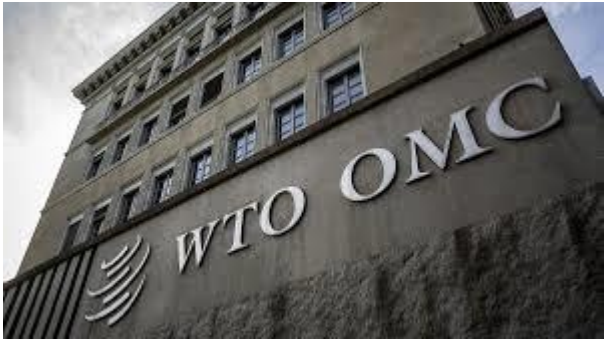
The Government of India is preparing for its eighth Trade Policy Review (TPR) at the World Trade Organization (WTO) scheduled for July 2026. This exercise serves as a critical transparency mechanism where India’s trade regime is scrutinized by the global community, highlighting reforms in digital customs and progress in international trade facilitation. Key Highlights and Summary • Periodic Peer Review Mechanism: The TPR is a mandatory exercise for all WTO members to ensure transparency and adherence to global trade rules. As one of the top 20 world exporters, India undergoes this review every 4 years. • Showcasing Digital Customs Reforms: Ahead of the July 2026 session, India is highlighting \'Turant Customs,\' an AI-driven, faceless, and paperless assessment system that has significantly reduced the \'Time Release\' of cargo at ports. • TFA Compliance and Implementation: The Indian delegation, led by the CBIC, reported high levels of compliance with the WTO Trade Facilitation Agreement (TFA), focusing on Ease of Doing Business and reducing transaction costs for MSMEs. • Focus on Export Diversification: The review will likely examine India\'s \'District as Export Hubs\' initiative and the Performance Linked Incentive (PLI) schemes aimed at making India a global manufacturing pivot. • Global Trade Leadership: By proactively engaging in the TPR process, India seeks to counter criticisms regarding \'protectionism\' while advocating for the interests of the Global South in areas like food security and TRIPS waivers. • Institutional Preparedness: The Ministry of Finance and the Department of Commerce are synchronizing data to present a robust case for India\'s transition toward a 5 trillion dollar economy through export-led growth. Constitutional and Legal Provisions • Article 253 of the Constitution: Empowers Parliament to make laws for implementing international treaties, agreements, and conventions (like WTO mandates). • The Customs Act, 1962: The primary legal framework for the levy and collection of customs duties, now modernized to support Electronic Data Interchange (EDI) under TFA. • Foreign Trade (Development and Regulation) Act, 1992: Provides the statutory basis for India’s Foreign Trade Policy (FTP), which is the subject of the WTO review. • Marrakesh Agreement (1994): The treaty that established the WTO; Annex 3 specifically outlines the Trade Policy Review Mechanism (TPRM) to achieve greater transparency. Key Definitions • Trade Policy Review Mechanism (TPRM): A periodic audit of the trade policies of member countries by the WTO to ensure they do not hinder global trade flows. • Trade Facilitation Agreement (TFA): A WTO agreement aimed at simplifying and standardizing customs procedures to speed up the movement, release, and clearance of goods. • Faceless Assessment: A digital reform where the assessing officer and the importer/exporter do not meet physically, reducing corruption and subjective bias in customs clearance. Additional Important Keypoints The 2026 review is expected to touch upon India’s growing \'Digital Public Infrastructure\' (DPI) and how it facilitates cross-border e-commerce. India has historically used the TPR platform to defend its \'Minimum Support Price\' (MSP) programs against claims of trade-distorting subsidies by developed nations. The July session will be a litmus test for India\'s balance between domestic welfare (Aatmanirbhar Bharat) and global market openness. Conclusion: India’s 8th Trade Policy Review is not merely a technical audit but a strategic opportunity to project the country as a reliable, rules-based trading partner. By emphasizing digital reforms and trade facilitation, India aims to attract foreign direct investment while maintaining its sovereign right to protect its agricultural and industrial interests within the multilateral framework. UPSC Relevance • GS Paper II: Bilateral, regional, and global groupings and agreements involving India and/or affecting India’s interests; Important International institutions (WTO). • GS Paper III: Indian Economy and issues relating to planning, mobilization of resources, growth, and employment; Effects of liberalization on the economy; Changes in industrial policy. • Prelims: Specifics of the Trade Facilitation Agreement (TFA), the role of CBIC, and the structure of the WTO TPRM.


Address : 506, 3rd EYE THREE (III), Opp. Induben Khakhrawala, Girish Cold Drink Cross Road, CG Road, Navrangpura, Ahmedabad, 380009.
Mobile : 8469231587 / 9586028957
Telephone : 079-40098991
E-mail: dics.upsc@gmail.com
Address: A-306, The Landmark, Urjanagar-1, Opp. Spicy Street, Kudasan – Por Road, Kudasan, Gandhinagar – 382421
Mobile : 9723832444 / 9723932444
E-mail: dics.gnagar@gmail.com
Address: 2nd Floor, 9 Shivali Society, L&T Circle, opp. Ratri Bazar, Karelibaugh, Vadodara, 390018
Mobile : 9725692037 / 9725692054
E-mail: dics.vadodara@gmail.com
Address: 403, Raj Victoria, Opp. Pal Walkway, Near Galaxy Circle, Pal, Surat-394510
Mobile : 8401031583 / 8401031587
E-mail: dics.surat@gmail.com
Address: 303,305 K 158 Complex Above Magson, Sindhubhavan Road Ahmedabad-380059
Mobile : 9974751177 / 8469231587
E-mail: dicssbr@gmail.com
Address: 57/17, 2nd Floor, Old Rajinder Nagar Market, Bada Bazaar Marg, Delhi-60
Mobile : 9104830862 / 9104830865
E-mail: dics.newdelhi@gmail.com