





Ahmedabad
(Head Office)Address : 506, 3rd EYE THREE (III), Opp. Induben Khakhrawala, Girish Cold Drink Cross Road, CG Road, Navrangpura, Ahmedabad, 380009.
Mobile : 8469231587 / 9586028957
Telephone : 079-40098991
E-mail: dics.upsc@gmail.com

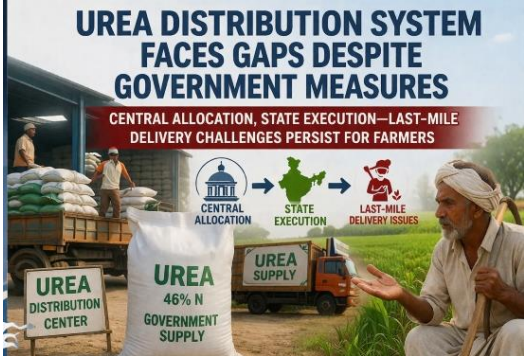
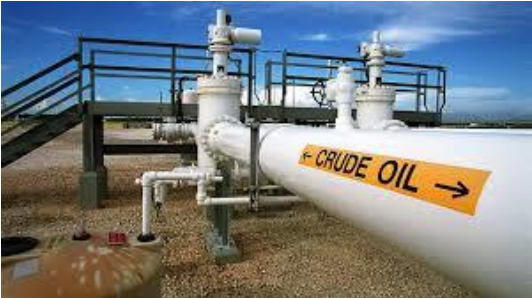
Context: In a strategic move to ensure agricultural stability, the Ministry of Petroleum and Natural Gas has significantly increased the allocation of natural gas to domestic fertilizer plants. This decision follows a period of acute supply constraints triggered by the Iran war and the subsequent disruption of Liquefied Natural Gas (LNG) maritime routes, which had previously forced several urea manufacturing units to suspend operations. Key Analysis of Gas Allocation and Fertilizer Security • Strategic Supply Restoration: The government has enhanced the gas supply to fertilizer units from a low of 70%-75% to approximately 90% of their average consumption. This recalibration is based on improved domestic inventory levels and the scheduled arrival of fresh LNG shipments despite ongoing regional volatility. • Impact of Geopolitical Disruption: The West Asian conflict had led to a severe shortage of LNG—a critical feedstock for urea—threatening the production cycle just before the crucial monsoon sowing season for staples like rice, corn, and soybeans. • Urea Import Dependency: Despite being a major producer, India remains the world\'s largest importer of urea. To bridge the current domestic production gap, Indian Potash Ltd (IPL) has issued a global tender for 2.5 million tonnes of urea to secure the nutrient for the upcoming Kharif season. • Inter-Ministerial Coordination: The hike in allocation reflects a high level of coordination between the Oil and Fertilizer Ministries to prioritize \'food-energy security,\' ensuring that industrial gas shortages do not translate into a localized food crisis or agricultural distress. • Logistical Resilience: By scheduling LNG arrivals and managing inventories, the government aims to insulate the agrarian economy from the \'risk premium\' associated with energy imports from conflictprone zones. Essential Definitions • Urea: A nitrogenous fertilizer critical for crop growth. In India, it is highly subsidized and serves as the primary nutrient for cereal and commercial crops. • LNG (Liquefied Natural Gas): Natural gas that has been cooled to a liquid state (about -162°C) for shipping and storage. It is the primary feedstock for ammonia production, which is subsequently converted to urea. • Feedstock: Raw material used in an industrial process to be converted into a finished product. For the fertilizer industry, natural gas accounts for nearly 70%-80% of the cost of producing urea. Constitutional and Legal Framework • Article 39(b) (DPSP): Mandates the State to direct its policy toward ensuring that the ownership and control of the material resources of the community are so distributed as best to subserve the common good, justifying the prioritization of gas for fertilizers over other industries. • The Fertiliser (Inorganic, Organic or Mixed) (Control) Order, 1985: Issued under the Essential Commodities Act, this order empowers the government to regulate the price, quality, and distribution of fertilizers across the country. • New Urea Policy (NUP), 2015: Aims to maximize indigenous urea production, promote energy efficiency in urea units, and rationalize the subsidy burden on the exchequer. Conclusion The restoration of gas supply to 90% capacity is a vital intervention to safeguard India\'s food security ahead of the monsoon. While short-term tenders and increased gas allocation provide immediate relief, the situation underscores the urgent need for India to diversify its energy sources and accelerate the adoption of \'Green Urea\' (produced using green hydrogen) to decouple the agricultural sector from the volatile global fossil fuel market. UPSC Relevance • GS Paper III (Economy & Agriculture): Issues related to direct and indirect farm subsidies; Minimum Support Prices; Public Distribution System; Food security; Economics of animal-rearing. • GS Paper II (Governance & IR): Government policies and interventions for development in various sectors; Impact of global conflicts on India\'s domestic policy and energy diplomacy. • Prelims: Understanding the role of LNG in urea production, the concept of Zaid/Kharif sowing cycles, and the geography of West Asian energy transit routes.


Address : 506, 3rd EYE THREE (III), Opp. Induben Khakhrawala, Girish Cold Drink Cross Road, CG Road, Navrangpura, Ahmedabad, 380009.
Mobile : 8469231587 / 9586028957
Telephone : 079-40098991
E-mail: dics.upsc@gmail.com
Address: A-306, The Landmark, Urjanagar-1, Opp. Spicy Street, Kudasan – Por Road, Kudasan, Gandhinagar – 382421
Mobile : 9723832444 / 9723932444
E-mail: dics.gnagar@gmail.com
Address: 2nd Floor, 9 Shivali Society, L&T Circle, opp. Ratri Bazar, Karelibaugh, Vadodara, 390018
Mobile : 9725692037 / 9725692054
E-mail: dics.vadodara@gmail.com
Address: 403, Raj Victoria, Opp. Pal Walkway, Near Galaxy Circle, Pal, Surat-394510
Mobile : 8401031583 / 8401031587
E-mail: dics.surat@gmail.com
Address: 303,305 K 158 Complex Above Magson, Sindhubhavan Road Ahmedabad-380059
Mobile : 9974751177 / 8469231587
E-mail: dicssbr@gmail.com
Address: 57/17, 2nd Floor, Old Rajinder Nagar Market, Bada Bazaar Marg, Delhi-60
Mobile : 9104830862 / 9104830865
E-mail: dics.newdelhi@gmail.com