






Ahmedabad
(Head Office)Address : 506, 3rd EYE THREE (III), Opp. Induben Khakhrawala, Girish Cold Drink Cross Road, CG Road, Navrangpura, Ahmedabad, 380009.
Mobile : 8469231587 / 9586028957
Telephone : 079-40098991
E-mail: dics.upsc@gmail.com

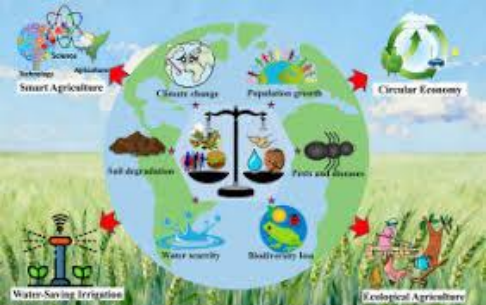
Context: Data released by the Ministry of Agriculture as of 3 April 2026 indicates a marginal increase in the total area under summer crops (Zaid season), reaching 5.82 million hectares. While pulses and coarse cereals have seen an uptick in acreage, rice cultivation has witnessed a notable decline, reflecting farmer concerns over input costs and supply chain disruptions caused by the ongoing conflict in West Asia. Analysis of Sowing Patterns and Challenges • Marginal Growth in Acreage: The total area under summer crops has edged up from 5.78 million hectares last year to 5.82 million hectares. This growth is driven primarily by a shift toward climateresilient and low-water-intensive crops like pulses and coarse cereals. • Decline in Rice Cultivation: Rice acreage has seen a sharp contraction. This is largely attributed to its high dependency on fertilizers and irrigation, both of which have been impacted by rising energy costs and potential shortages in the supply of phosphoric and potassic (P&K) fertilizers due to the Iran war. • Growth in Nutri-Cereals and Pulses: There is a significant increase in the sowing of coarse cereals (millets) and oilseeds. These crops are often favored during the summer window as they require less water and have shorter gestation periods, providing a \'safety net\' for farmers against market volatility. • Input Supply Constraints: The West Asian conflict has sparked fears of a disruption in the import of raw materials for fertilizer production. Since India is a net importer of such inputs, the resulting price hike is influencing crop selection toward those requiring fewer chemical interventions. • Regional Water Stress: The decline in rice also reflects localized water availability issues. As summer temperatures rise, the reliance on groundwater for waterintensive paddy becomes economically unviable for small and marginal farmers, leading to a natural diversification of the cropping pattern. Key Definitions • Zaid Season: The short cropping season between the Kharif (monsoon) and Rabi (winter) seasons, typically from March to June. Common crops include watermelon, muskmelon, cucumber, vegetables, and fodder crops. • Acreage: The total area of land, measured in acres or hectares, used for agricultural purposes or specifically for sowing a particular crop. • Coarse Cereals: A group of broad-leaved, short-duration grasses used for food, such as Jowar (Sorghum), Bajra (Pearl Millet), and Ragi (Finger Millet). They are nutritionally superior and droughtresistant. Constitutional and Legal Provisions • Entry 14 of State List (List II): \'Agriculture, including agricultural education and research, protection against pests and prevention of plant diseases\' falls under the primary jurisdiction of State Governments. • Article 48 (DPSP): Directs the State to organize agriculture and animal husbandry on modern and scientific lines, which includes supporting crop diversification and soil health. • Essential Commodities Act, 1955: Used by the Union to regulate the supply and distribution of fertilizers and seeds, ensuring that geopolitical shocks do not lead to hoarding or black marketing of agricultural inputs. • National Food Security Act (NFSA), 2013: While primarily about distribution, the production of pulses and cereals is vital for maintaining the nutritional buffer stocks required under this Act. Conclusion The marginal rise in summer crop sowing, despite the decline in rice, indicates a tactical shift in Indian agriculture toward resilience. However, the sensitivity of Indian farming to West Asian geopolitical stability— specifically regarding fertilizer inputs and fuel costs—underscores a structural vulnerability. To sustain food security, the focus must remain on promoting \'Per Drop More Crop\' through micro-irrigation and incentivizing the production of oilseeds and pulses to reduce import dependency. UPSC Relevance • GS Paper III (Agriculture): Cropping patterns in various parts of the country; different types of irrigation and irrigation systems; issues related to direct and indirect farm subsidies and minimum support prices. • GS Paper I (Geography): Major crops and cropping patterns; impact of climate and geography on seasonal agriculture (Rabi, Kharif, Zaid).


Address : 506, 3rd EYE THREE (III), Opp. Induben Khakhrawala, Girish Cold Drink Cross Road, CG Road, Navrangpura, Ahmedabad, 380009.
Mobile : 8469231587 / 9586028957
Telephone : 079-40098991
E-mail: dics.upsc@gmail.com
Address: A-306, The Landmark, Urjanagar-1, Opp. Spicy Street, Kudasan – Por Road, Kudasan, Gandhinagar – 382421
Mobile : 9723832444 / 9723932444
E-mail: dics.gnagar@gmail.com
Address: 2nd Floor, 9 Shivali Society, L&T Circle, opp. Ratri Bazar, Karelibaugh, Vadodara, 390018
Mobile : 9725692037 / 9725692054
E-mail: dics.vadodara@gmail.com
Address: 403, Raj Victoria, Opp. Pal Walkway, Near Galaxy Circle, Pal, Surat-394510
Mobile : 8401031583 / 8401031587
E-mail: dics.surat@gmail.com
Address: 303,305 K 158 Complex Above Magson, Sindhubhavan Road Ahmedabad-380059
Mobile : 9974751177 / 8469231587
E-mail: dicssbr@gmail.com
Address: 57/17, 2nd Floor, Old Rajinder Nagar Market, Bada Bazaar Marg, Delhi-60
Mobile : 9104830862 / 9104830865
E-mail: dics.newdelhi@gmail.com