





Ahmedabad
(Head Office)Address : 506, 3rd EYE THREE (III), Opp. Induben Khakhrawala, Girish Cold Drink Cross Road, CG Road, Navrangpura, Ahmedabad, 380009.
Mobile : 8469231587 / 9586028957
Telephone : 079-40098991
E-mail: dics.upsc@gmail.com

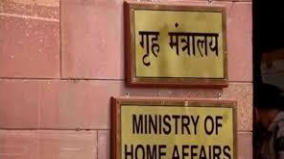
• Restriction on Statutory Bodies: The Ministry of Home Affairs (MHA) has barred bodies without criminal jurisdiction—including the NHRC, NCW, NCPCR, and NCLT—from directly requesting the Bureau of Immigration (BoI) to issue LOCs. • Mandatory Routing: All requests from these statutory commissions must now be routed through authorized law enforcement agencies (LEAs), such as the police, who will evaluate the necessity based on criminal legal standards. • Standardized LOC Categories: The MHA has introduced three specific action categories in the LOC proforma: \'detain and inform originator,\' \'prevent departure and inform originator,\' and \'see remarks for action\' (reserved largely for counter-terrorism). • Verification of Court Orders: To prevent the use of forged documents at border checkpoints, the BoI will no longer accept quashing or suspension orders directly from individuals; such orders must be verified and communicated via the original seeking agency. • Strict Custody Timelines: A new protocol requires the originating agency to take custody of a detained individual within 24 hours of detection at an Integrated Check Post (ICP), failing which the person is handed over to local police. • Counter-Terrorism Exemption: Intelligence agencies like IB, R&AW, and NIA are granted specific discretion under the \'see remarks\' category to handle sensitive national security and counter-terrorism cases. Key Definitions • Look Out Circular (LOC): A notice used by law enforcement agencies to check whether a person traveling internationally is wanted by the police, an investigating agency, or a court. • Originator: The specific agency (e.g., CBI, State Police, SFIO) that initially requests the Bureau of Immigration to open an LOC against an individual. • Integrated Check Post (ICP): A sanitary, specialized facility at border crossings that houses customs, immigration, and border security to facilitate the movement of people and goods. Constitutional & Legal Framework • Article 21: The Right to Life and Personal Liberty. The Supreme Court has repeatedly held that the right to travel abroad is a fundamental right under Article 21, and any restriction via an LOC must be \'fair, just, and reasonable.\' • Article 14: Right to Equality. The routing of LOCs through specific agencies ensures that arbitrary requests by various tribunals do not infringe upon the equal protection of laws. • Passport Act, 1967: Section 10(3) allows the impounding or revocation of passports, providing the underlying legal basis for preventing a person from leaving the country. • Section 41 of CrPC: Empowers police officers to arrest without a warrant, which often intersects with the \'detain\' instruction in an LOC. Additional Important Keypoints • Bureau of Immigration (BoI): Functioning under the MHA, it acts as the central nodal agency for executing LOCs at all 37 International Airports and various land/sea ports. • Due Process: The seven-day response window for originators to update LOC status following court orders is designed to reduce prolonged harassment of citizens whose legal cases have been resolved. • Judicial Oversight: High Courts in India (notably Delhi and Bombay) have recently criticized the \'mechanical\' issuance of LOCs, prompting the MHA to streamline these administrative safeguards. Conclusion The MHA\'s decision to centralize LOC requests through agencies with criminal jurisdiction represents a shift toward protecting civil liberties while maintaining national security. By stripping non-investigative statutory bodies of direct issuance powers, the government is ensuring that \'Right to Travel\' is not curtailed by administrative overreach, but rather by standardized legal procedures that can stand judicial scrutiny. UPSC Relevance • GS Paper II: Statutory, regulatory, and various quasi-judicial bodies; Fundamental Rights (Article 21); Governance and executive accountability. • GS Paper III: Internal Security; Role of external state and non-state actors in creating challenges to internal security; Border Management. • Prelims: Functions of NHRC/NCW/NCLT, powers of the Bureau of Immigration, and legal provisions governing international travel.


Address : 506, 3rd EYE THREE (III), Opp. Induben Khakhrawala, Girish Cold Drink Cross Road, CG Road, Navrangpura, Ahmedabad, 380009.
Mobile : 8469231587 / 9586028957
Telephone : 079-40098991
E-mail: dics.upsc@gmail.com
Address: A-306, The Landmark, Urjanagar-1, Opp. Spicy Street, Kudasan – Por Road, Kudasan, Gandhinagar – 382421
Mobile : 9723832444 / 9723932444
E-mail: dics.gnagar@gmail.com
Address: 2nd Floor, 9 Shivali Society, L&T Circle, opp. Ratri Bazar, Karelibaugh, Vadodara, 390018
Mobile : 9725692037 / 9725692054
E-mail: dics.vadodara@gmail.com
Address: 403, Raj Victoria, Opp. Pal Walkway, Near Galaxy Circle, Pal, Surat-394510
Mobile : 8401031583 / 8401031587
E-mail: dics.surat@gmail.com
Address: 303,305 K 158 Complex Above Magson, Sindhubhavan Road Ahmedabad-380059
Mobile : 9974751177 / 8469231587
E-mail: dicssbr@gmail.com
Address: 57/17, 2nd Floor, Old Rajinder Nagar Market, Bada Bazaar Marg, Delhi-60
Mobile : 9104830862 / 9104830865
E-mail: dics.newdelhi@gmail.com